
- Restaurant waste management food and grease disposal are two separate problems that need two separate systems.
- Illinois plumbing code requires grease interceptors on lines carrying grease-laden wastewater from food service operations.[1]
- Grease trap waste and general food waste should never go into the same dumpster stream.
- Right-sizing dumpster service around actual food waste volume prevents both overflow and odor problems.
- A consistent grease trap cleaning schedule protects both plumbing and compliance status.
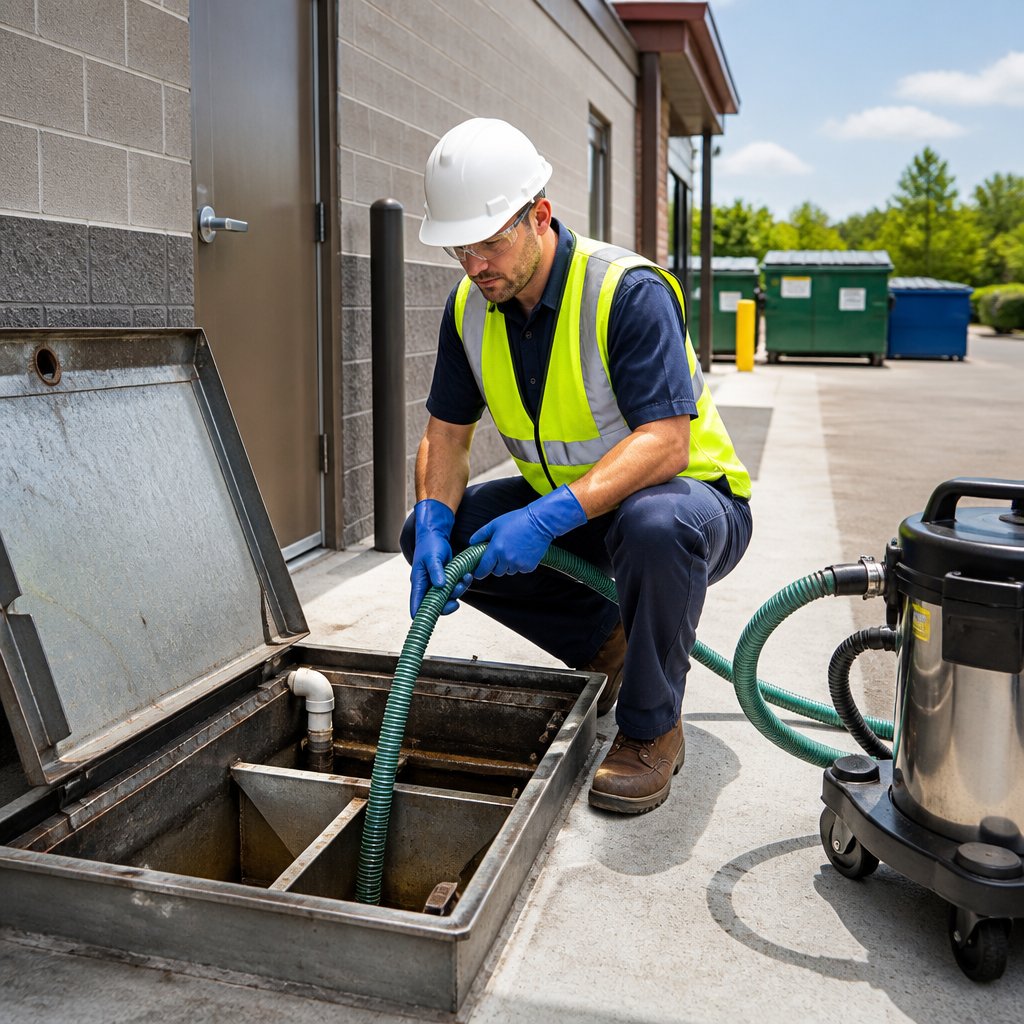
Restaurant Waste Management: Food and Grease Are Separate Problems
Running a commercial kitchen means dealing with two very different waste streams that get lumped together in conversation but need entirely separate handling in practice. Restaurant waste management food and grease disposal both matter, but treating them as the same problem is one of the most common mistakes new restaurant owners make. Food waste and packaging belong in a dumpster; grease and fats belong in a properly maintained interceptor system that never touches general trash.
Illinois plumbing code specifically requires that grease, oil, and sand interceptors be installed when necessary for handling liquid wastes containing excessive grease, with all drain lines from food preparation processes routed through one or more interceptors.[1] This isn’t optional for most food service operations — it’s a plumbing code requirement that protects both the restaurant and the municipal sewer system it connects to.
New restaurant owners sometimes assume grease management is something to figure out later, after opening. In practice, the plumbing and equipment decisions made before a kitchen opens directly affect how manageable grease disposal turns out to be, which is part of why getting this system planned correctly from the start matters more than it might seem during the early rush of getting a restaurant open.
Zap Dumpsters Peoria works as a sourcing partner for the food-waste side of this equation, helping connect Peoria restaurants with a properly sized dumpster for packaging and food scraps, separate from grease trap service.
Two Systems, Two Purposes
| Waste Type | Handling Method | Frequency |
|---|---|---|
| Food scraps, packaging, general trash | Commercial dumpster | Typically 2-3x weekly or more for busy kitchens |
| Fats, oils, grease (FOG) | Grease interceptor, pumped by licensed service | Often 90 days, sometimes monthly for high-volume kitchens |
| Used cooking oil | Sealed container, separate collection service | As container fills |
Food Waste and Packaging
General food waste, packaging, and kitchen trash need a dumpster sized to match actual volume, which for most restaurants means more frequent pickup than a typical office or retail business. Letting food waste sit too long between pickups creates odor and pest problems fast, particularly during warmer months. Breaking down cardboard boxes and consolidating packaging as it accumulates throughout a shift, rather than letting it pile up loose, also helps a dumpster hold more of what a busy kitchen actually generates between pickups.
Grease and Fats, Oils, Grease (FOG)
Grease interceptors capture fats, oils, and grease before they reach the sewer system, and they require regular pumping to stay effective. Letting FOG accumulate past the point an interceptor can handle leads to slow drains, backups, and potential compliance violations with local sewer authorities. Many municipalities also require kitchens to keep documented cleaning logs on file, so even when a trap is being serviced on schedule, missing paperwork can still result in a citation during an inspection.
Training Kitchen Staff on Proper Separation
Most restaurant waste problems trace back to a training gap rather than a system failure. Kitchen staff working through a busy dinner rush don’t always stop to think about which bin something belongs in, especially during a new hire’s first few weeks. Clear, visible signage above prep sinks and near dish stations — showing exactly what can go down the drain versus what needs to be scraped into a grease container or food waste bin — prevents most accidental mixing before it becomes a habit.
Assigning one person per shift to spot-check disposal practices, even informally, catches problems early. A staff member who’s been scraping plates directly into a floor drain instead of pre-scraping into a waste bin can undo months of careful grease trap maintenance in a matter of weeks, and it’s much easier to correct that habit during a quick conversation than after a sewer backup forces the issue.
Why Mixing These Streams Causes Problems
Grease and food waste should never end up in the same disposal stream — grease belongs in the interceptor system exclusively, and food waste disposal units should never be connected to or discharged into a grease interceptor. Mixing the two either overwhelms the interceptor’s capacity or contaminates general waste with grease that creates odor, pest, and container degradation problems over time.
Keeping these streams cleanly separated from the start — training kitchen staff on what goes where, and making sure grease never gets scraped into the same bins as food scraps headed for the dumpster — prevents most of the downstream problems restaurants run into with either system.
Quick Reference: Restaurant Waste Systems
| System | Never Mix With |
|---|---|
| Dumpster (food waste/packaging) | Grease, oil, liquid waste |
| Grease interceptor | Solid food waste, garbage disposal output |
| Used cooking oil container | General grease trap waste |
Sizing Dumpster Service for a Restaurant
Restaurant waste volume tends to run higher and more consistent than most other commercial businesses, simply because food service generates packaging and scraps every single day the kitchen operates. A dumpster sized for a slow retail week won’t hold up to a busy restaurant’s daily output, and letting waste accumulate past capacity creates both odor issues and potential health code concerns. Reviewing actual daily and weekly volume, rather than assuming a standard size fits every kitchen, is worth the time before settling on a service level. Enclosed or lidded containers are also worth considering for restaurants specifically, since food waste attracts pests far more readily than typical office or retail trash.
Seasonal and Event-Driven Volume Changes
Restaurants with strong seasonal patterns — patio season, holiday catering, festival weekends — often need flexible service that can scale up temporarily rather than a fixed size and schedule year-round. Planning for these swings ahead of time avoids scrambling for extra pickup during the busiest weeks of the year. A quick call ahead of a known busy stretch, like a holiday weekend or a local festival that brings extra foot traffic, is usually all it takes to arrange a temporary bump in service rather than dealing with an overflowing dumpster mid-rush.
Restaurant Waste Management Near You
Restaurant waste management food and grease disposal work best as two clearly separated systems, each maintained on its own schedule. Getting both right from the day a kitchen opens saves a tremendous amount of headache compared to fixing plumbing or compliance problems after the fact. If your kitchen is generating a lot of packaging alongside food scraps, our guide on waste audits for businesses can help you get a clearer picture of your actual volume before adjusting service.
For the food-waste side of your kitchen’s disposal needs, Zap Dumpsters Peoria works as your sourcing partner for commercial dumpster service, helping connect your restaurant with the right container near you.
Restaurant Waste Management Food and Grease FAQs
Can grease go in the same dumpster as food waste?
No, grease should never be disposed of in a general dumpster. It requires a separate interceptor system that’s pumped regularly by a licensed service.
How often should a restaurant’s grease trap be cleaned?
Cleaning frequency depends on kitchen volume, but many municipalities require at minimum every 90 days, with high-volume kitchens sometimes needing monthly service.
What size dumpster does a restaurant need?
Restaurant dumpster size depends on daily food waste and packaging volume, which is typically higher and more frequent than a standard office or retail business.
Is restaurant waste management food and grease disposal regulated in Illinois?
Yes, Illinois plumbing code requires grease interceptors for food service operations, and local municipalities often set additional cleaning and record-keeping requirements.
What happens if a restaurant doesn’t maintain its grease trap?
Neglected grease traps can cause sewer backups, plumbing damage, and compliance violations, which can result in fines or forced closures until the issue is resolved.
Restaurant Waste Management Food and Grease Citations
- Illinois Administrative Code, Section 890.510 — Grease Interceptor Requirements — ilga.gov