
- Waste audits for businesses identify exactly what’s in your dumpster before you decide how to reduce it.
- The EPA recommends records examinations, facility walk-throughs, and waste sorts as the three core audit methods.[1]
- Most waste reduction opportunities become obvious only after you actually measure what you’re throwing away.[2]
- A simple in-house audit can be done without hiring a consultant for most small and mid-sized Peoria businesses.
- Right-sizing your dumpster after an audit often saves more than any single recycling initiative.
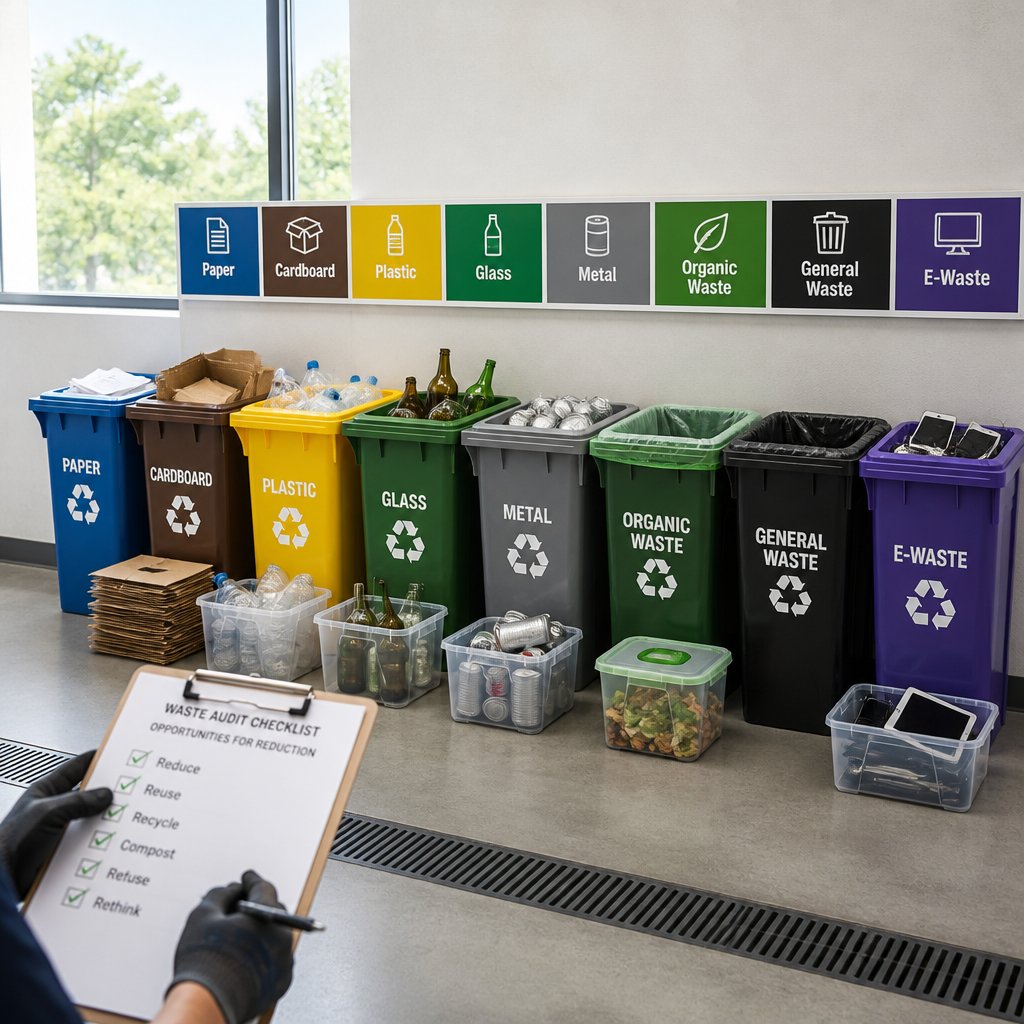
Why Waste Audits for Businesses Matter
Most businesses never actually look inside their dumpster. Trash gets hauled away weekly, the bill gets paid, and nobody stops to ask what’s actually in there or whether it could be handled more efficiently. Waste audits for businesses change that by turning waste from a mystery expense into a manageable, data-driven part of operations.
A waste assessment or audit is a systematic review of a building and its operations to identify the quantity and composition of materials in the waste stream, and knowing what’s in that stream is the first step to tailoring an effective reduction program.[1] For a Peoria business paying for regular dumpster service, this isn’t just an environmental exercise — it’s a direct look at where money is being spent on materials that could be reduced, reused, or recycled instead of hauled away.
Zap Dumpsters Peoria works as your sourcing partner once you know what your waste stream actually looks like, helping connect your business with a properly sized commercial dumpster instead of one guessed at without any real data behind it.
Three Common Waste Audit Methods
| Method | What It Involves | Best For |
|---|---|---|
| Records examination | Reviewing hauler invoices, pickup frequency, and container size over time | Businesses wanting a quick baseline without physical sorting |
| Facility walk-through | Visually inspecting bins and work areas to spot obvious waste patterns | Identifying quick wins without a full sort |
| Waste sort | Physically separating and weighing a sample of collected waste | Getting detailed composition data for a reduction plan |
Records Examination
The simplest starting point is pulling hauler invoices and looking at pickup frequency, container size, and any overage charges over the past several months. Patterns often jump out immediately — a dumpster that’s consistently only half full, or one that overflows every single week, both point toward a sizing mismatch worth addressing.
Facility Walk-Through
Walking through work areas with fresh eyes, paying attention to what’s actually landing in trash cans and dumpsters, often reveals obvious waste sources: excess packaging, single-use materials that could be reusable, or recyclables getting mixed into general trash simply because a labeled bin isn’t available nearby.
Waste Sort
For a more detailed picture, physically sorting a sample of collected waste into categories and weighing each one gives hard data on composition — how much is paper, packaging, food waste, or true landfill trash. The EPA provides specific instructions for conducting records examinations, facility walk-throughs, and waste sorts as the three standard waste assessment approaches.[1] A single day’s worth of sorted waste, weighed and categorized, is usually enough to establish a reliable snapshot of a typical week without requiring an ongoing commitment.
What a Waste Audit Typically Reveals
Most businesses that conduct a waste audit for the first time discover that a meaningful share of their “trash” is actually recyclable material, excess packaging, or a container that’s sized wrong for their actual volume. These findings translate directly into cost savings, since reducing volume, recycling more, and right-sizing a dumpster all reduce hauling costs over time.
Source reduction — using less material to do the same job — offers some of the greatest benefits of any waste reduction activity, since it prevents the cost of buying, using, and disposing of material in the first place rather than just diverting it after the fact.[2]
Quick Decision Table: Which Audit Method Fits Your Business?
| Your Situation | Recommended Method |
|---|---|
| Small office, limited time | Records Examination |
| Want quick, visible wins | Facility Walk-Through |
| Planning a formal reduction program | Full Waste Sort |
| Multiple locations to compare | Records Examination across all sites, then targeted walk-throughs |
Common Materials Businesses Overlook
Certain waste categories tend to slip through the cracks even at businesses that consider themselves fairly organized. Cardboard from shipping and receiving is one of the biggest culprits — it’s bulky, it’s almost always recyclable, and yet it frequently ends up flattened into a general dumpster rather than a dedicated recycling stream simply because nobody set one up. Office paper is another common one: even in an increasingly digital workplace, printer paper, mail, and packaging inserts add up fast, and a surprising share of it is still going straight to landfill-bound waste rather than a recycling bin sitting a few feet away.
Food service and break room waste is a third area worth a closer look, particularly for businesses with an on-site kitchen or cafeteria. Compostable material mixed into general trash not only adds unnecessary weight and volume to a dumpster, it can also be one of the more cost-effective streams to divert once a business realizes how much of its waste falls into that category. None of these findings are unusual — they show up in nearly every first-time audit, which is exactly why the audit itself is worth doing before assuming a business’s waste stream can’t be improved.
Turning Audit Findings Into Action
An audit is only useful if it leads to changes. Once you know your waste composition, the next step is prioritizing the easiest, highest-impact changes first — usually recycling programs for materials already showing up in large volumes, and right-sizing dumpster service based on actual fill rates rather than habit or guesswork. Businesses that skip this step and just file the audit away rarely see any real benefit from having done it.
Setting a Baseline for Future Comparison
Keep your first audit’s findings on record as a baseline. Repeating a lighter version of the audit every year or two lets you track whether changes are actually working, rather than assuming they are based on a general sense that things feel better organized. This baseline also becomes useful leverage when negotiating hauler contracts, since concrete data on volume and composition gives you a stronger position than a vague sense that “we probably generate less trash than we used to.”
Waste Audits for Businesses Near You
Waste audits for businesses turn a routine expense into a real opportunity for savings, once you actually look at what’s in the dumpster instead of just paying to have it hauled away. The process doesn’t need to be complicated or expensive to be worthwhile — even a modest first attempt tends to surface at least a few changes worth making. If your audit points toward setting up recycling collection alongside your regular waste service, our guide on implementing recycling programs in office buildings covers how to get one started.
Once you know what your business actually generates, Zap Dumpsters Peoria works as your sourcing partner for commercial dumpster service, helping connect you with the right container size near you.
Waste Audits for Businesses FAQs
What is a waste audit for a business?
A waste audit for a business is a systematic review of what a company discards, using records examination, facility walk-throughs, or physical waste sorts to identify reduction opportunities.
How often should businesses conduct waste audits?
Many businesses benefit from an initial detailed audit followed by a lighter annual or biennial check-in to track progress and catch changes in waste patterns.
Do small businesses need a professional waste audit service?
Not necessarily. Waste audits for businesses can often be done in-house using EPA’s records examination and walk-through methods, reserving professional audits for larger or more complex operations.
What’s the fastest waste audit method?
A records examination reviewing hauler invoices and pickup patterns is typically the fastest waste audit method, though it provides less detail than a physical waste sort.
Can a waste audit help reduce dumpster costs?
Yes, waste audits for businesses frequently reveal that a dumpster is oversized or undersized for actual volume, and right-sizing service based on that data can meaningfully reduce hauling costs.