
- Peoria requires a demolition permit before any building or structure demolition begins, separate from a general building permit.[1]
- OSHA requires a written engineering survey before demolition operations start, regardless of the project’s size.[2]
- Debris containing broken concrete, brick, or soil may qualify for Illinois EPA’s Clean Construction or Demolition Debris (CCDD) program, which offers lower-cost disposal than standard landfill fees.[3]
- Utilities must be shut off, capped, or controlled before demolition work begins on any structure.[2]
- Skipping permit or safety steps can lead to stop-work orders, fines, and personal liability if something goes wrong on-site.
Understanding Permits and Safety Rules for Demolition Debris
Demolition looks simple from the outside — knock it down, haul it away — but there’s a real paper trail and a real safety checklist behind any legitimate project. Understanding permits and safety rules for demolition debris upfront saves you from stop-work orders, fines, and the kind of liability nobody wants to deal with after an accident. Whether you’re a Peoria homeowner tearing down an old shed or a contractor managing a larger commercial teardown, the requirements follow the same basic structure.
The City of Peoria lists a Demolition Permit as its own distinct permit type, separate from a standard building permit, meaning you can’t assume a general construction permit covers a teardown.[1] On the safety side, OSHA’s demolition standard lays out specific requirements that apply before, during, and after the physical work begins.[2]
Zap Dumpsters Peoria works as your sourcing partner throughout the process, connecting you with the right dumpster for whatever debris the project generates once permitting and safety planning are squared away.
Permit Requirements for Demolition Projects
Before any demolition work begins in Peoria, a Demolition Permit needs to be secured, distinct from other permit types like residential building permits or right-of-way permits.[1] This permit process exists to make sure the city has a record of the work, can verify utility disconnections have been planned, and can confirm the demolition follows the applicable building code requirements. Skipping this step isn’t just a technicality — unpermitted demolition work can be subject to stop-work orders and fines, and can create real problems if you try to sell or refinance the property later without a clean permit history.
What the Permit Process Typically Involves
Most demolition permit applications require basic project information: the address, a description of what’s being demolished, and confirmation that utilities will be properly disconnected before work starts. Depending on the scope of the project, additional documentation like an asbestos survey may also be required before the permit is issued, particularly for older structures.
OSHA Safety Requirements Before Demolition Begins
| Requirement | What It Involves |
|---|---|
| Engineering survey | Written assessment of framing, floors, and walls by a competent person before work starts |
| Utility shutoffs | Electric, gas, water, steam, and sewer lines shut off, capped, or controlled outside the building line |
| Hazardous material check | Testing for chemicals, gases, or flammable materials in pipes, tanks, or equipment |
| Adjacent structure check | Neighboring buildings assessed if employees may be exposed to demolition hazards |
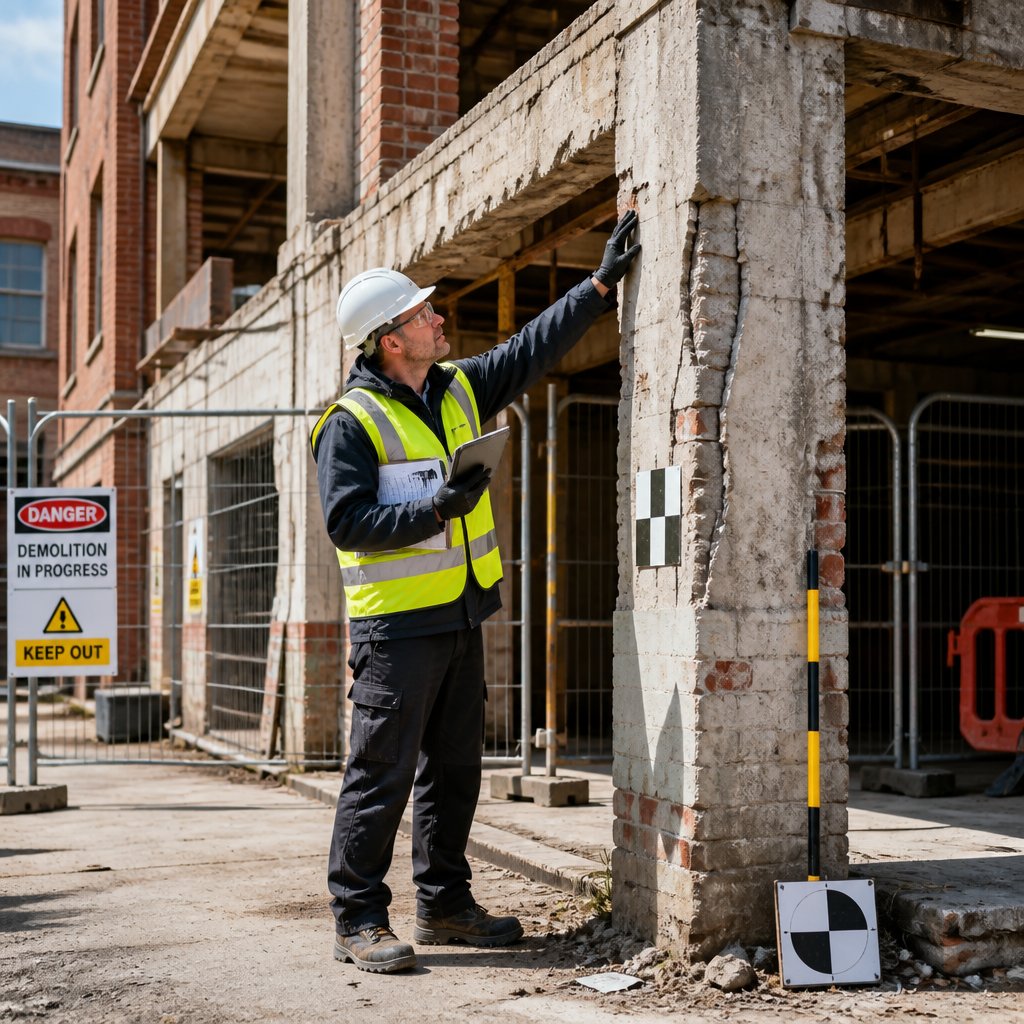
OSHA’s demolition standard requires that before permitting employees to start demolition operations, an engineering survey shall be made by a competent person to determine the condition of the framing, floors, and walls, and the possibility of unplanned collapse.[2] The employer must have written evidence that this survey was actually performed — a verbal walkthrough doesn’t satisfy the requirement.
All electric, gas, water, steam, sewer, and other utility service lines must be shut off, capped, or otherwise controlled outside the building line before demolition work begins — this single requirement prevents some of the most dangerous and preventable accidents on demolition sites.[2]
Disposal Rules for Demolition Debris
Not all demolition debris is treated the same way once it leaves the site. Clean, uncontaminated broken concrete, brick, and similar materials may qualify for Illinois EPA’s Clean Construction or Demolition Debris (CCDD) program, which allows this material to go to permitted fill operations at a lower cost than a standard landfill.[3] Material mixed with contaminated soil, hazardous substances, or other waste doesn’t qualify and needs to go through standard disposal channels instead.
This distinction matters for cost planning as much as compliance — sorting clean concrete and masonry debris separately from general mixed waste can meaningfully reduce disposal costs on larger demolition projects, since CCDD-eligible material typically costs less to dispose of than material headed to a standard landfill.
Quick Reference: Permits and Safety Checklist
| Step | Required Before |
|---|---|
| Obtain Demolition Permit from the City of Peoria | Any demolition work begins |
| Complete written engineering survey | Employees start demolition operations |
| Shut off/cap utilities outside the building line | Demolition work is started |
| Test for hazardous chemicals or materials on-site | Demolition begins, if presence is suspected |
| Sort clean concrete/masonry debris separately | Loading debris for disposal |
Special Considerations for Older Structures
Older buildings in Peoria’s established neighborhoods often come with extra permitting and safety considerations that newer construction doesn’t. Structures built before the 1980s may contain asbestos in materials like floor tile, pipe insulation, or old siding, which typically needs testing and, if present, professional abatement before demolition can proceed. Lead paint is another common concern in older homes, and disturbing it during demolition without proper precautions can create health hazards that extend well beyond the immediate work crew.
These extra steps take time, but skipping them isn’t really an option — asbestos and lead disturbances carry their own separate regulatory requirements on top of standard demolition permitting, and cutting corners here creates liability that can follow a property owner for years. Building in time for testing and, if needed, abatement work before your demolition permit is finalized helps avoid costly delays once the project is already underway.
What Happens Without Proper Permits and Safety Steps
Skipping the permit process or shortcutting safety requirements creates real risk, not just a technical violation on paper. A demolition project without a permit can be stopped mid-work by the city, and unpermitted work often has to be disclosed during property sales or refinancing, sometimes years later. On the safety side, skipping the engineering survey removes the one step specifically designed to catch structural risks before they turn into a collapse or injury — which is exactly why it remains one of the most cited violations in the industry.
Permits and Safety Rules for Demolition Debris Near You
Getting permits and safety rules for demolition debris right from the start keeps your project legal, your crew safer, and your disposal costs lower. If you’re weighing what to save before the permitted work begins, our guide on salvaging materials during demolition projects covers what’s typically worth setting aside first.
Once your permit and safety plan are in place, Zap Dumpsters Peoria works as your sourcing partner for demolition debris removal, helping connect you with the right container near you.
Permits and Safety Rules for Demolition Debris FAQs
Do I need a permit to demolish a structure in Peoria?
Yes, the City of Peoria requires a Demolition Permit before any building or structure demolition begins, separate from a standard building permit.
What is required before demolition work can legally start?
A written engineering survey by a competent person, proper utility shutoffs, and a Demolition Permit are all typically required before demolition work can legally start.
Can demolition debris go to a regular landfill?
Some debris can, but clean concrete, brick, and similar uncontaminated material may qualify for Illinois EPA’s lower-cost CCDD disposal program instead of a standard landfill.
What are the safety rules for demolition debris removal specifically?
Debris should be cleared from the work area continuously, sorted by material type where possible, and loaded without exceeding container weight limits, following the same general safety rules for demolition debris outlined by OSHA.
What happens if I demolish a structure without a permit?
Unpermitted demolition work in Peoria can result in stop-work orders and fines, and may need to be disclosed later during a property sale or refinance.
Permits and Safety Rules for Demolition Debris Citations
- City of Peoria, Permit / License / Event page (Demolition Permit) — peoriagov.org
- OSHA, 29 CFR 1926.850 — Preparatory Operations (Demolition) — osha.gov
- Illinois EPA, Clean Construction or Demolition Debris (CCDD) — epa.illinois.gov