
- Managing dust and debris on demolition sites protects worker health and keeps the surrounding property and neighbors safer during the project.
- Silica dust from concrete, brick, and masonry demolition is a serious respiratory hazard covered under a specific OSHA standard.[1]
- Water suppression is the most common and effective method for controlling dust during demolition work.[1]
- Debris should be cleared from the work area continuously, not left to pile up until the end of the project.[2]
- A properly sized dumpster placed close to the work zone reduces how far debris has to be carried, cutting down on secondary dust and mess.
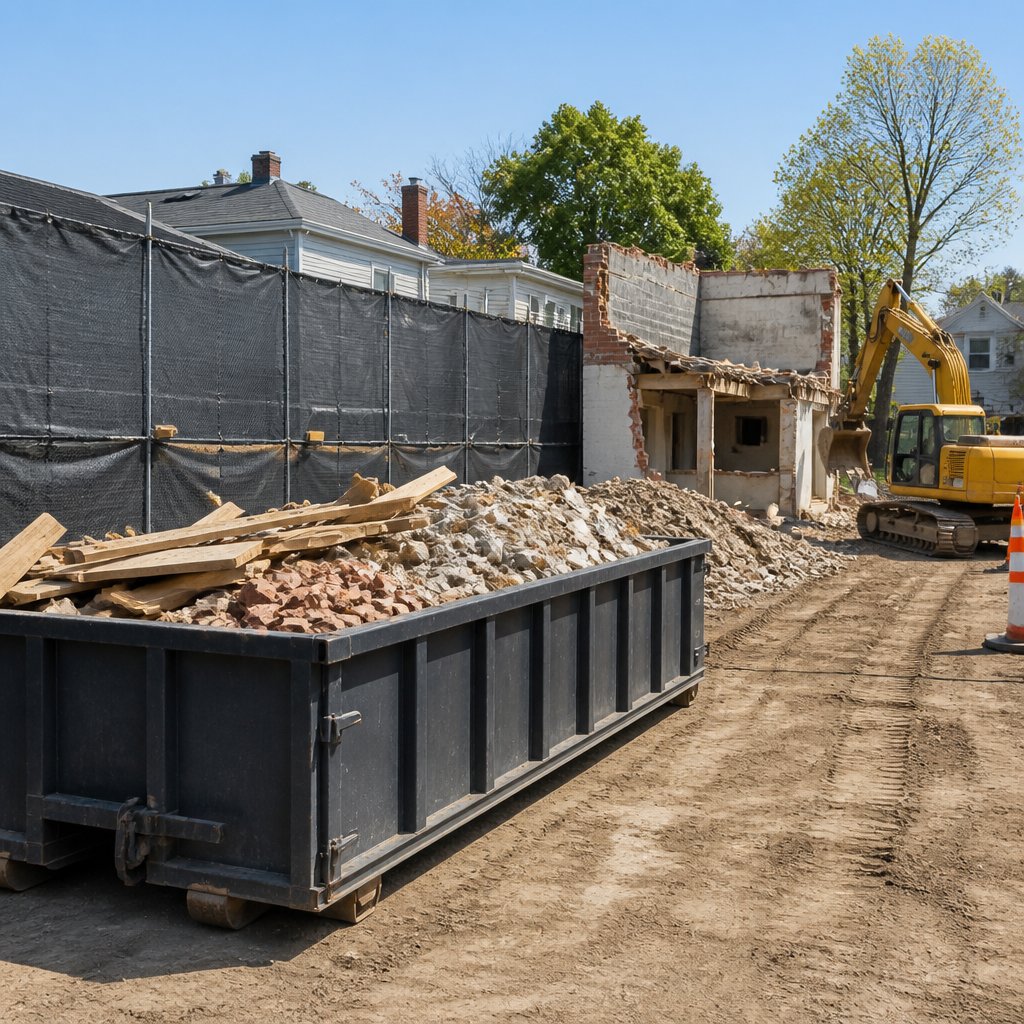
Why Managing Dust and Debris on Demolition Sites Matters
Demolition work kicks up more than just a mess. Breaking apart concrete, brick, drywall, and old plaster releases fine dust particles into the air, and depending on the material, that dust can pose a real health risk to anyone working nearby. Managing dust and debris on demolition sites isn’t just about keeping things tidy — it’s about protecting the people doing the work and the neighbors living next door.
Concrete, brick, and masonry materials contain crystalline silica, and OSHA has a dedicated standard specifically addressing the health risks of silica dust exposure in construction, including demolition work.[1] Beyond the health angle, unmanaged debris also creates trip hazards, blocks safe pathways around the site, and can turn a straightforward project into a slower, messier one than it needs to be.
Zap Dumpsters Peoria works as a sourcing partner throughout the project, helping connect Peoria contractors and homeowners with a properly sized dumpster placed close to the work zone, which cuts down on how far debris has to travel and how much dust gets stirred up moving it.
Understanding Silica Dust Risks
Crystalline silica is a common mineral found in concrete, brick, mortar, and stone — all common materials on a demolition site. When these materials are broken, cut, or crushed, they release fine dust particles small enough to be inhaled deep into the lungs. OSHA’s respirable crystalline silica standard for construction sets a permissible exposure limit of 50 micrograms per cubic meter of air as an eight-hour average, along with a lower action level that triggers additional monitoring requirements.[1]
The standard specifically addresses heavy equipment used during demolition activities involving silica-containing materials, requiring operators to work from an enclosed cab or apply water and dust suppressants to minimize airborne dust when working outside an enclosed cab.[1] Repeated exposure to silica dust without proper controls can lead to serious, irreversible lung disease, which is exactly why dust management isn’t an optional extra on a demolition project — it’s a core safety requirement.
Common Dust Control Methods
| Method | How It Works | Best For |
|---|---|---|
| Water suppression | Water applied at the point where dust is generated | Concrete cutting, brick breaking, general demolition |
| Enclosed cab equipment | Operator works inside a sealed, filtered cab | Heavy equipment demolition of silica-containing materials |
| Dust barriers and containment | Physical barriers limit dust spread beyond the work zone | Sites near occupied buildings or property lines |
| Wet sweeping/vacuum cleanup | Avoids stirring settled dust back into the air | End-of-day site cleanup |
Water Suppression
Applying water at the point where material is being cut, broken, or crushed is one of the simplest and most effective ways to keep dust from becoming airborne in the first place. This method works well for concrete cutting, brick removal, and general demolition debris handling, and it’s specifically listed as an approved control method under OSHA’s silica standard for several common demolition tasks.[1]
Containment and Barriers
On sites close to property lines, sidewalks, or occupied structures, physical dust barriers help keep airborne particles from drifting beyond the work zone. This matters as much for good-neighbor relations as it does for compliance — nobody wants concrete dust settling on a neighbor’s patio furniture or vehicle.
Keeping Debris Under Control Throughout the Project
Beyond dust, physical debris management matters just as much for safety and efficiency. OSHA’s general waste disposal standard requires that scrap material, waste, and rubbish be removed from the immediate work area as the project progresses, rather than allowed to accumulate.[2] On a demolition site, that means clearing broken material to the dumpster regularly throughout the day instead of letting it pile up until everything wraps up.
This habit does double duty: it keeps walkways clear and reduces trip hazards, and it also limits how much dust gets kicked back into the air every time someone has to navigate around a growing debris pile. A dumpster placed as close to the active work zone as site access allows shortens the distance debris has to travel, which means less handling, less dust disturbance, and a faster overall cleanup.
Quick Reference: Dust and Debris Priorities by Material
| Material | Primary Concern | Recommended Control |
|---|---|---|
| Concrete/masonry | Silica dust | Water suppression, enclosed cab equipment |
| Drywall/plaster | Fine particulate dust | Wet sweeping, minimize dry breakage |
| Wood debris | Trip hazards, splinters | Continuous clearing to dumpster |
| Mixed rubble | Trip hazards, secondary dust | Frequent debris removal, barriers along property lines |
Neighbor and Property Considerations
Demolition dust doesn’t respect property lines, and in a city like Peoria with plenty of established, closely spaced neighborhoods, that means a project on one lot can easily affect the house next door if dust isn’t controlled well. Settled dust on a neighbor’s car, patio furniture, or garden can turn into a costly cleanup dispute even when no rule was technically broken. Simple steps — checking wind direction before starting dust-heavy work, using barriers along shared property lines, and timing the dustiest phases of demolition for calmer parts of the day — go a long way toward avoiding friction with the people living around the job site.
Communication helps too. A quick heads-up to neighbors before a multi-day demolition project begins, especially one involving concrete or masonry removal, sets expectations and often prevents complaints before they start. It’s a small step that costs nothing but can save a lot of goodwill, particularly on projects that will generate noise and dust over several days.
Site Layout Considerations
Where you position your dumpster and material staging areas affects how much dust and debris ends up traveling across the site unnecessarily. Placing the container as close as possible to the active demolition zone, while still keeping clear pathways for equipment and workers, reduces the number of trips needed to clear debris and limits how much dust gets re-disturbed during transport. Wind direction matters too — positioning dust-generating work upwind of neighboring properties, where site conditions allow it, helps keep airborne particles from drifting toward occupied areas.
Managing Dust and Debris on Demolition Sites Near You
Managing dust and debris on demolition sites well protects your crew, your neighbors, and your project timeline all at once. If you’re weighing how much material might be worth saving before dust and debris become a bigger issue, our guide on salvaging materials during demolition projects covers what’s worth setting aside first.
Zap Dumpsters Peoria works as your sourcing partner for demolition debris removal, helping connect you with a properly sized container placed for efficient, lower-dust debris management near you.
Managing Dust and Debris on Demolition Sites FAQs
What is the biggest dust hazard on a demolition site?
Crystalline silica dust from breaking concrete, brick, and masonry is the biggest dust hazard on most demolition sites, since it can cause serious respiratory illness with repeated exposure.
What is the most effective method for managing dust on demolition sites?
Water suppression applied directly at the point where material is being broken or cut is one of the most effective and widely used methods for managing dust on demolition sites.
How often should debris be cleared during a demolition project?
Debris should be cleared from the work area continuously throughout the project rather than left to accumulate, which reduces trip hazards and limits secondary dust disturbance.
Do I need special equipment for managing dust and debris on demolition sites?
Basic water suppression equipment, dust barriers, and a properly placed dumpster cover most residential and small commercial demolition dust and debris needs without requiring specialized machinery.
Does dumpster placement affect dust levels on a demolition site?
Yes, placing a dumpster close to the active work zone reduces how far debris has to be carried, which limits how much dust gets stirred back into the air during transport.