
- Key Takeaways:
- Choosing materials that last longer is the single most effective way to minimize roofing waste over a building’s lifetime.
- Metal roofing can last 50–70+ years compared to 20–30 years for standard asphalt, cutting the number of full tear-offs a building will ever need.
- Materials with established recycling streams, such as metal panels and asphalt shingles in Illinois, reduce end-of-life landfill impact.
- Accurate measurement and ordering only what you need prevents installation waste before a shingle is ever laid.
- Roof coatings can extend existing roof life by 5–15 years, deferring a full tear-off and its associated waste entirely.
Minimizing roofing waste through material selection starts at the design and planning stage, long before any old material comes off the roof. The largest roofing waste event in a building’s life is a full tear-off, and the most effective waste reduction strategy is simply reducing how often that event occurs. Material lifespan, recyclability, geometric efficiency, and whole-life environmental impact are the four levers that make the biggest difference in total lifetime waste output.
Lifespan Is the Most Powerful Waste Reduction Tool
Every full roofing replacement generates a complete tear-off waste stream. Extending the time between replacements directly reduces total lifetime waste more than any other single choice.
Metal Roofing: The Longest-Life Residential Option
Metal roofing, including steel, aluminum, copper, and zinc panels, offers a typical service life of 50 to 70 years or more, often more than double the lifespan of standard asphalt shingles and significantly longer than any other widely available residential roofing option. According to the Metal Roofing Alliance, most metal roofs are manufactured with a minimum of 25 percent recycled content and are fully recyclable at end of life without any loss of material quality[1]. This combination of long service life and recyclability makes metal the most waste-efficient residential roofing choice over the full life of a building.
High-Quality Asphalt as a Middle-Ground Choice
Architectural or laminated asphalt shingles typically outlast basic 3-tab shingles by five to ten years with proper installation, pushing service life closer to 25 to 30 years on quality installations. Combined with Illinois’ active Reclaimed Asphalt Shingle (RAS) recycling infrastructure and the state’s regulatory incentives for shingle diversion from landfills, high-quality asphalt shingles are the most waste-conscious choice within the asphalt category.
Recyclability at End of Life Changes the Waste Calculation
A material’s waste impact is not just about what goes into the landfill during tear-off. It is also about how much of that material can re-enter the supply chain rather than occupying landfill space for centuries.
| Material | End-of-Life Recyclability | Illinois-Specific Pathway |
|---|---|---|
| Metal panels (steel, aluminum, copper) | 100% recyclable through scrap metal industry | Local scrap yards; no special certification needed |
| Asphalt shingles | Recyclable as RAS for road paving | IEPA BUD-certified facilities; Illinois SB2226 ban applies |
| Clay or concrete tile | Limited; some facilities accept for crush-and-reuse | CCDD-eligible if uncontaminated |
| Single-ply membranes (TPO, PVC, EPDM) | Growing manufacturer take-back programs | Specialized C&D recyclers; check manufacturer first |
| Wood shake | Limited; some biomass or compost facilities accept | Illinois landscape waste rules may apply to organic component |
Designing for Deconstruction
Mechanically attached roofing systems, such as standing seam metal with clip-fastened panels, are significantly easier to remove cleanly at end of life than fully adhered systems. When a panel can be unclipped rather than pried up from a bonded substrate, the removed material stays in better condition for recycling or reuse. Specifying mechanically attached systems over fully adhered ones, where the roof design allows, is a long-term waste reduction decision built into the installation method.
Matching Material to Roof Geometry
Large-Format Panels Reduce Installation Offcuts
Roofs with simple, large planes, such as a basic gable or hip roof on a modest rectangular home, are ideal candidates for large-format metal panels that run from ridge to eave in a single continuous piece. This standing seam approach produces far fewer edge cuts and offcuts than small, overlapping units like shingles or tiles. On complex roofs with many dormers, hips, and valleys, this advantage shrinks as more cuts are required around every penetration and intersection.
Ordering Accurately to Avoid Over-Purchasing
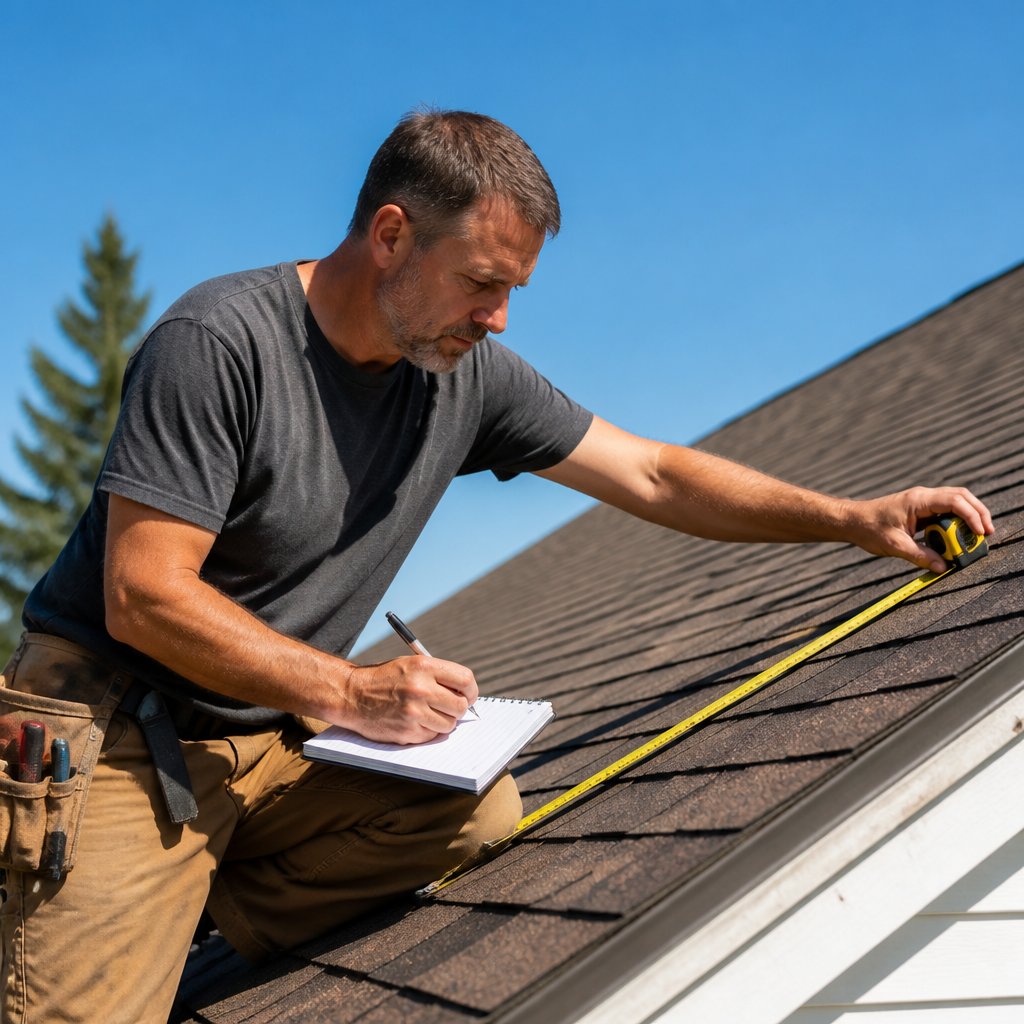
Material waste at the installation stage is almost entirely avoidable through accurate measurement and realistic waste factor application. A standard waste factor for a simple gable roof is around five percent; a complex roof with multiple hips, valleys, and dormers may warrant 10 to 15 percent. Over-ordering “just in case” beyond these factors results in wasted material that cannot be returned, adding both cost and disposal burden without any benefit.
Extending Existing Roof Life as the Ultimate Waste Avoidance Strategy
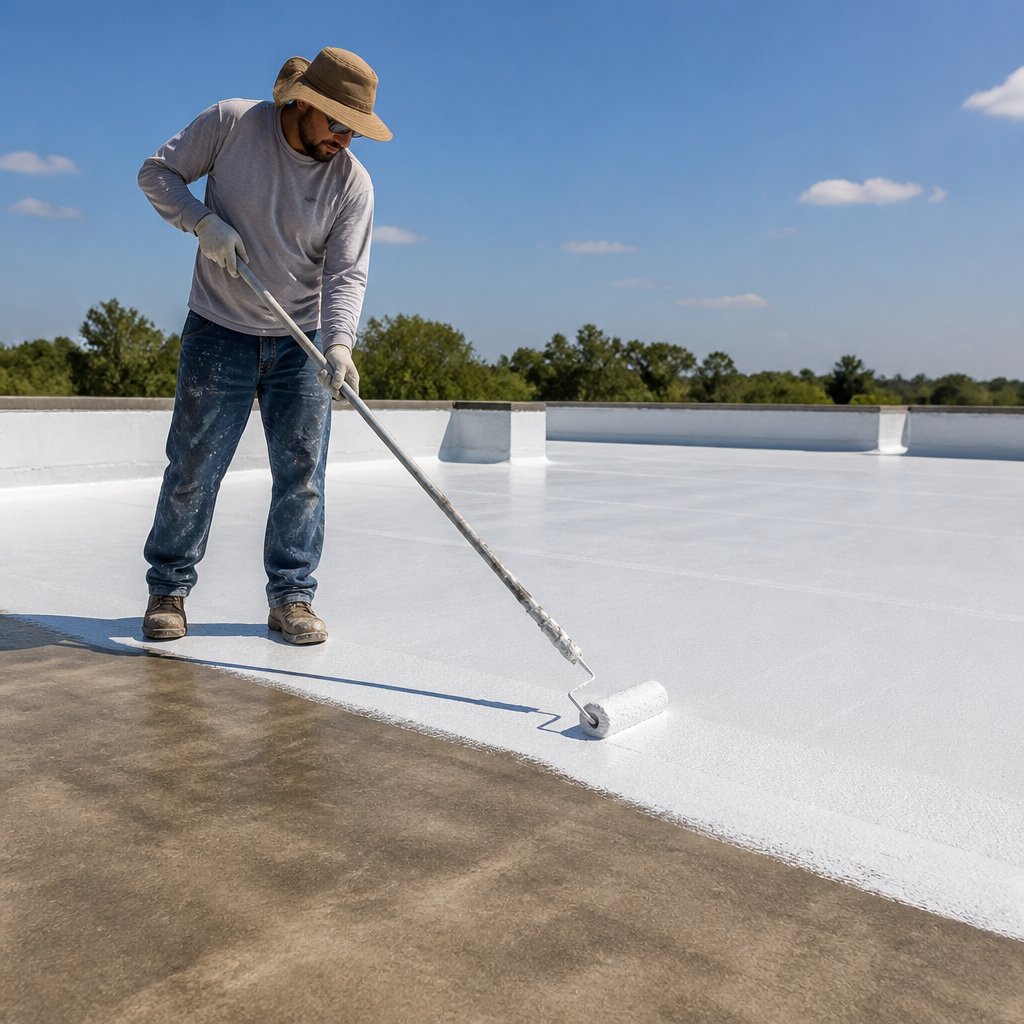
When a roof is still structurally sound but showing early signs of wear, coating rather than replacing it is the lowest-waste option available. Elastomeric, silicone, and acrylic roof coatings applied over existing membranes or metal panels can add five to fifteen years of service life without generating any tear-off waste at all. For low-slope and flat roofs in particular, coatings are widely used precisely because they defer the full replacement event that generates most of the lifetime waste from a roof.
Targeted Repairs Over Full Replacements
Replacing specific failed sections, re-flashing problem penetrations, or patching localized damage extends overall roof life while generating only a fraction of the waste a full tear-off would produce. This approach is most effective on metal and single-ply membrane systems, where failures tend to be localized rather than spread uniformly across the surface. Asphalt shingle systems eventually reach a threshold where patching is no longer economical, but recognizing that threshold accurately can still buy several more years before a full replacement becomes unavoidable.
Connecting Waste-Minimizing Material Choices to Disposal Planning
Even the most carefully chosen, long-life materials will eventually require disposal. Understanding the environmental context for that future event is part of whole-life planning. The article on environmental considerations for disposing of asphalt shingles covers the Illinois regulatory framework for RAS recycling, and the guide on how to recycle old metal roof panels addresses the scrap pathway for metal systems when they eventually reach end of life. For the broader perspective on why recycling in the roofing industry still falls short of its potential, the existing article at why roofing recycling efforts keep falling short provides useful context.
When a replacement project eventually does move forward, Zap Dumpsters Peoria works as a sourcing partner for roofing waste disposal, helping homeowners and contractors in Peoria find the right container for whatever material is being removed.
Minimizing Roofing Waste Through Material Selection Near You in Peoria
Minimizing roofing waste through material selection is primarily a lifespan game: fewer replacements over a building’s lifetime produce less total waste than any in-the-moment disposal decision. Choosing long-life materials with established recycling pathways, ordering accurately, and extending existing roofs through coatings and targeted repairs all reduce the scale of the waste event when replacement eventually comes. When that day arrives, Zap Dumpsters Peoria sources containers near you sized for whatever material your project produces.
How Do You Minimize Roofing Waste Through Material Selection FAQs
How do you minimize roofing waste through material selection?
You minimize roofing waste through material selection by choosing long-life materials like metal roofing or high-quality architectural shingles, selecting options with established recycling pathways, and designing for deconstruction so material stays recyclable at end of life.
Which roofing material produces the least lifetime waste?
Metal roofing produces the least lifetime waste because of its 50-to-70-plus-year service life and 100 percent recyclability at end of life, meaning fewer replacements and no landfill destination for removed material.
Can roof coatings reduce roofing waste?
Yes. Elastomeric and silicone coatings applied over existing roofing can extend service life by five to fifteen years, deferring the full tear-off event and the waste stream it produces entirely.
How much should I over-order when buying roofing materials?
A five percent waste factor is appropriate for simple gable roofs; complex roofs with many hips, valleys, and dormers typically warrant 10 to 15 percent — over-ordering beyond these ranges creates unnecessary material waste and disposal cost.
Does the type of roofing installation method affect future waste?
Yes. Mechanically attached systems like standing seam metal are easier to remove cleanly for recycling than fully adhered systems, making attachment method a long-term recyclability consideration worth specifying at installation.
How Do You Minimize Roofing Waste Through Material Selection Citations
- Metal Roofing Alliance, Recyclability: https://www.metalroofing.com/recyclability