
- Key Takeaways:
- An electric demolition hammer or rented gas jackhammer is the most effective tool for breaking up slabs thicker than 3 inches.
- A sledgehammer works well on thin, unreinforced concrete but is extremely labor-intensive on anything thicker.
- Cutting score lines with a circular saw and diamond blade before breaking reduces the amount of jackhammer work needed.
- PPE — eye protection, hearing protection, steel-toed boots, and gloves — is not optional when breaking concrete.
- Once the concrete is broken, sizing the right disposal container is the next decision; most residential DIY quantities fit a 10-yard heavy debris dumpster.
Breaking up concrete for DIY removal requires matching the right tool to the thickness and reinforcement of the slab. A sledgehammer handles thin sidewalk sections and shallow patio pads reasonably well. Anything thicker than 3 to 4 inches, or any slab with embedded rebar or wire mesh, calls for a demolition hammer or a rented jackhammer. Using the wrong tool does not just make the job slower — it risks injury and leaves you with irregular, hard-to-handle pieces that complicate loading and disposal.
Choosing the Right Breaking Tool for Your Concrete Project
The two main variables that determine your tool choice are slab thickness and reinforcement. A 2-inch decorative patio overlay behaves completely differently from a 6-inch reinforced garage floor. Getting this assessment right before renting or buying anything saves both time and money.
| Slab Type | Best Primary Tool | Notes |
|---|---|---|
| Thin sidewalk or patio (2–3 inches, unreinforced) | Sledgehammer (8–12 lb) | Labor-intensive; works for small areas |
| Standard driveway or patio (4 inches, minimal wire mesh) | Electric demolition hammer | Most DIY-friendly option; rentable |
| Thick garage floor or commercial slab (5–6+ inches) | Gas-powered jackhammer | Faster but heavier; consider renting |
| Reinforced slab with rebar | Demolition hammer + bolt cutters or angle grinder | Rebar must be cut separately after concrete breaks |
Sledgehammer: The Low-Tech Option
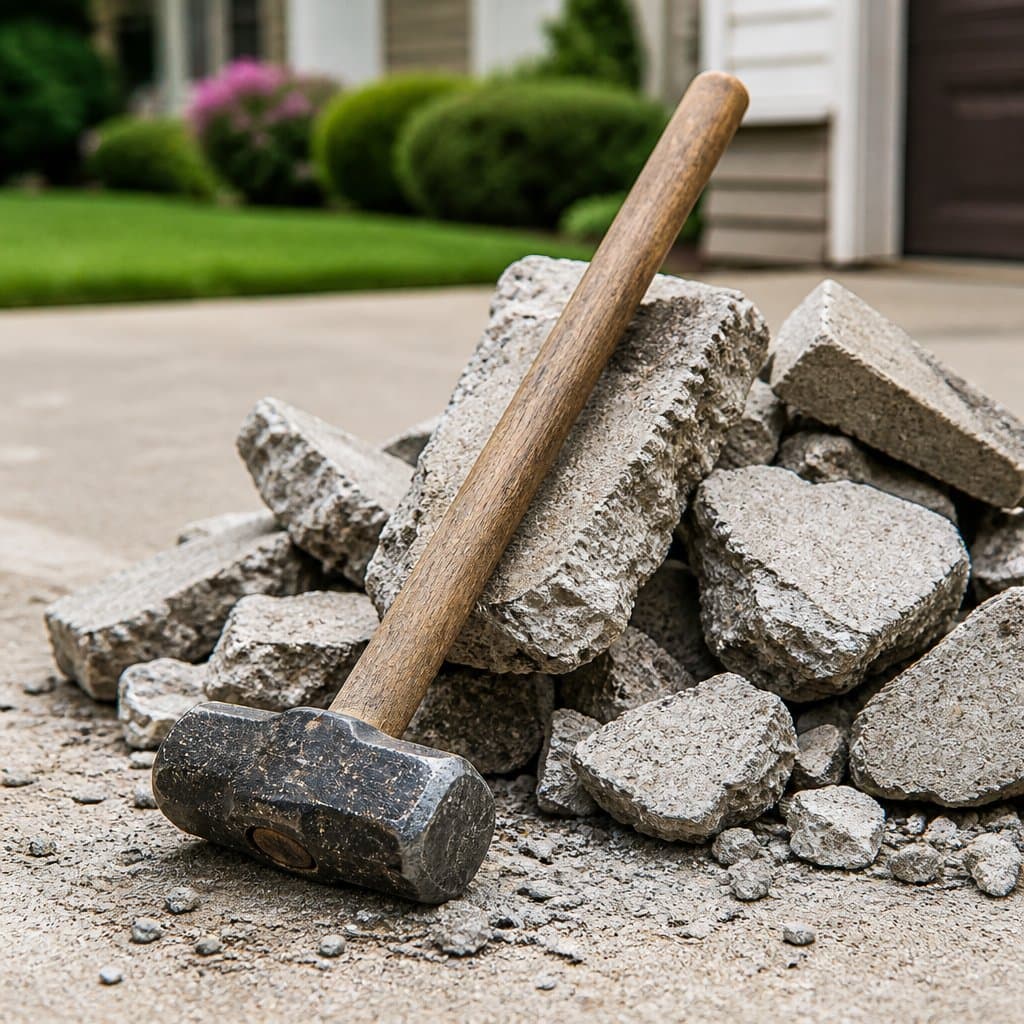
An 8 to 12-pound sledgehammer is the most accessible starting point for small concrete removal jobs. No fuel, no power cord, no rental fee. The trade-off is that it demands significant physical effort and works best on unreinforced concrete no thicker than about 3 inches. On thicker slabs, a sledgehammer may crack the surface without breaking through cleanly, leaving large, interlocked fragments that are hard to pry apart. For a small set of steps, a garden border, or a cracked sidewalk section that is already partially broken, a sledgehammer is a reasonable choice. For a driveway or garage floor, it is the wrong tool.
Electric Demolition Hammer: The Best DIY Option for Most Projects
An electric demolition hammer, sometimes called an electric jackhammer or breaker, is the most practical choice for most residential DIY concrete removal. These tools weigh between 12 and 25 pounds depending on the model and drive a pointed chisel bit or wide flat bit through the concrete using rapid vertical impacts. Most home improvement rental centers carry them at reasonable daily rates. Electric demolition hammers handle standard 4-inch residential slabs efficiently without the exhaust fumes of gas-powered equipment, making them more suitable for work in enclosed areas like garages.
Gas-Powered Jackhammer: For Larger or Thicker Projects
Gas-powered jackhammers deliver more impact force than electric demolition hammers and are better suited for thicker commercial-grade slabs or large driveway tear-outs where the job would take too long with an electric unit. They are also heavier, noisier, and generate exhaust, which makes them less convenient for confined spaces. Renting rather than buying is almost always the right call for a DIY project since the application is narrow and the cost per use is high.
Scoring Lines Before You Break
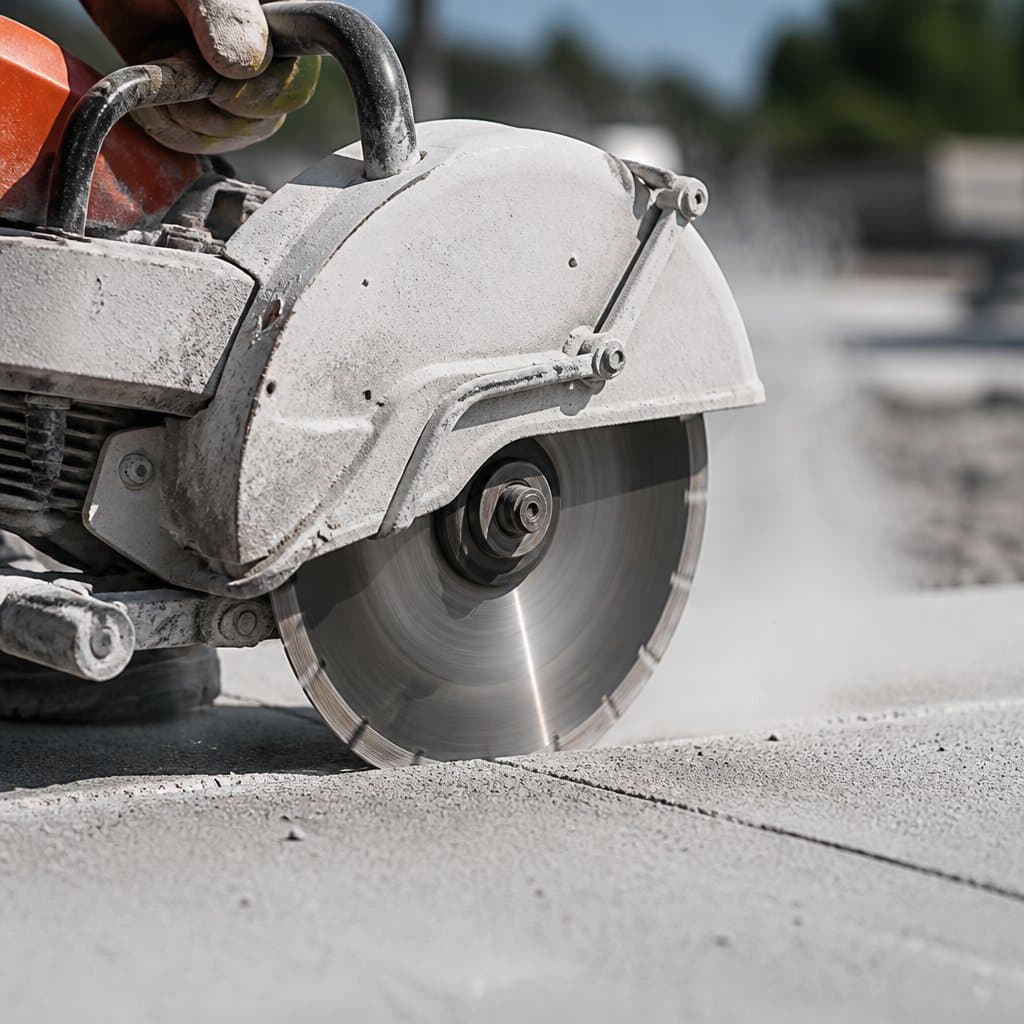
One of the most effective ways to reduce the amount of jackhammer work on a larger slab is to cut scoring lines first with a circular saw fitted with a diamond-tipped concrete cutting blade. Cut a grid of lines approximately 12 to 18 inches apart at a depth of roughly one-third of the slab thickness. These score lines create controlled fracture paths so that when the demolition hammer contacts the concrete between the lines, it breaks along predictable lines rather than producing random, large, interlocked fragments.
Using a Pry Bar After Breaking
Once the slab is broken, a long-handled pry bar or wrecking bar is essential for lifting and separating pieces. Concrete fragments lock together after breaking, and trying to lift them by hand without levering them apart first is both inefficient and hard on your back. A solid pry bar also helps expose and cut embedded wire mesh or rebar before loading pieces into a container.
PPE Requirements for Breaking Concrete
Personal protective equipment is not optional when breaking concrete — flying fragments, crystalline silica dust, vibration, and noise are all genuine hazards that cause real injuries when PPE is skipped. According to the Occupational Safety and Health Administration, workers operating jackhammers must wear safety glasses, an impact-resistant face shield, and steel-toed safety shoes at a minimum[1]. Hearing protection is also required due to the intense noise levels of pneumatic and electric breakers, and gloves reduce vibration-related fatigue.
Silica Dust: The Hidden Hazard of Concrete Breaking
Breaking concrete releases crystalline silica dust, which is invisible and odorless but causes serious long-term lung damage with repeated exposure. OSHA standards require respiratory protection when breaking concrete outdoors for more than four hours per shift, and when breaking concrete indoors, additional ventilation is typically needed[1]. For a one-time DIY project in the open air, a dust mask rated N95 or higher is a reasonable practical precaution, even for shorter work periods.
Managing Piece Size for Disposal
The size of the broken pieces matters as much as the tools used to create them. Large, irregular fragments are harder to load, take up more space due to air gaps, and can exceed the safe load capacity of a wheelbarrow or two-person carry. Breaking pieces down to roughly 12 to 18 inches across makes them manageable for one or two people to move and load without equipment, and they stack more efficiently in a container.
| Piece Size | Load Efficiency | Handling Requirement |
|---|---|---|
| Over 24 inches | Poor — large air gaps, hard to stack | May require mechanical handling |
| 12–18 inches | Good — stacks reasonably well | Two-person carry or wheelbarrow |
| Under 12 inches | Best — dense, efficient loading | One person with wheelbarrow or bucket |
When to Stop Breaking and Start Loading
Over-breaking concrete into very small pieces has diminishing returns. Concrete dust and very fine fragments are harder to manage, create more silica dust exposure, and do not load into a container significantly more efficiently than pieces that are already palm-sized or smaller. Breaking to roughly 12-inch chunks is the practical sweet spot for most residential DIY tear-outs.
When to Stop DIYing and Call a Contractor
DIY concrete removal makes economic sense for most smaller slabs up to about 200 to 300 square feet at standard residential thickness. Beyond that, the physical labor, tool rental costs, and time investment often tip the calculation toward hiring a contractor. Thick commercial slabs, heavily reinforced concrete, concrete in confined spaces with limited equipment access, and any project where disposal logistics are complex are all better handled professionally. The guide on what size dumpster you need for concrete disposal covers the next step once your concrete is broken — matching the right container to the weight of material you have produced.
Zap Dumpsters Peoria works as a sourcing partner for concrete disposal containers in the Peoria area, helping DIYers and contractors source the right heavy debris container once the breaking work is done.
DIY Concrete Breaking Tools and Disposal Near You in Peoria
The right tool for breaking up concrete depends on the slab’s thickness and whether it contains rebar or wire mesh. For most residential DIY projects, an electric demolition hammer combined with scoring lines and a pry bar handles the work efficiently. Full PPE throughout the job — eye and hearing protection, steel-toed boots, and respiratory protection for longer sessions — keeps the work safe from start to finish. Once the concrete is broken to manageable pieces, Zap Dumpsters Peoria sources the right heavy debris container near you so the cleared material is off your property and on its way to proper disposal.
What Tools Do You Need to Break Up Concrete for DIY Removal FAQs
What tools do you need to break up concrete for DIY removal of a standard driveway?
For a standard 4-inch residential driveway, the main tools you need to break up concrete for DIY removal are a rented electric demolition hammer, a pry bar for separating pieces, and a circular saw with a diamond blade for cutting score lines first.
Can a sledgehammer break up a concrete driveway?
A sledgehammer can break thin, unreinforced concrete but is impractical for standard driveways at 4 inches or thicker — the effort required is extreme and the results are often large, hard-to-handle fragments.
Do you need special PPE to break up concrete?
Yes. OSHA requires safety glasses, an impact-resistant face shield, and steel-toed shoes as a minimum when operating jackhammers, plus hearing protection due to noise levels and respiratory protection to manage crystalline silica dust.
What size pieces should I break concrete into for easy loading?
Pieces in the 12-to-18-inch range are the practical sweet spot — small enough for two people to handle with a wheelbarrow and large enough that you are not over-breaking and creating excessive dust.
When is it better to hire a contractor instead of breaking concrete yourself?
Projects larger than roughly 200 to 300 square feet, slabs thicker than 5 inches, heavily reinforced concrete, and any job with difficult equipment access are generally better handled by a contractor than attempted as DIY removal.
What Tools Do You Need to Break Up Concrete for DIY Removal Citations
- Occupational Safety and Health Administration, Hand and Power Tools — Overview: https://www.osha.gov/hand-power-tools