
- Key Takeaways:
- Fall protection is required for all roofing work where workers are 6 feet or more above a lower level under OSHA standards.
- A controlled drop zone with barriers set up before the tear-off begins prevents injuries to ground crew and bystanders.
- Magnetic nail sweeps after the job are essential — stray roofing nails are nearly invisible in grass and gravel.
- Older roofs may contain asbestos or lead-based materials that require separate, regulated handling.
- Zap Dumpsters Peoria helps source containers positioned to reduce debris handling distance and risk.
The safety tips for roofing debris disposal cover three distinct phases: setting up a safe work zone before the tear-off begins, managing debris movement and loading safely during the job, and sweeping for hidden hazards after the container leaves. Missing any one of these phases creates risks that often show up as injuries or property damage days after the project is finished.
Phase One: Setting Up Before the Tear-Off Starts
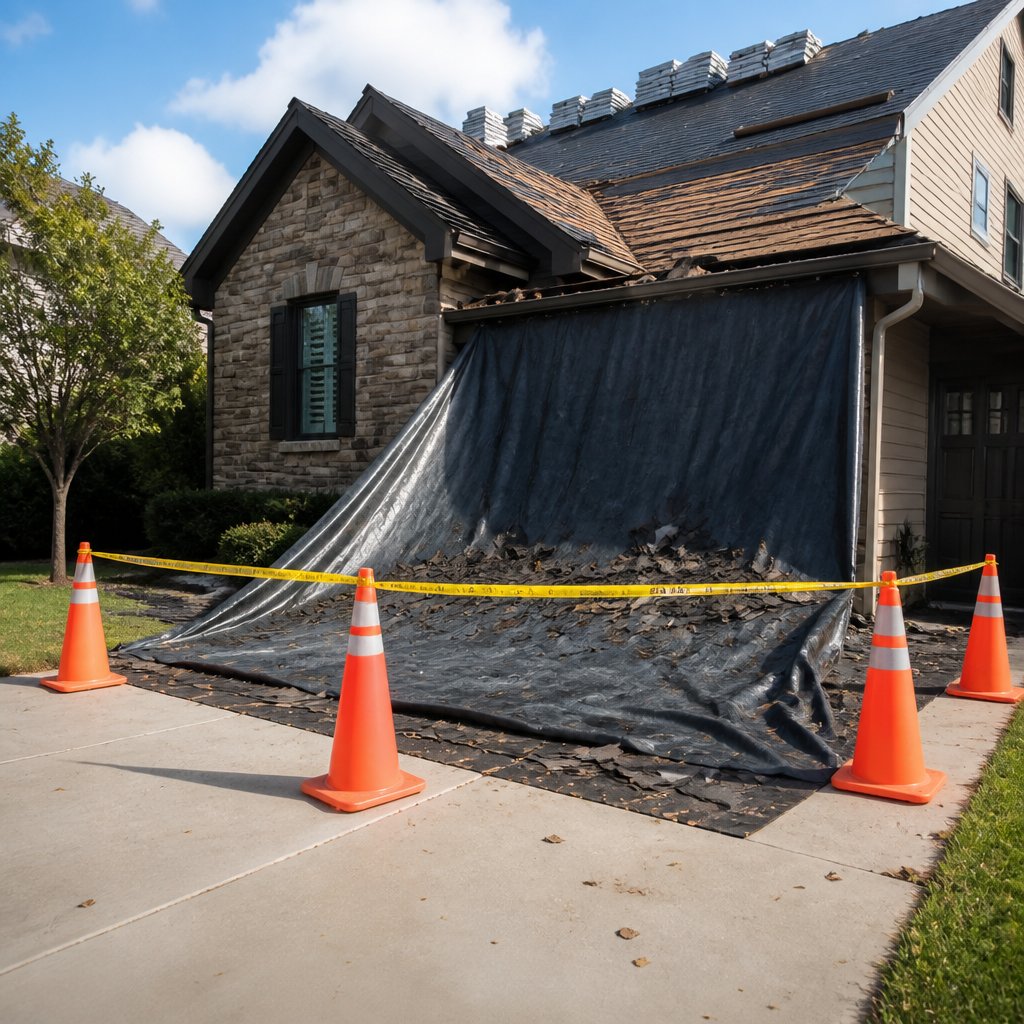
Most roofing safety failures are the result of planning gaps rather than mistakes made in the moment. The time to establish a safe debris zone is before any material comes off the roof.
OSHA Fall Protection Requirements for Roofing Work
Under OSHA standard 29 CFR 1926.501(b)(13), workers engaged in residential construction activities six feet or more above lower levels must be protected by guardrail systems, safety net systems, or personal fall arrest systems[1]. For roofing work specifically, this means a properly fitted full-body harness connected to an approved anchor point on the roof deck is required before any tear-off work begins. Falls remain the leading cause of construction fatalities, and no production schedule justifies skipping this step.
Defining a Controlled Drop Zone
Before the first shingle comes off, identify the specific area of the property where debris will land when tossed from the roof. This zone should be the least-trafficked side of the building, away from doors, driveways, utility connections, and walkways. Once identified, it should be physically barricaded with caution tape, cones, or temporary fencing, and all ground crew, bystanders, vehicles, and pets should be kept clear for the duration of the job.
Dumpster Placement for Minimal Handling Distance
Positioning the container as close as possible to the drop zone reduces the physical distance debris travels before it reaches the dumpster, which in turn reduces the risk of material scattering across the property. The delivery truck needs enough clearance to place and later retrieve the container, so flag any overhead wires, low tree branches, or tight driveway conditions when working with your sourcing partner ahead of delivery day.
Phase Two: Safe Debris Handling During the Job
PPE for Everyone in the Work Zone
Everyone present on site during a roofing tear-off, including ground crew loading debris and anyone within the drop zone, should wear a hard hat. Cut-resistant gloves protect against shingle edges and embedded nails. Safety glasses prevent flying grit and dust from causing eye injuries, particularly during the initial tear-off when dried granules become airborne. Sturdy closed-toe boots with good grip are non-negotiable for anyone working in debris piles.
Loading Containers Safely
Never send anyone into a loaded dumpster to compact or rearrange roofing debris — this is one of the most dangerous behaviors on a roofing job site and a major cause of crush and fall injuries. Material should be spread evenly as it goes in, with heavier shingle loads placed toward the bottom and center. Large pieces of flashing, ridge cap material, and plywood decking should be broken or cut to manageable lengths before loading to prevent dangerous overhangs above the container wall.
Communicating Tosses and Drops Clearly
Every piece of material tossed or slid off a roof edge should be announced before release, particularly on jobs where multiple workers are handling debris simultaneously. A simple verbal call before each toss, combined with a clear view that the drop zone is unoccupied, prevents the most common struck-by injuries on roofing sites.
| Safety Item | Who It Applies To | Why It Matters |
|---|---|---|
| Fall arrest harness | All roof workers | OSHA-required; prevents leading-edge falls |
| Hard hat | All ground crew within the drop zone | Protects against falling shingles and debris |
| Cut-resistant gloves | Everyone handling debris | Shingle edges and embedded nails cause deep cuts |
| Dust mask or respirator | Anyone in visible dust zones | Shingle granules and older felts can contain silica |
| Sturdy closed-toe boots | All workers on roof and ground | Protects against nail punctures and ankle rolls on debris piles |
Identifying and Isolating Hazardous Materials
Asbestos in Pre-1980 Roofing
Roofing materials installed before 1980 may contain asbestos in the felt underlayment, pipe insulation, or even in the shingles themselves. Asbestos-containing materials cannot go into a standard C&D dumpster and require testing, specialized handling, and regulated disposal. If there is any uncertainty about the age of the roofing materials being removed, have a sample tested before tear-off begins rather than after the debris is already mixed in a container.
Treated Wood, Lead Paint, and Chemical Contamination
Decking material treated with CCA-based preservatives, painted surfaces with possible lead-based coatings, and roofing materials contaminated by chemical spills all require handling protocols beyond standard C&D disposal. These should be kept separate from clean roofing debris and taken to the appropriate regulated facility rather than mixed into a general tear-off load.
Phase Three: Post-Job Safety Sweep
The magnetic nail sweep after a roofing job is not optional — it is what separates a completed project from a liability waiting to happen. Roofing nails scatter much further than most crews expect, ending up in lawns, flower beds, driveways, and gutters, where they are invisible until they cause a punctured tire, a foot injury, or a pet emergency days or weeks later.
How to Run an Effective Magnetic Sweep
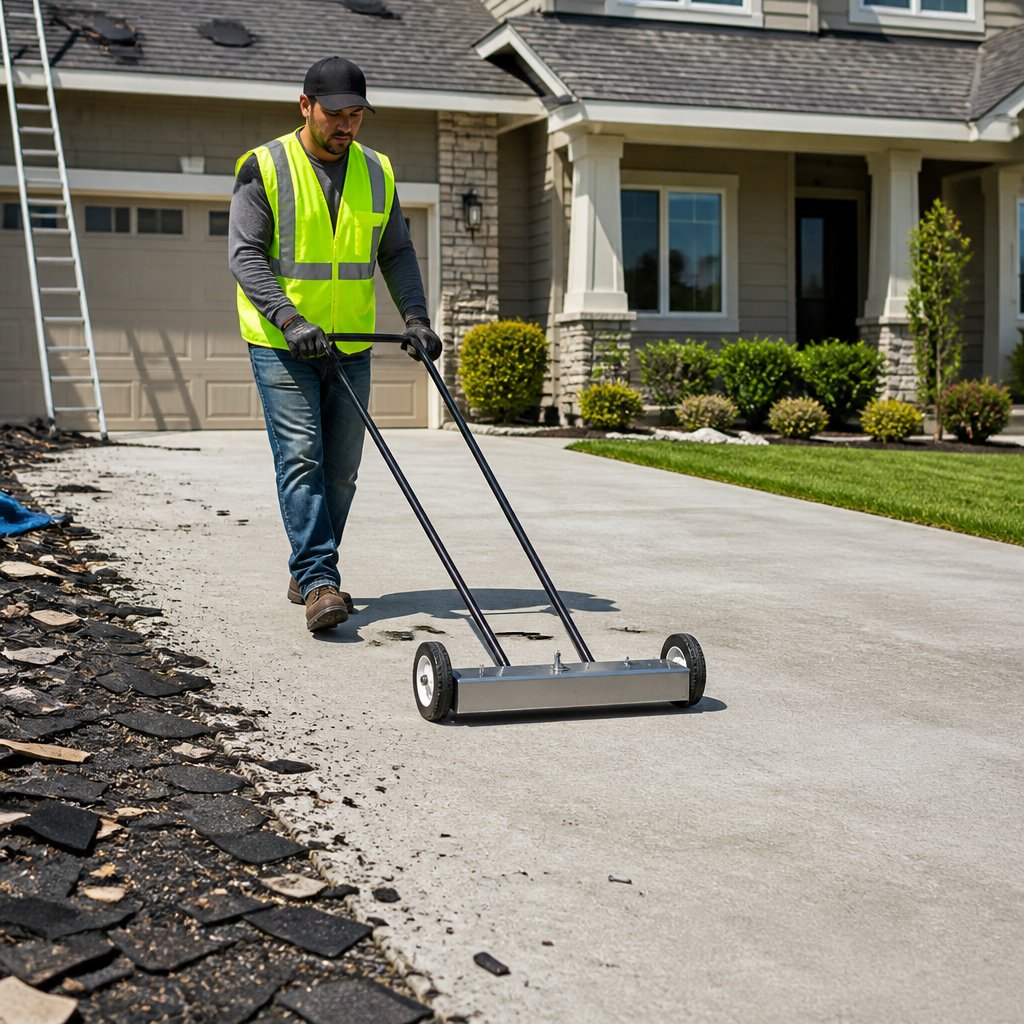
Roll a wheeled magnetic sweeper across the entire work area using a grid pattern: first in one direction, then cross-sweep at 90 degrees. This two-pass method catches nails that were lying flat parallel to the first sweep direction. Pay particular attention to grass areas, gravel driveways, and landscaping beds, where nails can partially sink and become impossible to spot by eye. Use a handheld magnetic wand for tight spaces like along fence lines, under vehicles, and around downspouts where rolling sweepers cannot reach.
The detailed protocols for debris handling during a roofing project, including nail sweep specifics, are covered in the guide on roofing debris best practices for dumpsters and nail cleanup. And for the dumpster placement and sizing decisions that reduce debris handling risk in the first place, the guide on what dumpster options are available for residential roof projects covers the container comparison. For understanding how debris weight affects safety logistics, see the sizing formula in our article on estimating dumpster size and weight for a roof tear-off.
Zap Dumpsters Peoria works as a sourcing partner for roofing waste disposal, helping Peoria-area homeowners and contractors place containers where they reduce handling distance and debris scatter risk from the start of the job.
Roofing Debris Disposal Safety Tips Near You in Peoria
The safety tips for roofing debris disposal apply at every stage, from fall arrest setup before the first shingle comes off to the final magnetic sweep after the container is gone. Ground crew PPE, clear communication before every toss, proper hazardous material isolation, and a thorough nail sweep are the four pillars that keep a roofing project safe from start to finish. Zap Dumpsters Peoria sources containers near you positioned to support safe, efficient debris handling on every Peoria-area roofing project.
Safety Tips for Roofing Debris Disposal FAQs
What are the safety tips for roofing debris disposal that every homeowner should know?
The most important safety tips for roofing debris disposal are setting up a controlled drop zone before tear-off, requiring PPE for all workers and ground crew, and running a thorough magnetic nail sweep across the entire property after the container is removed.
What does OSHA require for fall protection during a roofing tear-off?
OSHA standard 29 CFR 1926.501(b)(13) requires that residential construction workers six feet or more above lower levels be protected by a guardrail system, safety net, or personal fall arrest system during all roofing work.
Can you mix asbestos-containing roofing materials into a standard dumpster?
No. Asbestos-containing materials require testing, specialized handling, and regulated disposal through a licensed asbestos abatement process — they cannot go into a standard C&D dumpster.
Why is the magnetic nail sweep so important after a roofing job?
Roofing nails scatter far beyond the immediate work zone during a tear-off and are nearly invisible in grass and gravel, where they cause tire punctures, foot injuries, and pet hazards days after the project ends.
How should dumpster placement reduce safety risk on a roofing job?
Placing the container close to the designated drop zone minimizes the distance debris travels across the property, reducing scatter and the risk of material landing outside the controlled zone.
Safety Tips for Roofing Debris Disposal Citations
- Occupational Safety and Health Administration, Fall Protection in Residential Construction (29 CFR 1926.501): https://www.osha.gov/residential-fall-protection