
- Warehouse cleanup strategies managing pallets and packaging need to address both safety compliance and disposal volume together.
- OSHA requires storage areas to stay free from material accumulation that creates tripping, fire, or pest hazards.[1]
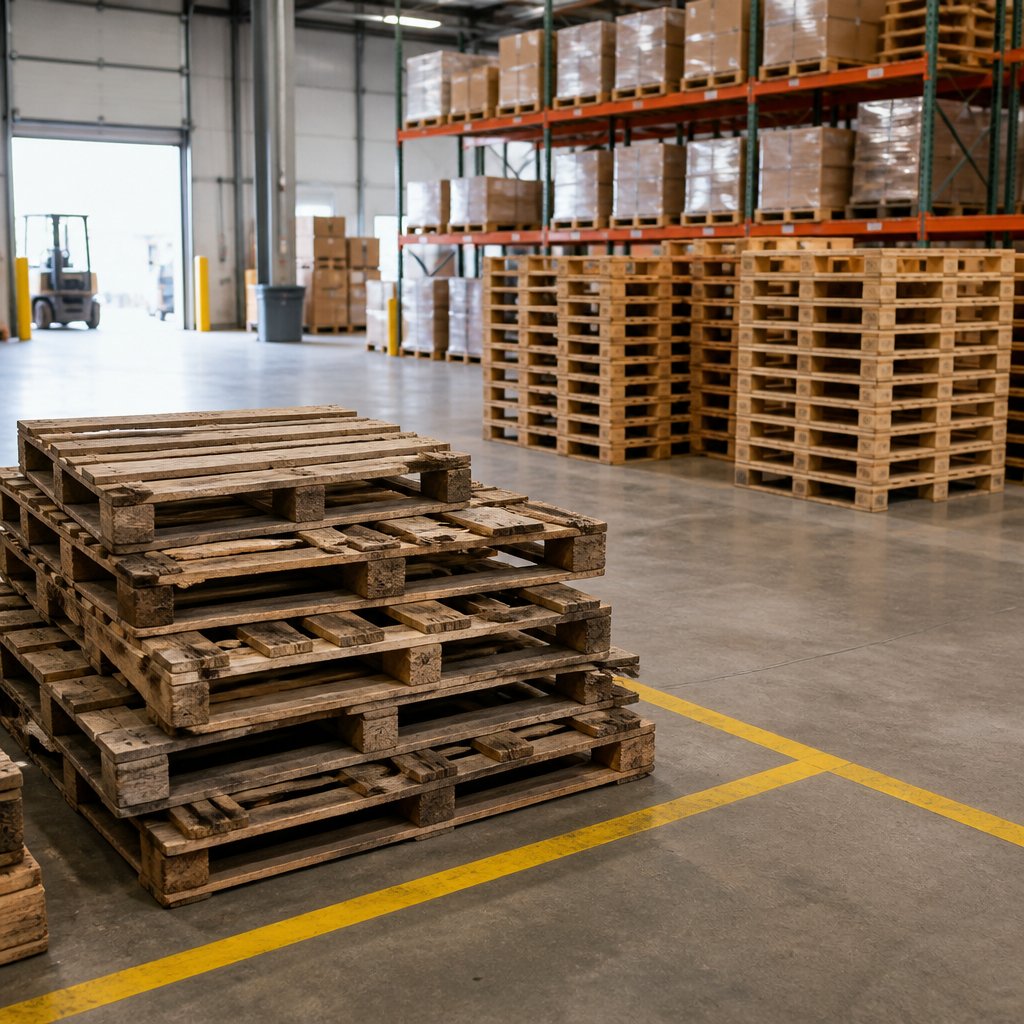
- Damaged pallets should be pulled from circulation immediately rather than stacked with usable ones.
- Packaging waste (shrink wrap, cardboard, strapping) often outweighs pallet waste by volume in most warehouses.
- A dedicated cleanup schedule prevents the kind of accumulation that leads to OSHA housekeeping citations.[1]
Why Warehouse Cleanup Strategies Managing Pallets and Packaging Matter
Warehouses generate a steady, almost constant stream of two very different waste types: damaged or excess pallets, and the packaging materials — cardboard, shrink wrap, strapping — that come off every incoming and outgoing shipment. Warehouse cleanup strategies managing pallets and packaging need to address both, since letting either accumulate creates safety hazards well beyond just looking cluttered.
OSHA’s general materials handling standard requires that storage areas be kept free from accumulation of materials that constitute hazards from tripping, fire, explosion, or pest harborage.[1] This isn’t just a suggestion — it’s a specific compliance requirement that inspectors actively look for, and pallet and packaging clutter are among the most common ways warehouses run afoul of it.
These aren’t abstract concerns either. Warehouses and distribution facilities remain among the more frequently inspected workplace categories, and material handling and housekeeping violations consistently rank among the most commonly cited issues once an inspection actually happens. Building good habits around pallet and packaging management isn’t just about avoiding a citation — it directly reduces day-to-day injury risk for anyone moving through the facility on foot or operating equipment.
Zap Dumpsters Peoria works as a sourcing partner for Peoria warehouses and distribution facilities, helping connect operations with the right container size for consistent packaging waste removal.
Two Waste Streams, Different Handling
| Waste Type | Handling Approach | Volume Pattern |
|---|---|---|
| Damaged pallets | Pull from service immediately; recycle or dispose separately | Irregular, depends on handling volume |
| Cardboard/packaging | Break down and bale or dumpster regularly | Steady, near-constant volume |
| Shrink wrap/strapping | Separate collection if recycling program available | Steady, tied to shipment volume |
Pallet Management
Pallets stored in tiers must be stacked, blocked, interlocked, and limited in height so they remain stable and secure against sliding or collapse.[1] Damaged pallets — broken boards, protruding nails, cracked stringers — should be pulled from active circulation as soon as they’re identified rather than left mixed in with usable stock, both for safety and to avoid the pile of “maybe usable” pallets that tends to accumulate in an unused corner of most warehouses. A quick visual inspection at the point a pallet is unloaded, rather than waiting until it’s already been stacked and mixed with others, catches most damage before it becomes a hazard further down the line.
Packaging Waste
Cardboard, shrink wrap, and strapping typically outweigh pallet waste by sheer volume in an active warehouse, since nearly every incoming and outgoing shipment generates some. Breaking down cardboard immediately rather than letting it pile up loose saves significant dumpster space and makes the difference between a container that lasts a full week and one that overflows by Wednesday.
Fire and Pest Risks from Accumulated Packaging
Cardboard and packaging materials aren’t just a housekeeping nuisance — they’re combustible material that adds real fuel load when allowed to accumulate beside equipment, electrical panels, or high-traffic work areas. OSHA’s housekeeping requirement specifically calls out fire hazard alongside tripping and pest harborage as reasons storage areas need regular clearing.[1] A warehouse that lets cardboard pile up “temporarily” in a corner beside a loading dock is creating exactly the kind of hazard that requirement is meant to prevent.
Pest issues follow a similar pattern. Cardboard and packaging materials, especially anything that’s absorbed moisture, attract pests looking for both shelter and nesting material. Once an infestation takes hold in a stack of stored packaging, it tends to spread into surrounding inventory, turning a simple housekeeping lapse into a much costlier problem involving pest control and potentially damaged product.
Keeping Aisles and Storage Areas Clear
Where mechanical handling equipment like forklifts is used, sufficient safe clearances must be maintained for aisles, loading docks, and doorways, and these areas must stay free of obstructions that could create a hazard.[1] Pallets and packaging waste that creep into these clearances are a common and preventable safety issue, and they’re also one of the fastest ways a warehouse can end up cited during an inspection.
Quick Reference: Warehouse Cleanup Priorities
| Priority | Action |
|---|---|
| Highest | Clear aisles and dock clearances of any obstruction |
| High | Pull and separate damaged pallets from usable stock |
| High | Break down cardboard as it accumulates, don’t let it pile loose |
| Medium | Establish a fixed schedule for dumpster service based on shipment volume |
| Medium | Set up separate collection for shrink wrap/strapping if volume supports it |
Sizing Dumpster Service for Warehouse Volume
Warehouse packaging waste tends to scale directly with shipment volume, which means a container sized for a slow month can be badly undersized during a busy season. Reviewing actual cardboard and packaging output over a representative stretch of weeks, rather than a single slow or busy period, gives a more reliable basis for choosing container size and pickup frequency. Facilities with predictable seasonal peaks — holiday shipping surges, back-to-school inventory pushes, or similar cyclical patterns — benefit from planning for a temporary bump in service ahead of time rather than reacting once the existing container is already overflowing.
It’s also worth accounting for the physical footprint packaging waste takes up relative to its actual weight. Cardboard and shrink wrap are bulky but light, meaning a dumpster can reach visual capacity well before it approaches any weight-based limit. This is different from many other commercial waste streams and worth keeping in mind when comparing container sizes, since a facility generating mostly packaging waste may need more volume capacity than a facility of similar size generating denser material.
Baling as an Alternative for High-Volume Cardboard
Warehouses generating especially high cardboard volume sometimes find that a baler, paired with less frequent dumpster pickup for what remains, works out more cost-effective than dumpster service alone. This isn’t the right fit for every facility, but it’s worth evaluating once cardboard volume reaches a certain scale. Baled cardboard also tends to have better resale value to recyclers than loose material, since it’s already compressed and sorted, which can turn what was previously a pure expense into a small revenue stream for high-volume operations.
Warehouse Cleanup Strategies Near You
Warehouse cleanup strategies managing pallets and packaging come down to consistent habits — clearing regularly, separating damaged pallets, and sizing service around actual shipment volume rather than guesswork. Facilities that build these habits into routine operations, rather than treating cleanup as an occasional catch-up task, tend to avoid both safety citations and the disposal cost spikes that come from letting material accumulate unchecked.
If your facility handles heavier materials alongside general packaging waste, our guide on choosing the right commercial dumpster service covers how to match container size to mixed waste types.
Zap Dumpsters Peoria works as your sourcing partner for commercial dumpster service, helping connect your warehouse with the right container near you.
Warehouse Cleanup Strategies Managing Pallets and Packaging FAQs
How should damaged pallets be handled in a warehouse?
Damaged pallets should be pulled from active circulation immediately and stored separately from usable stock, then recycled or disposed of rather than left mixed in with the working supply.
What’s the biggest packaging waste source in most warehouses?
Cardboard is typically the largest volume contributor, followed by shrink wrap and strapping, and breaking cardboard down immediately helps manage dumpster capacity significantly.
Are there OSHA rules for warehouse pallet storage?
Yes, OSHA requires stored materials including pallets to be stacked, blocked, and limited in height so they remain stable, with storage areas kept free from hazards like tripping and fire risk.
How often should a warehouse schedule dumpster pickup?
Pickup frequency should scale with shipment volume, and reviewing actual packaging output over several weeks gives a more reliable basis than assuming a fixed schedule fits year-round.
Is baling cardboard worth it for warehouse cleanup strategies managing pallets and packaging?
For high-volume facilities, baling can reduce dumpster needs and sometimes lower overall disposal costs, though it requires evaluating whether the volume justifies the equipment investment.
Warehouse Cleanup Strategies Managing Pallets and Packaging Citations
- OSHA, 29 CFR 1910.176 — Handling Materials, General — osha.gov