
Key Takeaways
- The faster and more systematically you restore a rental unit after a tenant leaves, the shorter your vacancy — and vacant days cost you real money.
- A methodical walk-through on day one — before anything is touched — is both legal protection and the foundation of your restoration plan.
- Prioritize repairs in order: safety and structural first, then systems (plumbing, HVAC, electrical), then cosmetic work like paint and flooring.
- Illinois law requires landlords to return a unit to a habitable condition before re-renting — and this standard is not just ethical, it is enforceable.[1]
- Efficient debris removal using a roll-off dumpster keeps the restoration timeline moving without waiting for multiple junk removal pickups.
This guide is part of our resource hub on tenant cleanouts and turnover cleanups. See also our contractor dumpster rental options in Peoria.
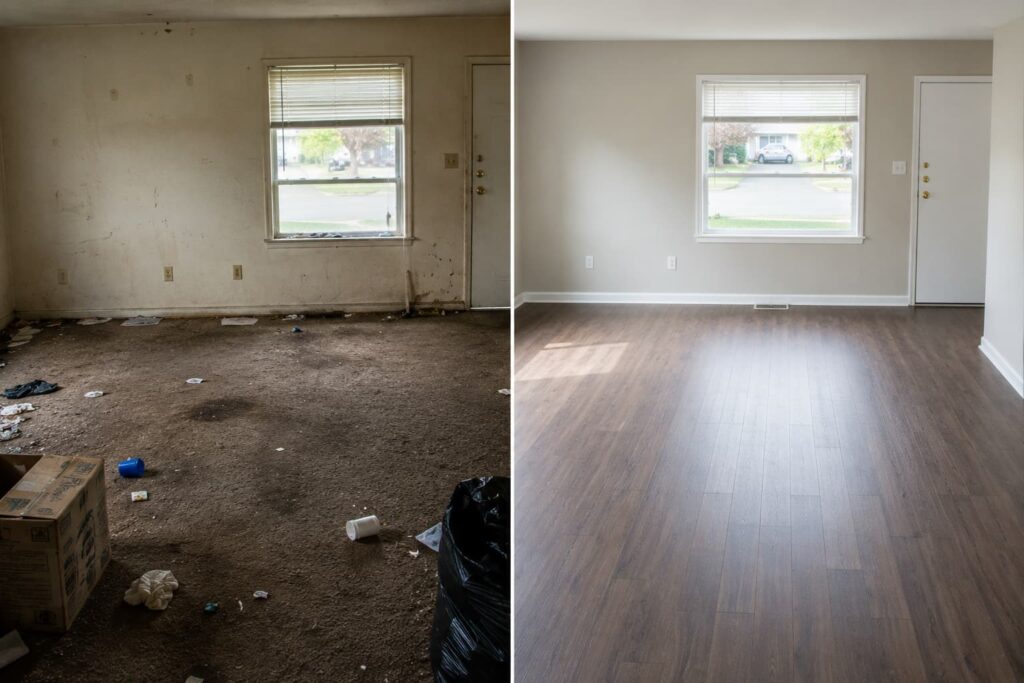
Restoring rental units after a tenant leaves is the most time-sensitive and financially significant task in any Peoria landlord’s recurring workflow. Every day a unit sits in disrepair is a day of lost rental income — and in a competitive Central Illinois rental market, a well-restored unit re-leases faster and at stronger rates than one that shows deferred maintenance or a rushed cleanup.
Restoring Rental Units After a Tenant Leaves: Start With a Systematic Assessment
The Day-One Walk-Through Before Anything Is Moved
The moment you have legal possession of the unit — whether the tenant moved out voluntarily or following an eviction — your first action should be a complete, documented walk-through before a single item is disturbed. Bring your move-in inspection checklist and a smartphone with the date stamp enabled. Walk every room in sequence, taking wide-angle photos of the overall condition followed by close-up shots of each area of damage, wear, or concern.
This documentation serves two purposes simultaneously. It creates your legal baseline for security deposit deductions under Illinois law, and it builds the restoration priority list you will work from. As you walk, note every repair that needs to be made, every system that needs to be tested, and every area that needs deep cleaning. By the time you finish the walk-through, you should have a clear picture of the scope of work ahead and a rough sense of whether you are dealing with a light cosmetic turnover or a major restoration project.
Functional Testing — Systems That Look Fine May Not Be
After the visual walk-through, test every functional system in the unit. Run every faucet and check for drips, slow drains, and water pressure issues. Flush every toilet. Test every light switch and electrical outlet. Run the HVAC system through a full heating and cooling cycle. Check that all appliances operate correctly — oven, refrigerator, dishwasher, and range hood. Test smoke detectors and carbon monoxide detectors and replace batteries in all of them as a baseline practice during every turnover.
Hidden functional problems discovered after the next tenant moves in are far more costly to your relationship with that tenant — and your legal obligations as a landlord — than finding and fixing them during the restoration phase. Illinois law requires landlords to maintain rental units in a habitable and safe condition, and a unit with a leaking pipe, failing HVAC system, or non-functional appliance does not meet that standard.[1]
| Restoration Category | Priority | Typical Tasks |
|---|---|---|
| Safety and security | First — before anything else | Rekey locks, test smoke/CO detectors, secure broken windows |
| Structural damage | First — before cosmetic work | Patch major wall damage, address subfloor issues, fix doors |
| Systems (plumbing, HVAC, electrical) | Second | Fix leaks, service HVAC, replace filters, test outlets |
| Debris removal | Second — enables all other work | Clear all left-behind items, furniture, and trash |
| Deep cleaning | Third | Scrub appliances, sanitize bathrooms, steam-clean carpets |
| Cosmetic restoration | Third | Fresh paint, patch nail holes, replace worn fixtures |
| Final polish and photography | ⚪ Last — just before marketing | Window cleaning, touch-up wipe-down, listing photos |
Clearing the Unit: Debris Removal as the Foundation of Restoration
Remove Before You Repair
It sounds obvious, but many landlords try to begin repair or cleaning work before the unit is fully cleared — and that sequence slows everything down. Contractors cannot work efficiently around piles of furniture or bags of trash, and cleaning crews cannot deep clean a surface they cannot access. Getting all debris, left-behind furniture, and discarded items out of the unit first creates the clean, accessible workspace that every subsequent restoration task depends on.
For most standard rental turnover cleanouts in Peoria, a 20-yard roll-off container sourced through a Peoria roll-off container sourcing partner provides enough capacity for furniture, flooring remnants, general debris, and renovation scraps from a 2–3 bedroom home. Getting the container placed before your crew begins work means debris goes into it immediately — no staging piles in the living room while you wait for pickup. Once the unit is cleared, every other restoration task moves faster.
For guidance on what to do with items that may still have value — furniture that could be donated rather than dumped — our article on handling tenant belongings left behind: dumpster or donation covers the decision framework in detail.
Flooring: When to Clean, When to Replace
Carpet is one of the most significant cost decisions in a rental unit restoration. Steam cleaning removes most odors and surface stains and makes sense when the carpet is otherwise in reasonable condition with good remaining life. But carpet with deep pet urine saturation, large permanent stains, or significant wear beyond normal use should be replaced — steam cleaning will not eliminate embedded urine odor permanently, and putting a new tenant into a unit with a persistent odor problem generates complaints, disputes, and early lease terminations that cost far more than a carpet replacement would have.
When replacing carpet, remove both the carpet and the pad, and inspect the subfloor before installing new flooring. Subfloor damage from moisture — whether from pet accidents, spills, or plumbing issues — must be repaired before new flooring goes down. Putting fresh carpet over a damaged or odor-saturated subfloor is one of the most common and expensive shortcuts Peoria landlords make during turnovers.
Repairs: Doing Them in the Right Order
Safety and Structural Work First
Rekey all exterior locks the day possession is returned — not at the end of the restoration process. This is both a security measure and a legal one. A vacant property with a tenant’s old key still circulating is an insurance and liability risk. Change all exterior deadbolts, reprogram any electronic entry codes, and install a contractor lockbox if multiple vendors will need access during the restoration period.
Structural repairs — holes in walls, damaged door frames, failing subfloors — need to be completed before cosmetic work begins. Patching drywall over structural damage, or painting over a crack that indicates settling, creates problems that come back with the next tenant. Address the underlying issue, then do the cosmetic work on top of a solid foundation.
Cosmetic Work: Paint and Fixtures Last
Fresh paint is the single highest-impact cosmetic investment in a rental unit restoration. A coat of neutral, durable semi-gloss or satin paint covers scuffs, eliminates odors embedded in wall surfaces, and makes a unit look clean and move-in ready to prospective tenants. Paint after all debris is cleared, all structural repairs are complete, and all flooring work is done — painting before flooring replacement is a common sequence mistake that results in scuffed baseboards and walls that need touch-up work.
Landlords who follow a systematic restoration sequence — assess, clear, repair systems, remove debris, deep clean, paint, final polish — consistently get their Peoria rental units re-leased faster and at stronger rates than those who work without a plan.
| Carpet Condition | Right Action | Why |
|---|---|---|
| Surface stains, good remaining life | Professional steam cleaning | Restores appearance without replacement cost |
| Pet urine saturation (odor present) | Replace carpet AND pad; inspect subfloor | Steam cleaning will not permanently eliminate embedded urine odor |
| End of useful life, significant wear | Replace | Worn carpet cannot be charged to tenant; replace at landlord expense |
| Heavy stains with good pad condition | Replace carpet; reuse pad if undamaged | Reduces cost while addressing the visible problem |
The Final Mile: Odor, Curb Appeal, and Marketing Readiness
Persistent odors are one of the top reasons prospective tenants walk away from otherwise good rental units. If the unit smells of smoke, pets, or mildew after cleaning and painting, the problem has not been fully resolved — it has been covered. Smoke damage requires oil-based shellac primer on walls and ceilings before any latex paint is applied, as standard latex paint does not seal smoke odor effectively. For pet odor that has penetrated the subfloor, an enzyme-based odor neutralizer applied directly to the bare subfloor before new flooring is installed is the only reliable solution.
Curb appeal matters even for rental units. Mow the lawn, trim overgrown shrubs, clear any exterior debris left from the cleanout, and make sure the entry area looks clean and welcoming before any prospective tenant visits the property. The first impression a tenant has as they approach the front door shapes their entire viewing experience — a neglected exterior makes even a well-restored interior feel like a maintenance risk.
Conclusion: Restore Systematically and Get Your Peoria Rental Ready Near You
Restoring rental units after a tenant leaves is not a process you can afford to improvise. Landlords who follow a consistent, priority-ordered restoration sequence — secure the property first, clear the debris, address structural and systems issues before cosmetic work, deep clean, then paint and polish — get back to cash-flowing rentals faster with fewer callbacks and tenant complaints.
If you are ready to begin a turnover and want a dumpster sourced and placed before your crew starts clearing, call Zap Dumpsters Peoria. We help landlords across Peoria, East Peoria, Pekin, Washington, Morton, and surrounding Central Illinois communities source the right container fast so the restoration timeline stays on track from day one.
Start Your Rental Restoration Right — Source a Dumpster Before Day One
Zap Dumpsters Peoria helps Central Illinois landlords source the right roll-off container for tenant cleanouts and unit restorations. Get it placed before your crew starts — so nothing waits. Serving Peoria, Pekin, East Peoria, and surrounding communities.
Restoring Rental Units After Tenant Leaves FAQs
What is the first step when restoring rental units after a tenant leaves?
The first step when restoring rental units after a tenant leaves is a complete, documented walk-through with time-stamped photos before anything is touched. This creates the legal baseline for security deposit deductions and builds the restoration priority list. Rekey the locks on day one, then begin clearing debris so repair and cleaning work can begin on an accessible, organized workspace.[1]
How long does it take to restore a rental unit after a tenant leaves in Peoria?
Restoring rental units after a tenant leaves in Peoria typically takes 3 to 10 days for a standard 2–3 bedroom home, depending on the scope of damage and repair needed. Light turnovers with minimal damage can be completed in 2–3 days. Units requiring flooring replacement, extensive drywall repair, or odor remediation typically take 7–10 days when work is sequenced efficiently.
What repairs are legally required when restoring a rental unit in Illinois?
Illinois law requires landlords to maintain rental units in a habitable and safe condition before re-renting them. This includes functional plumbing, heating, electrical systems, and structural integrity — not just cosmetic cleanliness. A unit with failing systems or structural safety issues does not meet the implied warranty of habitability standard and cannot legally be re-rented as-is.[1]
Should I replace or steam clean the carpet when restoring a rental unit after a tenant leaves?
Steam clean when the carpet has surface stains but good remaining life and no pet odor saturation. Replace when pet urine has fully saturated the carpet and pad, when there is deep staining that cleaning cannot remove, or when the carpet is at the end of its useful life. Always inspect the subfloor before installing new flooring to check for moisture damage underneath.
How do I eliminate smoke or pet odor when restoring a rental unit?
Smoke odor requires oil-based shellac primer applied to walls and ceilings before any latex paint — standard latex will not seal the smell. Pet urine odor that has reached the subfloor needs an enzyme-based odor neutralizer applied directly to the bare subfloor before new flooring is installed. Painting over odors without sealing them first is one of the most common and costly tenant turnover mistakes.
Restoring Rental Units After Tenant Leaves Citations
- iPropertyManagement — Illinois Landlord Tenant Rights (2025): Habitability standards, restoration obligations, and security deposit deduction requirements
- iPropertyManagement — Illinois Security Deposit Returns: Deduction rules for restoration costs including flooring, cleaning, and repairs
- KSN Law Firm — 2025 Laws Impacting Illinois Landlords: Updated obligations for unit condition and security deposit itemization