
- Phased demolition breaks a large project into stages, which changes how and when waste removal needs to happen.
- Coordinating waste removal across phases prevents debris pileup and keeps the site safer between demolition stages.
- OSHA’s engineering survey requirement applies to the whole structure, even when work happens in planned phases.[1]
- Scheduling dumpster swaps between phases, rather than relying on one container for the entire project, usually works better for larger jobs.
- Clean concrete and masonry debris from each phase may qualify for lower-cost CCDD disposal if kept separate from mixed waste.[2]
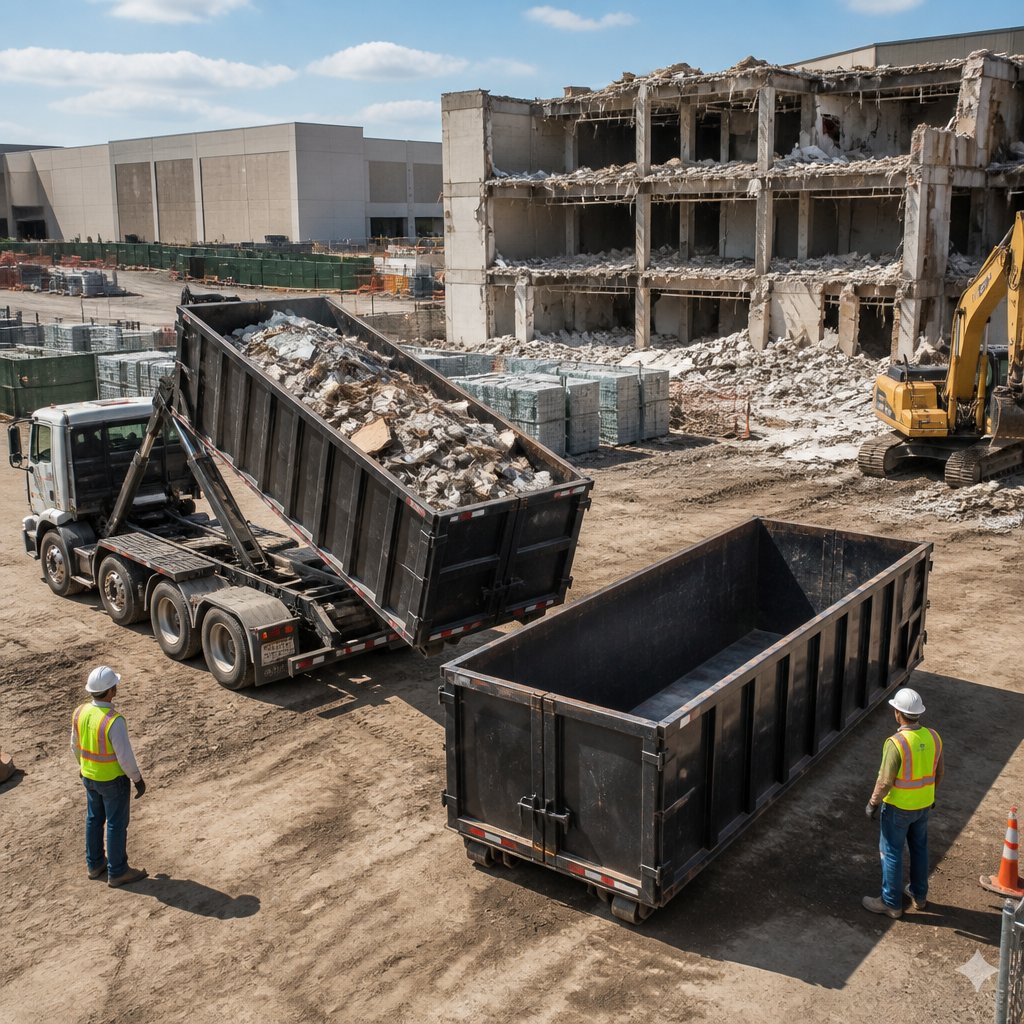
What Phased Demolition Coordinating Waste Removal Actually Means
Not every demolition project happens in one continuous push. Larger jobs — a multi-building commercial property, a home with several additions built over the years, or a project where only part of a structure comes down at a time — often get broken into phases. Phased demolition coordinating waste removal is about making sure debris disposal keeps pace with each stage, instead of letting waste pile up between phases or running out of container space partway through.
This matters more than it might seem at first. A single dumpster sized for the whole project can end up either too small for the first phase or sitting mostly empty during a slower stage, wasting money either way. Planning waste removal phase by phase, matched to what each stage of demolition will actually generate, tends to work out both cheaper and more efficient than trying to guess one size that covers everything.
Zap Dumpsters Peoria works as a sourcing partner across the whole project, helping schedule the right container size and timing for each phase of a Peoria demolition job.
Why Break a Demolition Project into Phases?
| Reason for Phasing | Waste Removal Impact |
|---|---|
| Large property, multiple structures | Each structure generates its own debris volume and timeline |
| Partial demolition (one wing, one addition) | Debris volume is smaller and more predictable per phase |
| Budget or scheduling constraints | Spreads disposal costs across the project timeline |
| Salvage-focused projects | Materials removed and sorted before mechanical demolition of remaining structure |
Multi-Structure and Multi-Building Projects
Commercial and larger residential properties with more than one structure often demolish them one at a time rather than simultaneously, whether due to scheduling, access constraints, or budget. Each structure effectively becomes its own mini-project with its own debris volume, which makes scheduling a fresh dumpster for each phase more practical than trying to keep one oversized container on-site for the entire duration.
Partial Structure Demolition
When only part of a building comes down — an old addition, a damaged wing, or a section being rebuilt — the remaining structure often needs to stay protected and accessible throughout the process. This changes where a dumpster can realistically be placed and how often it needs to be swapped, since ongoing work in adjacent areas limits site access in ways a full teardown wouldn’t. Property owners staying on-site during a partial demolition also tend to prefer smaller, more frequently emptied containers over one large dumpster sitting visible near the entrance for the whole project.
Scheduling Waste Removal Across Phases
Good phased demolition coordinating waste removal starts with a rough estimate of debris volume for each individual phase, not just the project as a whole. A smaller container swapped out more frequently often works better than one large dumpster sitting on-site for weeks, particularly when site access is limited during active work in adjacent areas.
Matching container size and swap frequency to each phase, rather than the whole project at once, keeps debris from accumulating around active work zones and avoids paying for container space that sits unused during slower stages. This is especially true for projects where phases are separated by weeks or months rather than happening back-to-back.
Budgeting for Multi-Phase Waste Removal
Spreading demolition across phases changes how disposal costs land over the life of a project, and it’s worth planning for that rather than being surprised by it. Instead of one large disposal invoice at the end of the job, phased projects tend to generate a series of smaller charges tied to each stage, which can actually make budgeting easier since costs are distributed rather than concentrated. It also gives project managers a chance to adjust container sizing for later phases based on what earlier phases actually generated, rather than guessing everything upfront.
Safety Requirements Still Apply Phase by Phase
OSHA’s demolition standard requiring a written engineering survey before operations begin applies to the structure being demolished, which matters even when a project unfolds across multiple phases over an extended timeline.[1] A survey conducted at the start of a project shouldn’t be assumed to still apply months later if conditions at the site have changed, particularly if earlier phases have altered the structural stability of what remains.
Sorting Clean Debris Across Phases
Projects broken into phases have a real advantage for sorting debris: each phase offers a natural checkpoint for separating clean concrete and masonry material from general mixed waste. Clean, uncontaminated debris may qualify for Illinois EPA’s CCDD program, which typically costs less than standard landfill disposal.[2] Keeping this material separated phase by phase, rather than trying to sort it after everything’s already mixed together at the end of the project, makes qualifying for lower-cost disposal much more realistic.
Communicating the Schedule with Everyone Involved
A phased demolition project only runs smoothly if everyone on-site actually knows the schedule — the demolition crew, any subcontractors, and whoever’s coordinating dumpster swaps all need to be working from the same timeline. Miscommunication here is one of the most common reasons projects stall: a crew shows up ready to start the next phase only to find the previous phase’s debris still sitting untouched because the dumpster swap didn’t happen on schedule.
Building a simple written timeline — even just a list of phases with target start dates and expected debris volumes — makes it much easier to coordinate with a sourcing partner like Zap Dumpsters Peoria ahead of time, rather than scrambling to arrange a container on short notice once a phase is already underway. This is especially valuable on commercial projects involving multiple contractors, where waste removal delays in one phase can create a ripple effect that pushes back every phase that follows.
Quick Reference: Phased Waste Removal Checklist
| Step | When |
|---|---|
| Estimate debris volume per phase | Before scheduling any dumpster |
| Confirm site access for each phase | Before dumpster placement |
| Sort clean concrete/masonry separately | During each phase’s demolition |
| Re-check structural conditions | Before starting a later phase |
| Schedule container swap or pickup | Between phases or as containers fill |
Phased Demolition Coordinating Waste Removal Near You
Phased demolition coordinating waste removal works best when it’s planned phase by phase from the start, rather than treating the whole project as one undifferentiated pile of debris. If you’re still deciding on the right equipment for each stage, our guide on choosing the right demolition tools can help you plan tool selection alongside your phasing schedule.
Zap Dumpsters Peoria works as your sourcing partner for demolition debris removal, helping coordinate container scheduling near you across every phase of your project.
Phased Demolition Coordinating Waste Removal FAQs
What is phased demolition?
Phased demolition breaks a larger project into planned stages, often due to multiple structures, partial demolition, or budget and scheduling constraints.
How does phased demolition coordinating waste removal work in practice?
Phased demolition coordinating waste removal typically involves scheduling a dumpster for each individual phase based on its expected debris volume, rather than relying on one container for the entire project.
Do I need a new engineering survey for each demolition phase?
Not always, but if significant time passes between phases or earlier work may have affected structural stability, re-checking conditions before the next phase begins is a good safety practice.
Can I use one dumpster for a phased demolition project?
It’s possible for smaller projects, but larger phased demolition coordinating waste removal plans usually work better with dumpster swaps timed to each phase rather than one container for the whole job.
Does phasing a demolition project save money on waste disposal?
It can, since sorting clean concrete and masonry debris separately during each phase makes it easier to qualify for lower-cost disposal options instead of paying standard landfill rates for everything.
Phased Demolition Coordinating Waste Removal Citations
- OSHA, 29 CFR 1926.850 — Preparatory Operations (Demolition) — osha.gov
- Illinois EPA, Clean Construction or Demolition Debris (CCDD) — epa.illinois.gov