
- Coordinating dumpster rentals for multi-unit housing works best when treated as a shared utility, not an afterthought split between residents.
- Sizing service from actual measured demand, not just unit count, prevents both overflow and wasted capacity.
- Some city programs, such as Charlotte, North Carolina’s, require properties with twelve or more units to use a shared dumpster or compactor instead of individual carts.[1]
- An equal unit share is the simplest cost-splitting method for ordinary trash and recycling.
- A short operating playbook for residents and staff prevents the most common shared-dumpster problems: overflow, blocked access, and unclear responsibility.
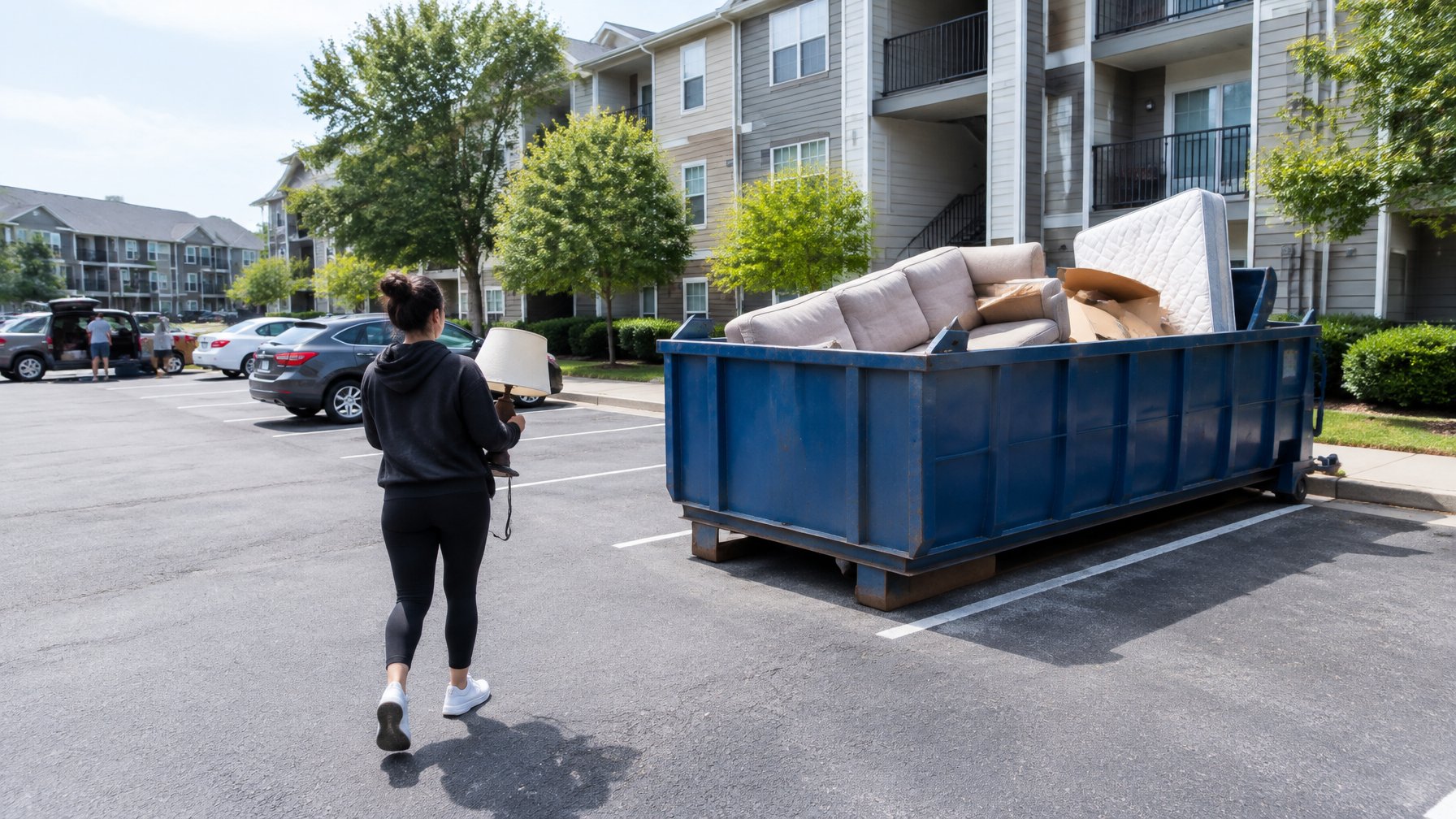
Coordinating Dumpster Rentals for Multi-Unit Housing as a Shared Utility
A multi-unit property’s waste needs are fundamentally different from a single-family home’s, and treating them the same way usually leads to overflow, blocked access, or arguments over who’s paying for whose trash. Coordinating dumpster rentals for multi-unit housing means measuring real demand, securing a single agreement that covers the whole property, and matching container capacity and pickups to that demand rather than guessing.
In Charlotte, North Carolina, for example, properties with twelve or more units don’t qualify for individual cart collection and must provide a dumpster or compactor to receive service at all.[1] Rules vary by city, so Peoria-area owners should confirm what their own hauler or municipality allows, but the pattern is common: once a property passes a certain size, shared-service coordination stops being optional and becomes the only workable model.
Property managers new to this coordination role sometimes assume the process is mostly about picking a vendor and signing a contract. In practice, most of the ongoing work happens after that point: monitoring fill levels, adjusting service as occupancy or seasonal patterns shift, and keeping the shared collection point functional for everyone using it. Treating the initial setup as the finish line rather than the starting point is a common early misstep.
Zap Dumpsters Peoria works as a sourcing partner for Peoria property managers and multi-unit owners, helping connect properties with the right shared container setup once demand is measured.
Choosing the Right Service Type
| Need | Best Fit |
|---|---|
| Ongoing household trash and recycling | Front-load dumpster, cart, or compactor with recurring service |
| Bulk move-outs, cleanouts, turnover periods | Temporary roll-off dumpster |
| Large renovation affecting many units | Dedicated project roll-off, billed to the project not residents |
| Mixed situation | Permanent service plus scheduled temporary dumpsters for peaks |
Don’t Use a Roll-Off as a Permanent Bin
For routine residential waste, relying on a temporary roll-off as the everyday shared container is usually less convenient and more prone to unauthorized dumping than a recurring service agreement. Reserve a short-term roll-off for a defined project or seasonal spike, and use recurring service for the day-to-day trash and recycling every property generates. Blurring this line — treating a project dumpster as if it were the building’s permanent trash solution — is one of the more common and avoidable mistakes newer property managers make.
Designing the Collection Point
A dumpster area on a multi-unit property is shared infrastructure, and it needs to work for residents, the hauler, people with mobility needs, and emergency access all at once — not simply fit wherever there’s unused pavement. A good location sits close enough that residents will actually use it, but away from windows, entrances, and fresh-air intakes. It needs a level, durable surface rated for both the container and the collection truck, and enough clearance outside fire lanes, accessible parking, and drainage paths for the truck to service it without reversing through a crowded pedestrian area.
Clear truck access matters more than most property managers initially expect. Parked vehicles, temporary storage, or bulky items left near the enclosure can prevent a scheduled pickup entirely, which then compounds into an overflow problem the following week. A standing pickup-day rule — no parking in the service lane, no items left in front of the enclosure — enforced consistently prevents most of these access failures before they start.
Sizing Service From Real Demand
Choosing dumpster size solely by unit count misses how much household size, move-out turnover, and bulky-item accumulation actually vary — a two- to four-week measurement period tracking fill level, overflow, and missed pickups gives a far more reliable basis for sizing than a generic per-unit formula. If bins routinely run more than three-quarters full before pickup, that’s the signal to increase frequency or capacity rather than waiting for a complaint. On the other side, containers that are consistently half-empty are worth flagging too, since a smaller container or reduced pickup frequency might cut costs without creating any real overflow risk.
Splitting Costs Fairly
| Method | Works Best When |
|---|---|
| Equal unit share | Similar-sized units, common service level |
| Occupancy-based | Roommate-heavy properties with variable household sizes |
| Square-footage/ownership share | Condominiums with an established common-expense formula |
| Base plus usage | Properties with frequent move-outs or mixed commercial use |
Handling Move-Out and Renovation Surges
Routine trash is only part of the picture. Move-out weeks, unit turnovers, and common-area renovations can produce a burst of furniture, flooring, and drywall that would overwhelm the regular container in a day. Treat those surges as separate jobs with a separate cost line. A short-term roll-off ordered for the turnover, and billed to the owner or the project, keeps the shared bin free for residents and stops one unit’s cleanout from becoming everyone’s expense.
Quick Reference: Vendor Quote Checklist
| Ask Every Vendor For | Why It Matters |
|---|---|
| Delivery, removal, and monthly service charges | Enables true apples-to-apples comparison |
| Included pickups and weight allowances | Reveals hidden overage exposure |
| Missed-pickup and extra-pickup terms | Sets expectations before a problem occurs |
| Contract term and price-escalation clauses | Prevents unwanted automatic renewal lock-in |
Running Day-to-Day Logistics
A shared dumpster system needs a short operating playbook distributed to every resident and maintenance worker. Residents should bag trash fully, close lids and gates after use, and never leave bulky items beside the container without scheduling approved removal. A property manager or coordinator should check bins before pickup, confirm the truck’s access route stays clear, and keep invoices and pickup logs on file for reference when service levels need renegotiating. Sending a brief reminder before predictable high-volume periods — lease turnover weekends, holidays, a scheduled maintenance project — heads off most overflow complaints before they happen.
Planning for Exceptions
Move-in and move-out periods, contractor work, and illegal dumping all need a defined process rather than being handled ad hoc each time they come up. Requiring contractors to provide their own debris container unless the property explicitly approves shared use, and documenting illegal dumping before charging recovery costs, keeps the exceptions from becoming disputes between residents and management.
Call (309) 650-8954 to Coordinate Waste Service for Your PropertyZap Dumpsters Peoria sources containers sized to your property’s measured demandMulti-Unit Housing Dumpster Coordination Near You
Coordinating dumpster rentals for multi-unit housing runs smoothly once demand is actually measured and costs are split with a formula residents understand. Treating the shared collection point as ongoing infrastructure to manage, rather than a one-time contract to sign and forget, keeps the whole system running without the recurring friction that comes from letting it drift. If your property is also weighing whether to set up a shared recycling program alongside trash service, our guide on setting up a neighborhood recycling program covers that related setup process.
Zap Dumpsters Peoria works as your sourcing partner for residential dumpster service, helping connect your multi-unit property with the right container near you.
How to Coordinate Dumpster Rentals for Multi-Unit Housing FAQs
How many dumpsters does a multi-unit property need?
The right number depends on measured waste volume over a two- to four-week period, not just unit count, since household size and turnover rates vary significantly between properties.
Can individual residents get their own trash pickup in a multi-unit property?
It depends on the local program. Some cities, such as Charlotte, North Carolina, require properties with twelve or more units to use a shared dumpster or compactor instead of individual curbside carts.
What’s the fairest way to split dumpster costs among units?
An equal unit share is usually the simplest and most defensible method for ordinary trash and recycling, with separate charges for unit-specific costs like bulk pickups.
Should a temporary roll-off be used as permanent multi-unit trash service?
No, coordinating dumpster rentals for multi-unit housing works better with a recurring service agreement for everyday waste and a temporary roll-off reserved for defined projects.
Who should pay for a dumpster during a property renovation?
Renovation debris affecting common areas is generally billed to the project owner or contractor rather than split among residents, unless the work is a shared capital expense benefiting the whole building.
How to Coordinate Dumpster Rentals for Multi-Unit Housing Citations
- City of Charlotte, Multi-Family Services — charlottenc.gov