
- Demolition tears a structure down quickly with heavy equipment, while deconstruction dismantles it piece by piece to save materials for reuse.
- Deconstruction diverts far more usable material from the landfill, but takes longer and needs more labor than standard demolition.
- OSHA still requires an engineering survey before any demolition-based project starts, regardless of which method is used.[1]
- A hybrid approach — salvaging key materials before mechanical demolition finishes the job — is often the most practical option for Peoria homeowners and small contractors.
- Waste management planning should start before the first wall comes down, not after.
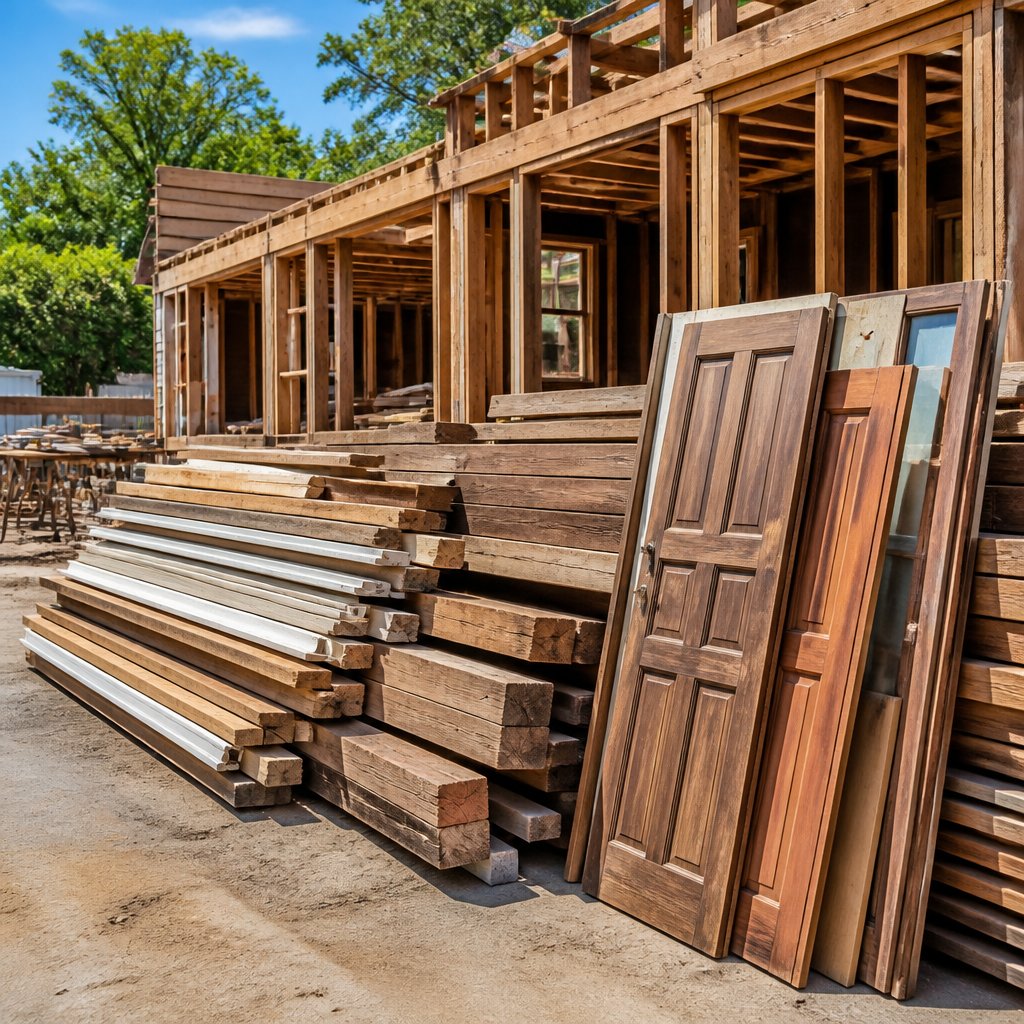
Demolition vs Deconstruction: What’s the Real Difference?
When people hear “tear it down,” they usually picture heavy machinery knocking through walls in a matter of hours. That’s demolition, and it’s the right call for a lot of projects. But there’s a second option that’s grown a lot more common in recent years: deconstruction, where a structure is carefully taken apart, often mostly by hand, so materials like lumber, doors, cabinets, and fixtures can be saved and reused instead of crushed and hauled to a landfill.
Understanding demolition vs deconstruction matters because the method you choose affects your project timeline, your budget, and how much waste actually leaves the site. For a garage or a small outbuilding, standard demolition often makes the most sense. For a full home or a structure with valuable materials like hardwood flooring or vintage fixtures, deconstruction — or a hybrid of the two — can save real money on disposal while keeping usable material out of the waste stream.
Zap Dumpsters Peoria works as a sourcing partner for either approach, helping connect Peoria homeowners and contractors with the right size dumpster to handle whatever debris the project generates, whether that’s a fast mechanical teardown or a slower material-recovery job.
Demolition vs Deconstruction: Side-by-Side Comparison
| Factor | Demolition | Deconstruction |
|---|---|---|
| Speed | Fast — often finished in a day or two | Slower — can take days to weeks depending on structure size |
| Labor | Heavy equipment, small crew | Larger hand-labor crew, specialized skills |
| Material recovery | Minimal — most material is crushed or mixed | High — lumber, fixtures, and hardware saved for reuse |
| Landfill waste | Higher volume | Significantly reduced |
| Upfront cost | Generally lower | Generally higher due to labor time |
| Best for | Structures with little salvage value, tight timelines | Older homes, hardwood-framed buildings, valuable fixtures |
When Demolition Makes Sense
Standard demolition is the practical choice when a structure has little to salvage, when the project is on a tight schedule, or when the building’s condition makes hand-dismantling unsafe. Garages, sheds, damaged structures, and additions with mostly modern, low-value materials are usually strong candidates for straightforward demolition. It’s also generally the more budget-friendly option upfront, since it requires less labor time.
When Deconstruction Makes Sense
Deconstruction shines when a structure has materials worth saving — old-growth lumber, hardwood flooring, brick, vintage doors and trim, or fixtures that would cost a lot to replace new. The EPA notes that wood-framed buildings, especially those with heavy timbers or beams, tend to be the most “deconstructable,” since their stick-by-stick construction allows components to be removed largely intact.[2] Homeowners renovating an older Peoria property sometimes find that the resale value of salvaged materials meaningfully offsets the extra labor cost of taking the structure apart carefully instead of knocking it down.
Why Deconstruction Reduces Waste
The scale of construction and demolition debris nationally is enormous — the EPA’s sustainable materials management program notes that recovering usable construction and demolition materials for reuse and recycling helps conserve resources and avoid the need to mine and process virgin materials for new building projects.[3] Deconstruction is specifically defined by the EPA as the process of carefully dismantling buildings to salvage components for reuse and recycling, rather than sending them to a landfill as mixed debris.[3]
The core trade-off is simple: deconstruction trades speed for material recovery, while demolition trades material recovery for speed and lower upfront labor cost. Neither approach is universally “better” — the right choice depends on the structure, the timeline, and what’s actually inside the walls.
Safety Requirements Apply to Both Methods
Whichever approach you choose, OSHA’s demolition standard requires a written engineering survey by a competent person before work begins, assessing the condition of framing, floors, and walls to determine the risk of unplanned collapse.[1] This requirement applies broadly to demolition-related operations and is worth keeping in mind even for a DIY deconstruction project on an older structure, since hidden structural damage is one of the most common causes of on-site injuries.
Quick Decision Table: Which Approach Fits Your Project?
| Your Situation | Recommended Approach |
|---|---|
| Small shed or garage, no valuable materials | Standard Demolition |
| Older home with hardwood, vintage fixtures | Deconstruction or Hybrid |
| Tight project timeline | Standard Demolition |
| Budget allows extra labor time for savings later | Deconstruction |
| Structure has fire, flood, or storm damage | Demolition (with engineering survey first) |
What Happens to the Materials Afterward
One thing that surprises a lot of homeowners the first time they look into deconstruction is just how much of a structure can realistically be saved. Framing lumber, especially older growth wood cut before modern harvesting practices, often has better density and strength than what’s sold new today. Doors, trim, hardware, and light fixtures from older Peoria homes frequently have a style and build quality that’s hard to find in newer construction, which is part of why salvage yards and reuse organizations are often willing to take these materials off your hands, sometimes even paying for higher-value pieces.
Demolition debris, by contrast, is typically mixed together as it comes down — broken drywall, splintered wood, shingles, and structural material all landing in the same pile. That mix can still be sorted and partially recycled at the disposal facility, but it takes more processing to separate valuable material from true waste once everything’s already crushed together. This is one of the practical reasons deconstruction and salvage-first approaches have grown more popular even on standard residential projects: separating materials on-site, before demolition begins, is simply more efficient than trying to sort them out afterward.
Managing Debris However You Demolish
Whether your project ends up mostly demolition, mostly deconstruction, or a hybrid of both, you’ll still need a plan for hauling away what’s left. Mixed demolition debris tends to need a larger container due to its bulk and weight, while deconstruction projects often generate a mix of salvageable material set aside separately and a smaller volume of true waste headed for disposal.
Sorting as You Go
Setting aside salvageable lumber, fixtures, and hardware in one area while directing true waste straight to the dumpster keeps the site organized and makes it much easier to see what’s actually worth saving. Sorting during the project, rather than after everything’s already mixed together, is the single biggest factor in how much material actually gets diverted from the landfill.
Finding Demolition and Deconstruction Support Near You
Choosing between demolition vs deconstruction isn’t about picking the “correct” answer — it’s about matching the method to your structure, your budget, and your timeline. If your project leans toward a full mechanical teardown, our guide on calculating construction and demolition waste can help you plan container sizing before the work starts.
Whichever direction you go, Zap Dumpsters Peoria works as your local sourcing partner for demolition debris removal, helping connect Peoria homeowners and contractors with the right container for the job near you.
Demolition vs Deconstruction FAQs
What is the main difference between demolition and deconstruction?
Demolition tears a structure down quickly using heavy equipment, while deconstruction carefully dismantles it to save materials for reuse, generating significantly less landfill waste.
Is deconstruction more expensive than demolition?
Deconstruction usually costs more upfront due to the extra labor time involved, though the resale value of salvaged materials and reduced disposal costs can offset some of that difference.
Can I do a hybrid of demolition and deconstruction?
Yes, many Peoria projects use a hybrid approach — salvaging valuable materials like lumber, doors, or fixtures first, then using standard demolition to remove the remaining structure quickly.
Do demolition vs deconstruction projects both need a dumpster?
Yes, both approaches generate waste that needs proper disposal, though deconstruction projects typically produce a smaller volume of true waste since more material is set aside for reuse.
Is an engineering survey required for both demolition and deconstruction?
OSHA’s demolition safety standard requires a written engineering survey before operations begin on demolition-related projects, which is a good practice to follow even for careful deconstruction work on an older structure.