
- Building codes and debris containment requirements in Peoria draw from the 2018 International Building Code alongside several other adopted codes.
- Construction dumpsters don’t need a separate zoning permit in Peoria as long as they’re placed on a hard surface and tied to active construction.
- OSHA’s waste disposal standard adds a separate, federal layer of debris containment requirements on top of local code.
- Containment failures — debris blowing off-site or piling outside approved areas — create both code violations and safety hazards.
- Knowing which containment rules apply before a project starts avoids costly mid-project corrections.
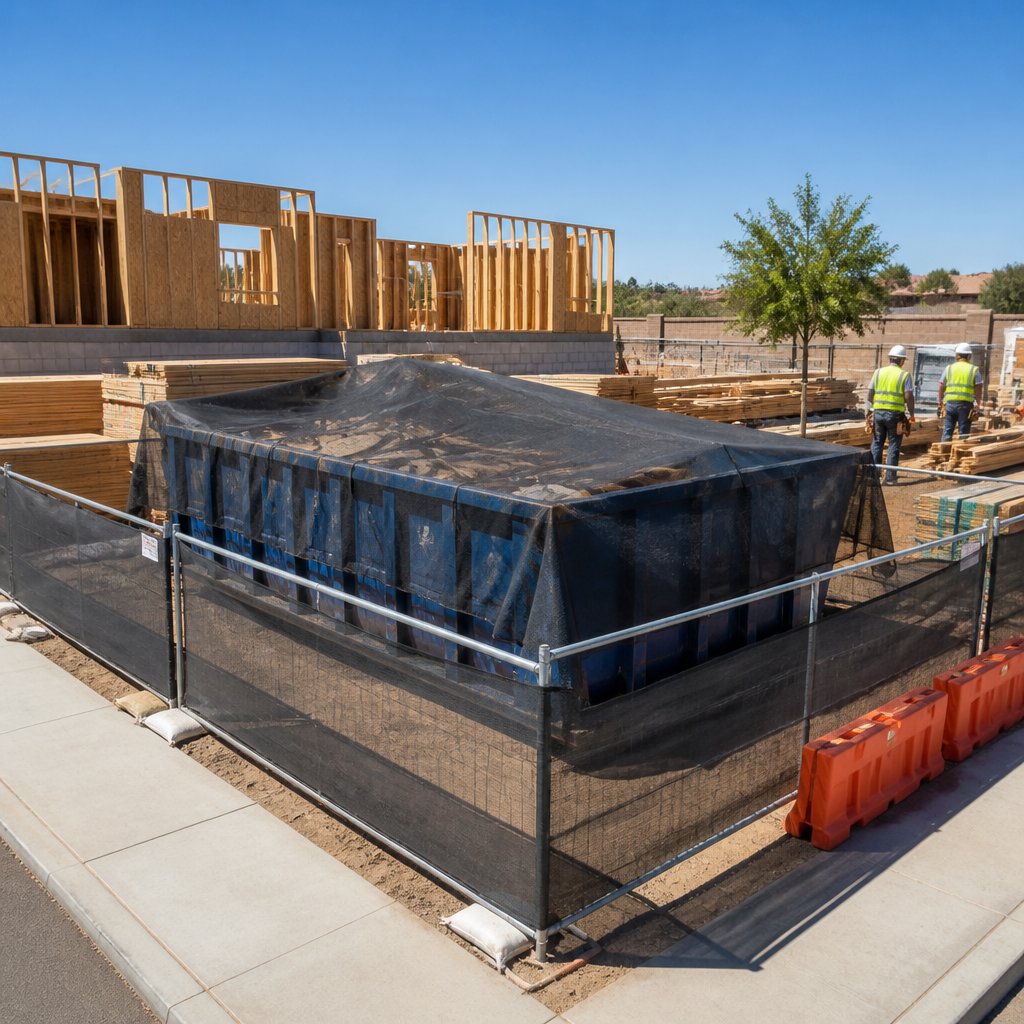
Understanding Building Codes and Debris Containment Requirements in Peoria
Every construction project generates debris, and how that debris gets contained on-site is governed by more than one layer of rules. Building codes and debris containment requirements in Peoria combine local building code adoption with federal OSHA standards, and understanding both keeps a project compliant without unnecessary permitting delays.
The City of Peoria has adopted the 2018 International Building Code, 2018 International Residential Code, 2018 International Existing Building Code, and several related codes covering fire, mechanical, and property maintenance standards.[1] These adopted codes form the baseline framework construction projects operate under, including provisions that touch on debris and site containment during active work.
Contractors working across multiple jurisdictions in Central Illinois sometimes assume code requirements are identical from one municipality to the next, which isn’t always the case. Peoria County and surrounding communities have each gone through their own code adoption processes, so a debris containment approach that satisfies one jurisdiction’s inspectors doesn’t automatically carry over to a project just across a municipal boundary. Confirming which specific code version applies before a project begins avoids assumptions that could create compliance gaps later.
Zap Dumpsters Peoria works as a sourcing partner for Peoria contractors, helping connect projects with a properly placed dumpster that supports debris containment requirements from day one.
Dumpster Placement for Construction Projects
A construction dumpster on an active jobsite in Peoria does not require a separate zoning permit, provided it’s placed on a hard surface and its presence coincides with active construction on the property.[2] This is a meaningful simplification for contractors — as long as the container is tied to genuine ongoing work and sits on an appropriate surface, no additional temporary use approval is needed beyond standard building permitting for the project itself. This exception exists specifically because construction dumpsters are understood to be a normal, expected part of active work rather than a standalone temporary use requiring its own separate review.
| Requirement | Applies To |
|---|---|
| Placement on hard surface | All construction dumpsters |
| Tied to active construction | Duration of dumpster presence on-site |
| No separate zoning permit needed | Standard construction dumpster placement on private property |
| Right-of-way permit required | Only if dumpster sits on public street/alley |
Private Property vs Right-of-Way
The simplified rule for construction dumpsters applies to placement on the project site itself. If a dumpster needs to sit in the public right-of-way — the street or alley rather than the property — a separate right-of-way use permit becomes necessary, following the same process required for any dumpster occupying public space. This distinction matters most on tighter urban lots where the driveway or yard genuinely can’t accommodate a container, forcing a street placement that triggers the additional permit step.
OSHA’s Federal Debris Containment Layer
Beyond local code, OSHA’s construction standard requires that scrap lumber, waste material, and rubbish be removed from the immediate work area as the project progresses, rather than allowed to accumulate.[3] This federal requirement operates independently of local building code and applies regardless of what a specific municipality’s containment rules say, meaning contractors need to satisfy both layers simultaneously. A project can be fully compliant with Peoria’s building code and still draw an OSHA citation if debris is allowed to pile up around active work areas, since the two sets of rules address different concerns — code focuses on where and how a container sits, while OSHA focuses on how often the site itself gets cleared.
Common Containment Failures
Debris blowing off-site during windy conditions, materials piling up outside the dumpster’s footprint, and containers left uncovered close to property lines are among the most common ways containment requirements get violated in practice. None of these require complex fixes — a securely covered container, adequate distance from property boundaries, and regular clearing of overflow material address most of them. Assigning one person on the crew to do a quick end-of-day walkthrough, checking that the container is covered and nothing has escaped the designated footprint, catches most containment problems before they turn into a code complaint or an OSHA finding.
Quick Reference: Debris Containment Checklist
| Item | Requirement Source |
|---|---|
| Dumpster on hard surface, tied to active work | City of Peoria temporary use rules |
| Debris cleared as work progresses | OSHA construction standard |
| Right-of-way permit if on public property | City of Peoria Public Works |
| Adopted building code compliance for the project itself | City of Peoria Building Safety Division |
Planning Containment Before Work Begins
Confirming dumpster placement, surface requirements, and any right-of-way needs before construction starts avoids the kind of mid-project scramble that slows work down. This is a quick conversation to have during initial project planning, well before the container actually arrives on-site. Walking the proposed placement location in person, rather than just estimating from a site plan, also catches issues like uneven ground or insufficient hard-surface area that might otherwise only get discovered once the delivery truck is already there.
Coordinating With Building Inspectors
Building inspectors reviewing a project periodically may also take note of debris containment as part of a general site condition check, even if it’s not the primary focus of their visit. Keeping the site tidy and the dumpster properly placed avoids raising questions during inspections that have nothing to do with the actual construction work being reviewed. A clean, well-contained site also tends to leave a better impression that can smooth the way for future permit applications or inspections on the same project.
Building Codes and Debris Containment Near You
Building codes and debris containment requirements in Peoria are more manageable than they first appear once you know the standard construction dumpster placement doesn’t require extra permitting. Getting the containment basics right from the start — proper surface, active-work coordination, and regular debris clearing — keeps a project moving without unnecessary compliance friction. If you’re also thinking through how subcontractors on your project should coordinate around waste handling, our guide on working with subcontractors to coordinate waste management covers that next step.
Zap Dumpsters Peoria works as your sourcing partner for contractor dumpster rentals, helping connect your project with a compliant container near you.
Building Codes and Debris Containment Requirements FAQs
Do I need a permit for a construction dumpster in Peoria?
No separate zoning permit is generally required as long as the dumpster is placed on a hard surface and tied to active construction on the property; a right-of-way permit only applies if it sits on public property.
What building codes apply to construction projects in Peoria?
Peoria has adopted the 2018 International Building Code along with related residential, existing building, fire, mechanical, and property maintenance codes.
Does OSHA regulate debris containment separately from local code?
Yes, OSHA requires scrap material and rubbish to be removed from the work area as a project progresses, which applies independently of and in addition to local building code requirements.
What counts as a debris containment violation?
Common violations include debris blowing off-site, material piling up outside the dumpster’s footprint, and uncovered containers close to property lines, any of which can draw complaints or code enforcement attention.
Where can I find Peoria’s building codes and debris containment requirements in detail?
The City of Peoria’s Building Safety Division and Municipal Code list the full set of adopted codes and amendments applicable to construction projects, and staff there can answer specific questions about how those codes apply to a given project.
Building Codes and Debris Containment Requirements Citations
- City of Peoria, Building Safety Division — Adopted Codes — peoriagov.org
- City of Peoria, Guide to Temporary Uses (Dumpster for Construction Projects) — peoriagov.org
- OSHA, 29 CFR 1926.252 — Disposal of Waste Materials — osha.gov