

We may earn money or products from the companies mentioned in this post.
- Setting up a neighborhood recycling program works best as an ongoing shared service, not a one-time cleanup event.
- Choosing the right operating model — shared subscription, fixed station, or rotating collection point — depends on density and available storage space.
- A short pilot period with a small recycling committee prevents overbuilding infrastructure before demand is proven.
- Contamination is the biggest operational threat and needs clear, visual rules from day one.
- Formalizing the program into a simple one- or two-page policy keeps it running once the initial enthusiasm fades.
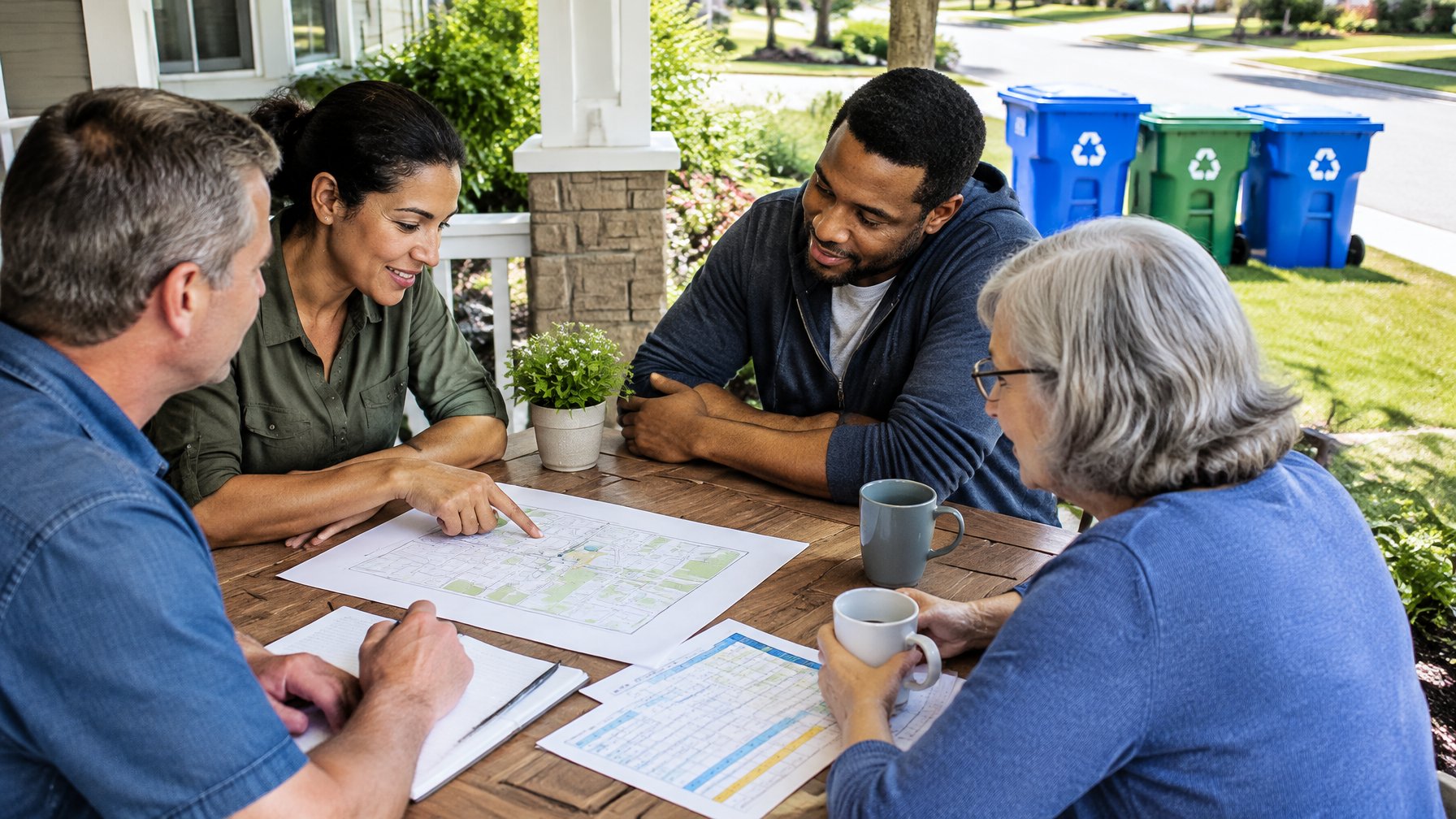
Setting Up a Neighborhood Recycling Program That Actually Lasts
A lot of neighborhood recycling efforts start with good intentions and fizzle out within a season. Setting up a neighborhood recycling program that actually sticks means treating it as a small shared utility from the start — something with a real operating model, a budget, and clear rules — rather than a one-off event organized by whoever volunteers first.
Multi-family and shared-property recycling programs work best when residents get service at least equal to what single-family households receive, with the same consistent education and outreach built in from the start.[1] That principle applies just as well to an informal block or HOA program as it does to a large apartment complex.
Zap Dumpsters Peoria works as a sourcing partner for Peoria neighborhoods and HOAs setting up shared waste and recycling service, helping connect your program with the right container size once the operating model is chosen.
Choose the Right Operating Model
| Model | How It Works | Best For |
|---|---|---|
| Shared subscription | Households jointly contract with a hauler for recurring pickup | Streets without municipal recycling |
| Fixed central station | Permanent bins at a common area or approved curb location | HOA/condo communities with shared property |
| Rotating collection points | Households host secured bins on a schedule | Small blocks testing demand before investing |
| Hybrid | Mixed recycling plus separate streams for cardboard, electronics, etc. | Mature, established programs |
Matching Model to Density
For an HOA or condo association, a central collection setup paired with a contracted service is usually easier to maintain long-term than asking individual households to rotate hosting duties. For an informal block group without that shared infrastructure, starting with a time-limited rotating pilot — 8 to 12 weeks is a reasonable window — lets you prove participation before committing to a fixed station or subscription. Moving too fast toward a large fixed installation before knowing whether households will actually participate is a common and costly early mistake.
Accessibility Matters More Than It Seems
Recycling containers that are easy to reach and placed near existing trash containers see meaningfully higher use than ones tucked away for convenience of appearance. Capacity should be checked and adjusted based on actual volume, not guessed once and left alone indefinitely.
Build the Program Before Collecting Anything
Forming a small recycling committee with clearly limited roles — a program lead, a site lead, a finance lead, and a communications lead — before the first bin arrives prevents the most common failure mode: a program that depends entirely on one exhausted volunteer. Confirming local hauler rules, measuring likely volume for a week, and choosing the smallest reliable service level are all better done before signing anything than adjusted after the fact. Backup volunteers, even just one or two, matter more than people expect — the whole system stalls the first time the program lead goes on vacation without anyone else knowing who the hauler contact is.
Quick Reference: Setup Checklist
| Step | Why It Matters |
|---|---|
| Confirm hauler’s accepted-materials rules | Avoids rejected loads and unexpected fees |
| Measure volume for one week | Sets realistic container size and pickup frequency |
| Get written permission for shared property | Protects placement, insurance, and access rights |
| Set a budget with a small reserve | Covers signage, locks, and unexpected costs |
Making Collection Routine
Once a model is chosen, the operational rule should stay simple: residents know what goes where, where to take it, and when it leaves. For a shared subscription, negotiating one contract on behalf of the whole group beats asking every household to solve recycling separately. Ask prospective haulers for the exact material list, cart size and ownership terms, pickup schedule with a missed-pickup procedure, and whether cardboard needs to be flattened or collected separately. Getting these answers in writing before signing avoids disputes once service is underway.
For a rotating collection-point setup, structure matters more than most people expect going in. Publishing a schedule at least a month ahead, using the same collection day and window each cycle, and giving every host the same secured bin and signage keeps the system predictable. Assigning a non-host “pickup captain” to verify the container actually gets moved curbside and returned removes the single point of failure that sinks most informal rotations — the host who forgets on the one week it matters.
Preventing Contamination
A few wrong items in a shared bin can cause an entire load to be rejected, driving up costs for everyone participating. Keeping materials loose rather than bagged, rinsing containers, flattening cardboard, and keeping batteries and electronics out of mixed recycling are the basics most contamination problems trace back to when they’re ignored. Large, visual signage — photos or icons rather than just text — on every bin does more to prevent mistakes than a written policy nobody reads.
When Participation Is Low
If participation stays low after a reasonable trial period, the barrier is usually distance, uncertainty about the rules, cost, or inconvenient timing rather than genuine disinterest. A short resident survey often reveals which one applies before assuming the program simply isn’t wanted.
Call (309) 650-8954 to Size Your Neighborhood’s Waste ServiceZap Dumpsters Peoria sources containers for HOA and block-level recycling programsFormalize and Improve
Once a pilot is working, converting it into a standing neighborhood policy or HOA operating procedure keeps the program from drifting once the founding volunteers move on or lose interest. This doesn’t need to be a long document — one or two pages covering the purpose, eligible participants, collection schedule, accepted-materials list, and who has authority to sign contracts or approve spending is usually enough. Reviewing the program every quarter, checking participation against contamination rates, and adjusting signage or service level based on what’s actually happening rather than what was assumed at launch keeps it responsive to real conditions rather than locked into a plan made before anyone knew how residents would actually use it.
Neighborhood Recycling Programs Near You
Setting up a neighborhood recycling program takes more planning than a single cleanup day, but the payoff is a system residents can actually rely on year after year. Getting the operating model, pilot period, and formalization steps right the first time saves a lot of frustration compared to launching something informal and hoping it holds together. If your street or HOA is also weighing how to handle a larger shared waste setup, our guide on coordinating dumpster rentals for multi-unit housing covers similar shared-service logistics.
Zap Dumpsters Peoria works as your sourcing partner for residential dumpster service, helping connect your neighborhood with the right container near you as your program gets off the ground.
Setting Up a Neighborhood Recycling Program FAQs
What’s the easiest way to start a neighborhood recycling program?
A time-limited rotating pilot, such as 8 to 12 weeks with a small number of participating households, is usually the easiest way to test demand before investing in permanent infrastructure.
Does setting up a neighborhood recycling program require HOA approval?
For programs using shared HOA or common property, written board approval covering placement, insurance, and access is generally required before installing any permanent collection point.
How do you prevent contamination in a shared recycling program?
Clear, visual signage on every bin, keeping materials loose rather than bagged, and educating residents on the hauler’s specific accepted-materials list are the most effective contamination prevention steps.
How much does setting up a neighborhood recycling program typically cost?
Costs vary by model, but a shared subscription typically involves a flat monthly contribution per household covering service fees, a small reserve, and occasional signage or supply costs.
Should a rotating collection point convert to a fixed station eventually?
Many rotating pilots convert to a fixed, professionally serviced station once participation is proven and volunteer hosting duty becomes a burden rather than a novelty.
Setting Up a Neighborhood Recycling Program Citations
- US EPA, Transforming Waste Tool — Multi-Family Customers — epa.gov