
- Implementing recycling programs in office buildings starts with knowing what materials you actually generate, not guessing.
- Office paper remains one of the largest and most consistently recyclable waste streams in most buildings.[1]
- Clear signage and convenient bin placement matter more than most offices realize for program success.
- Employee education and consistent communication are what separate recycling programs that stick from ones that quietly fail.[1]
- Right-sizing your dumpster after recyclables are diverted often reduces overall waste hauling costs.
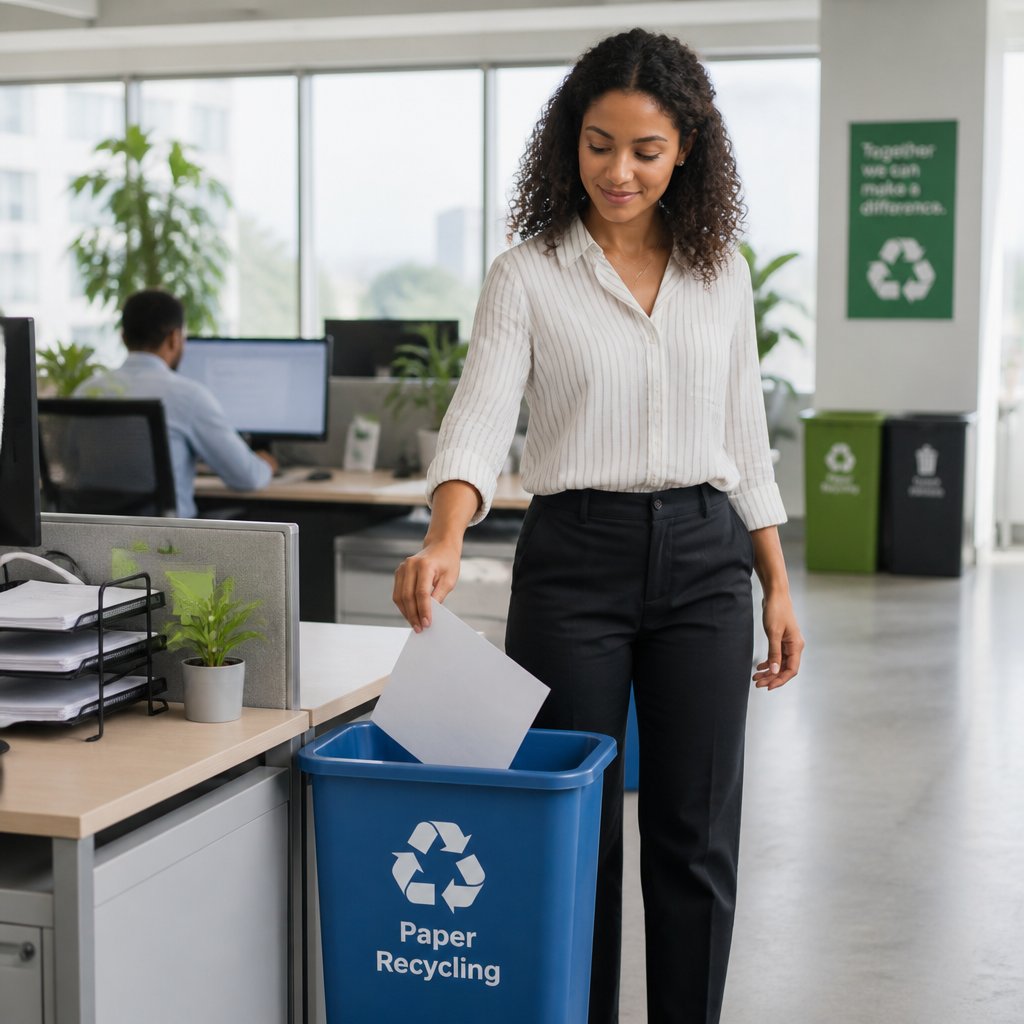
Getting Started With Implementing Recycling Programs in Office Buildings
Plenty of office buildings have a recycling bin sitting in the break room that nobody quite trusts is being used correctly. Implementing recycling programs in office buildings that actually work takes more than dropping a blue bin next to the trash can — it requires understanding what your building generates, making recycling as easy as throwing something away, and keeping the program visible enough that it doesn’t quietly fade out after the first few months.
Office buildings, schools, stores, and other commercial and institutional buildings generate significant amounts of materials and waste, and understanding your organization’s waste is the foundation for a successful waste reduction program.[1] For Peoria offices, this often starts with the same basic question: what’s actually filling up the dumpster right now, and how much of it could be diverted instead?
Zap Dumpsters Peoria works as your sourcing partner throughout this process, helping connect your building with the right dumpster size once a recycling program is diverting material away from general waste.
Common Office Waste Streams Worth Recycling
Before setting up any collection system, it helps to know which materials actually make up the bulk of an office’s waste. Most buildings share a fairly predictable mix, though the exact proportions vary depending on whether the space is primarily desk-based, includes a warehouse or shipping component, or has a full kitchen and cafeteria on-site.
| Material | Recyclability | Notes |
|---|---|---|
| Office paper | High | One of the largest volume contributors in most offices |
| Cardboard | High | Common from shipping/receiving areas |
| Aluminum cans and plastics | High | Break room and kitchen waste streams |
| Electronics | Requires special handling | Should not go in standard recycling bins |
| Mixed food waste | Compostable, not recyclable | Needs separate collection stream if pursued |
Office Paper
Paper remains one of the most significant and most easily recyclable materials generated in an office setting. Establishing a simple system — desk-side bins for paper, paired with a central collection point — captures most of this material before it ever reaches general trash. Even offices that have shifted heavily toward digital workflows still generate a steady stream from mail, printed reports, and packaging inserts that add up faster than most people expect.
Cardboard and Packaging
Shipping and receiving areas tend to generate steady cardboard volume that’s almost always recyclable but often gets flattened straight into a general dumpster out of habit rather than an actual recycling stream being set up nearby. Breaking down boxes before they’re collected and keeping a dedicated bin or baler close to the receiving dock, rather than routing everything through a single central recycling point across the building, tends to capture significantly more of this material in practice.
Handling Electronics and Special Materials
Not every material belongs in a standard recycling bin, and offices that lump everything together risk contaminating an otherwise good recycling stream. Electronics — old monitors, keyboards, printers, and cables — require separate handling through dedicated e-waste recycling rather than a standard paper and plastics bin. Batteries fall into a similar category, since they can pose fire risks if crushed or compacted with general recyclables. Setting up a small, clearly labeled collection point for these items, even if it’s just a box beside the IT department or facilities office, keeps them out of the regular waste stream without complicating the main recycling program.
Toner and ink cartridges are another item many offices overlook. Most manufacturers and office supply retailers offer free take-back programs for empty cartridges, and setting up a simple collection box beside the copier or supply closet costs nothing and diverts a surprising volume of material that would otherwise end up in general trash.
Building a Program That Actually Sticks
Many offices launch a recycling program with good intentions that fades within a few months. The difference between a program that lasts and one that quietly dies usually comes down to a few practical factors: clear signage explaining exactly what goes where, bins placed at the point of use rather than tucked away, and periodic reminders that keep the habit fresh for employees.
A recycling program with confusing or absent signage will always underperform, regardless of how good the underlying collection system is — people default to the trash can when they’re not sure where something belongs. Simple, consistent labeling solves most of this problem on its own.
Getting Employee Buy-In
Recruiting representatives from different departments to help plan and communicate a waste reduction program broadens the range of perspectives involved and tends to identify more improvement opportunities than a program designed by a single person or department in isolation.[1] Even an informal group of a few interested employees can help spread awareness and troubleshoot problems faster than management alone.
Framing the program around outcomes people can relate to also helps. Rather than presenting recycling purely as an environmental initiative, connecting it to cost savings on waste hauling, or to a simple sense of a cleaner, better-organized workspace, tends to land better with employees who might otherwise see it as an extra chore added to their day. A short, informal announcement explaining why the program exists and what’s expected goes a long way toward getting genuine participation instead of quiet resistance.
Quick Reference: Setting Up Your Program
| Step | Priority |
|---|---|
| Identify main waste streams (audit first) | High |
| Place bins at point of use, not out of the way | High |
| Use clear, consistent signage | High |
| Recruit a green team or point person | Medium |
| Track and share progress periodically | Medium |
Sizing Waste Service Once Recycling Is in Place
Once a recycling program is diverting a meaningful share of material from general waste, it’s worth revisiting your dumpster size and pickup frequency. Many offices continue paying for the same container size and schedule they had before recycling started, even after volume has meaningfully dropped. Reassessing service levels after a few months of steady recycling participation often reveals room to downsize, cutting costs on top of whatever savings the recycling program itself generates. This review works best a few months after launch, once participation has settled into a steady pattern rather than the initial enthusiasm that tends to follow any new program’s first few weeks.
Implementing Recycling Programs in Office Buildings Near You
Implementing recycling programs in office buildings pays off most when it’s built around convenience, clear communication, and a realistic understanding of what your building actually generates. If you haven’t yet looked closely at your waste stream, our guide on waste audits for businesses covers how to get that baseline first.
Once your recycling program is up and running, Zap Dumpsters Peoria works as your sourcing partner for commercial dumpster service, helping connect your office with the right container size near you.
Implementing Recycling Programs in Office Buildings FAQs
Where should recycling bins be placed in an office?
Recycling bins work best when placed at the point of use — near desks, printers, and break rooms — rather than in a single out-of-the-way location employees have to remember to visit.
What’s the biggest reason office recycling programs fail?
Unclear signage and inconvenient bin placement are the most common reasons implementing recycling programs in office buildings doesn’t stick, since confusion leads people to default to the trash can.
Does implementing recycling programs in office buildings save money?
Yes, diverting recyclable material often allows a building to downsize its general waste dumpster or reduce pickup frequency, cutting hauling costs over time.
What office materials are most worth recycling first?
Office paper and cardboard are typically the highest-volume, most easily recyclable materials and are usually the best starting point for a new program.
Do I need employee training to start a recycling program?
Some basic communication and clear signage go a long way; formal training isn’t required, but ongoing reminders help keep participation consistent over time.
Implementing Recycling Programs in Office Buildings Citations
- US EPA, Managing and Reducing Wastes: A Guide for Commercial Buildings — epa.gov