
- Choosing the right demolition tools depends on the material you’re removing, not just the size of the project.
- Hand tools handle small, targeted demolition, while powered equipment is needed for larger structural teardown work.
- Tools that cut, grind, or break silica-containing materials like concrete require specific dust control methods under OSHA’s silica standard.[1]
- An engineering survey should inform equipment selection, not just come after the tools are already on-site.[2]
- Matching your dumpster size to the debris your equipment generates avoids mid-project disposal headaches.
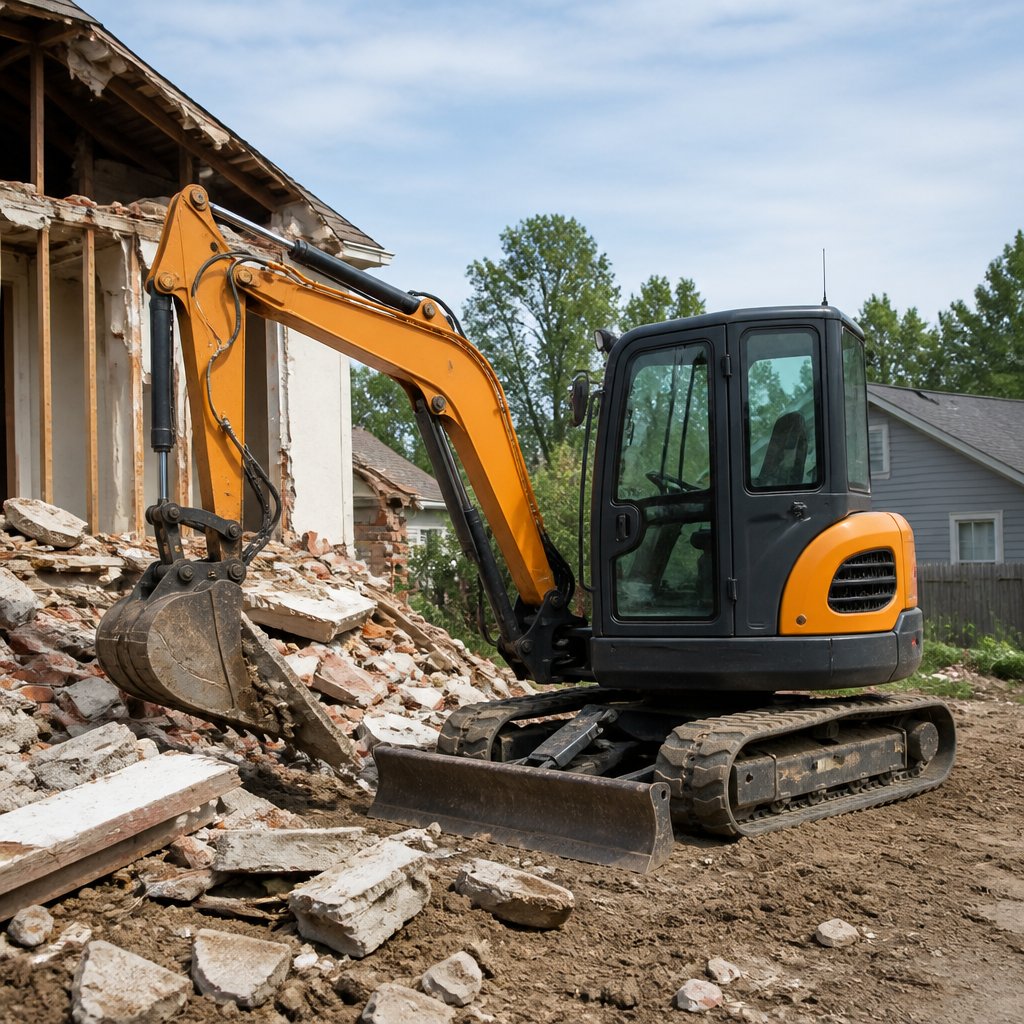
Choosing the Right Demolition Tools for Your Project
Walk into any hardware store’s demolition aisle and you’ll find everything from simple pry bars to heavy-duty jackhammers, and it’s not always obvious which tool actually fits your project. Choosing the right demolition tools starts with a basic question: what material are you removing, and how much of it is there? A single interior wall calls for a very different toolkit than a full garage teardown or a concrete patio removal.
Getting the equipment choice right isn’t just about efficiency — using underpowered tools on a big job slows everything down and increases the risk of injury from repeated strain, while using oversized equipment on a small, delicate job risks damaging things you didn’t intend to touch. Peoria homeowners and small contractors tackling residential demolition projects generally fall somewhere between simple hand tools and mid-sized powered equipment, rarely needing the heavy machinery reserved for commercial teardowns.
Zap Dumpsters Peoria works as your sourcing partner once the demolition work is underway, helping connect you with the right container size for whatever debris your equipment generates.
Hand Tools vs Power Tools vs Heavy Equipment
| Tool Category | Best For | Examples |
|---|---|---|
| Hand tools | Small, targeted removal; precision work | Sledgehammers, pry bars, hand saws, flat bars |
| Power tools | Medium-scale demolition; cutting, breaking | Reciprocating saws, rotary hammers, angle grinders |
| Heavy equipment | Large structural teardown | Excavators, skid steers, mini excavators |
Hand Tools for Precision Work
Sledgehammers, pry bars, and hand saws remain the right choice for smaller, more targeted demolition — removing a single wall section, taking apart cabinetry, or careful salvage work where you want to preserve materials rather than destroy them. Hand tools also require the least amount of specialized training, making them accessible for homeowners tackling smaller DIY demolition projects.
Power Tools for Efficiency
Reciprocating saws, rotary hammers, and angle grinders speed up medium-scale demolition significantly compared to hand tools alone. A rotary hammer, for example, can break through concrete or masonry far faster than manual methods, making it a practical choice for projects like removing a small concrete pad or breaking up a section of driveway.
Heavy Equipment for Large-Scale Teardown
Excavators, skid steers, and mini excavators come into play for larger structural demolition — full garage or outbuilding teardown, significant concrete removal, or any project where hand and power tools alone would take unreasonably long. These machines require more training and typically come with a rental cost that only makes sense once a project reaches a certain scale. Operators should also factor in site access before committing to heavier equipment; a mini excavator needs enough clearance to maneuver and turn, which isn’t always available on a tight urban lot with a narrow driveway.
Dust Control Requirements Based on Equipment
Choosing the right demolition tools also means planning for the dust each one generates, particularly when working with concrete, brick, or masonry. OSHA’s respirable crystalline silica standard specifically addresses heavy equipment used during demolition activities involving silica-containing materials, requiring either an enclosed operator cab or the application of water and dust suppressants to minimize airborne dust.[1]
Any tool that cuts, grinds, drills, or breaks concrete, brick, or stone needs a dust control plan built in from the start, not added as an afterthought once dust becomes a visible problem. Water-fed attachments are available for many rotary hammers and saws specifically for this reason, and they’re worth the investment for any project involving masonry demolition.
Quick Reference: Tool Selection by Task
| Task | Recommended Tool |
|---|---|
| Removing drywall | Hand tools (pry bar, hammer) |
| Cutting through framing lumber | Reciprocating saw |
| Breaking a small concrete pad | Rotary hammer with water suppression |
| Removing a full garage or outbuilding | Mini excavator or skid steer |
| Careful salvage of trim/fixtures | Hand tools, flat bar |
Renting vs Buying Demolition Equipment
For most homeowners and small contractors, renting demolition equipment makes more financial sense than buying, especially for tools used infrequently like rotary hammers or mini excavators. Rental costs for a weekend or a few days are typically far less than the purchase price of comparable equipment, and rental companies handle maintenance and repairs that would otherwise fall on the owner. Buying tends to make sense only for tools used regularly across multiple projects, like a basic reciprocating saw or a set of pry bars that see repeated use well beyond a single demolition job.
When renting heavier equipment, it’s worth asking the rental company about training or a quick walkthrough, particularly for anything you haven’t operated before. A few extra minutes learning proper technique reduces both the risk of injury and the risk of damaging the equipment itself, which can turn into an unexpected cost if returned damaged. It’s also worth confirming what safety gear the rental includes versus what you’ll need to bring yourself — some companies include basic protective equipment with heavier equipment rentals, while others expect you to supply your own.
Safety Planning Comes Before Equipment Selection
Before deciding which tools to bring onto a demolition site, OSHA’s demolition standard calls for a written engineering survey by a competent person to assess the structure’s condition and the risk of unplanned collapse.[2] That survey should inform equipment choice — a structure with compromised framing, for example, may call for more caution and lighter, more controlled tools rather than heavy equipment that could accelerate an unplanned collapse.
Matching equipment to a structure’s actual condition, rather than just its apparent size, is one of the most overlooked parts of planning a demolition project. A building that looks sturdy from the outside can have hidden water damage or structural weakness that changes which tools are actually safe to use.
Choosing the Right Demolition Tools Near You
Choosing the right demolition tools comes down to matching your equipment to the material, the scale of the job, and the structure’s actual condition. Rushing this step, or grabbing whatever tool happens to be on hand, tends to slow projects down and increase the risk of injury or unnecessary property damage. If you’re wondering how to sequence a larger project once your tools and safety plan are in place, our guide on permits and safety rules for demolition debris covers what needs to happen before work begins.
Once demolition is underway, Zap Dumpsters Peoria works as your sourcing partner for demolition debris removal, helping connect you with the right container size near you, sized to match whatever your equipment choice generates.
Choosing the Right Demolition Tools FAQs
What’s the difference between hand tools and power tools for demolition?
Hand tools work best for small, targeted removal and precision salvage work, while power tools handle medium-scale demolition tasks like cutting framing or breaking concrete much faster.
Do I need heavy equipment for a residential demolition project?
Most residential projects, like removing a wall or a small structure, can be handled with hand and power tools; heavy equipment is typically reserved for full garage, outbuilding, or larger structural teardowns.
What tools require dust control measures?
Any tool that cuts, grinds, drills, or breaks concrete, brick, or masonry requires dust control measures under OSHA’s silica standard, typically through water suppression or enclosed equipment.
How do I know which demolition tools are safe for my project?
A written engineering survey assessing the structure’s condition should guide which demolition tools are safe to use, since compromised framing may call for lighter, more controlled equipment.
Where can I rent demolition equipment in Peoria?
Most equipment rental companies in the Peoria area carry rotary hammers, mini excavators, and other common demolition tools for short-term project rental.