
- Key Takeaways:
- Recycled concrete is processed into crushed concrete aggregate (CCA) used as road base, fill, drainage material, and new concrete mix.
- Taking clean concrete to a CCDD-permitted recycling facility in Illinois typically costs less than standard landfill disposal.
- Concrete must be clean and free of contamination to qualify for recycling — mixed loads with asphalt, soil, or hazardous material are often rejected.
- On-site reuse as fill or base material avoids disposal fees entirely when the project allows it.
- Recycling one ton of concrete saves roughly a ton of virgin aggregate from being quarried, reducing the environmental footprint of the project.
Recycling concrete slabs is more practical and accessible than most homeowners expect. Clean broken concrete qualifies as a valuable construction material — specifically, as feedstock for crushed concrete aggregate used in road bases, drainage beds, and new concrete production. According to the U.S. Environmental Protection Agency, asphalt, concrete, and rubble are among the most commonly recycled construction and demolition materials, often processed into aggregate or new products[1]. The main requirement is cleanliness: concrete that is free of contamination has a clear recycling pathway; concrete mixed with hazardous additives, asphalt, or heavy soil does not.
How Concrete Gets Recycled
Recycling concrete is a mechanical process. Broken concrete is fed into crushing equipment that reduces it to a graded aggregate, typically sorted into sizes from fine screenings through coarse crushed stone. This material is sold or used as a substitute for virgin quarried aggregate in road base construction, backfill applications, drainage layers, and in some cases as a partial replacement for coarse aggregate in new concrete mixes.
What Happens at a CCDD-Permitted Recycling Facility
In Illinois, facilities that accept clean construction and demolition debris (CCDD) including concrete must be permitted by the Illinois EPA. Incoming concrete loads are inspected for contamination before being accepted. Clean concrete is then crushed on-site, graded, and stockpiled for sale to road construction crews, landscapers, and building contractors who use it as a cost-effective alternative to quarried base material. Facilities that meet Beneficial Use Determination (BUD) standards can receive double recycling credit, which creates a financial incentive for them to prioritize clean concrete loads over mixed debris.
Benefits of Recycling Concrete Instead of Landfilling It
| Benefit | Detail |
|---|---|
| Lower disposal cost | CCDD tipping fees are typically lower than standard landfill rates |
| Reduced landfill burden | Concrete is one of the heaviest C&D materials — diverting it extends landfill life significantly |
| Virgin aggregate conservation | Each ton of recycled concrete aggregate replaces a ton of quarried stone or gravel |
| Road base quality | Crushed concrete aggregate performs comparably to quarried base in road subbase applications |
| On-site reuse potential | Clean broken concrete can be used directly as fill or drainage material, avoiding disposal entirely |
Cost Savings at the Drop-Off Point
Tipping fees at CCDD-permitted concrete recycling facilities are generally lower than standard C&D landfill rates because the facility can resell the processed aggregate rather than simply disposing of it. The difference varies by facility and current aggregate market conditions, but for larger loads — a full driveway or patio tear-out — the savings can be meaningful. Calling ahead to confirm rates and load requirements before hauling material is always worthwhile.
On-Site Reuse: The Zero-Cost Option
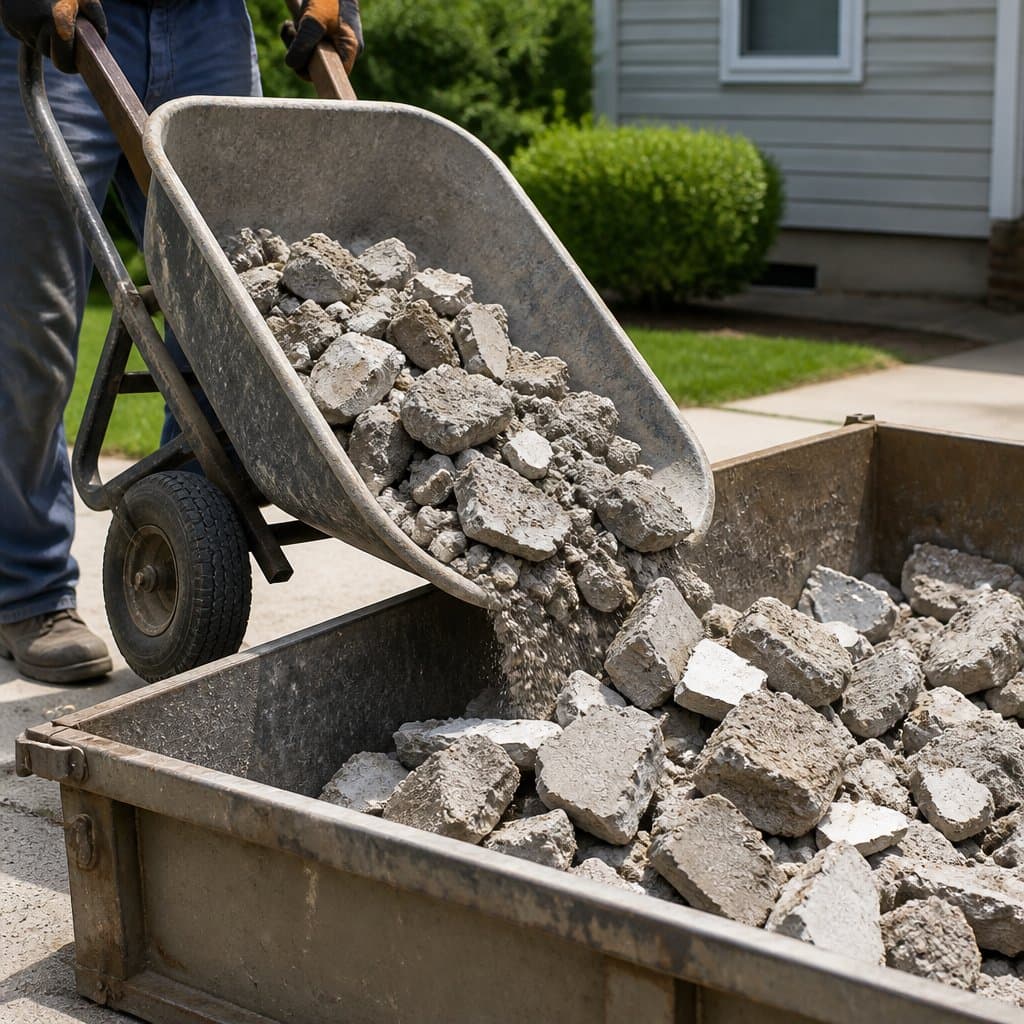
Before arranging off-site disposal, consider whether broken concrete can be reused directly on the same property. Crushed or broken concrete works well as fill for low-lying areas, as a base layer under new gravel driveways, and as drainage aggregate in French drain systems. The U.S. EPA notes that brick, concrete, and masonry can be recycled on-site as fill, subbase material, or driveway bedding[1]. On-site reuse avoids hauling costs, tipping fees, and the need to source a separate disposal container for the concrete load.
Limitations of On-Site Reuse
On-site reuse works best when the project has a specific need for fill or base material. It does not make sense for a simple patio tear-out in a finished yard with no areas needing fill. It also requires that the concrete is broken to a manageable size — very large slabs or thick chunks cannot simply be buried in a yard without long-term settling and drainage issues. For most homeowners, the practical question is whether the project provides a natural opportunity to use the material, not whether on-site reuse is theoretically possible.
What Makes a Concrete Load Recyclable
Cleanliness is the single most important factor in whether a concrete load qualifies for recycling. Even a small amount of contamination can cause an entire load to be reclassified as general C&D waste and sent to a standard landfill instead.
Acceptable Loads for Concrete Recycling
Most CCDD recycling facilities accept clean concrete with embedded rebar or wire mesh, since the metal is screened out mechanically during the crushing process. Painted concrete surfaces are generally acceptable if the paint is not lead-based. Small amounts of soil attached to concrete from a footing or slab base are usually tolerated, though large volumes of soil mixed into the load can cause problems.
Loads That Are Often Rejected
Concrete mixed with asphalt, wood, drywall, or other C&D materials is frequently rejected by concrete-only recycling facilities. Concrete with oil or chemical contamination from spills, petroleum product storage, or industrial processes requires separate handling and cannot enter a CCDD recycling stream. Lead-based paint on older concrete surfaces needs to be assessed before the material is accepted. If you are unsure about the condition of your concrete, calling the receiving facility ahead of time to describe the material and ask about their specific acceptance criteria takes only a few minutes and prevents a wasted trip.
Concrete Recycling in the Peoria Area Context
For Peoria-area homeowners and contractors, GFL Environmental operates the primary C&D processing infrastructure in Central Illinois through the Wigand Transfer Station in Chillicothe and Indian Creek Landfill in Hopedale, both of which handle construction material disposal. Confirming specific acceptance criteria for concrete recycling directly with the facility before hauling material is the practical first step for any project in the region.
For the disposal container side of the equation, the guide on what size dumpster you need for concrete disposal covers the weight limits and container types that apply before material reaches a recycling facility. And for a broader look at how to break the concrete into pieces suitable for recycling or transport, our guide on what tools you need to break up concrete for DIY removal covers the breaking side of the process.
Zap Dumpsters Peoria works as a sourcing partner for concrete disposal containers, helping Peoria homeowners and contractors source heavy debris containers for concrete loads headed to recycling facilities or permitted disposal sites.
Concrete Slab Recycling Options Near You in Peoria
Recycling concrete slabs is straightforward when the load is clean and the right facility is identified ahead of time. The benefits — lower tipping fees, reduced landfill impact, and the recovery of useful aggregate material — make recycling the default choice for most clean residential concrete loads. For the portion of the project that requires containerized transport to a recycling or disposal facility, Zap Dumpsters Peoria sources the right heavy debris container near you.
How Do You Recycle Concrete Slabs and What Are the Benefits FAQs
How do you recycle concrete slabs and what are the benefits for a residential tear-out?
You recycle concrete slabs by taking clean broken concrete to a CCDD-permitted recycling facility, where it is crushed into aggregate; the benefits include lower tipping fees compared to standard landfill disposal and diversion of heavy material from landfills.
Can concrete with rebar be recycled?
Yes. Most CCDD recycling facilities accept concrete with embedded rebar or wire mesh, since the metal is screened out mechanically during the crushing process.
What happens to recycled concrete after it is crushed?
Crushed concrete is graded into aggregate sizes and sold for use in road base construction, backfill, drainage applications, and as a partial aggregate replacement in new concrete mixes.
Can I reuse concrete on my own property instead of recycling it?
Yes. Broken concrete can be used on-site as fill for low-lying areas, as a base layer under new gravel, or as drainage aggregate in French drain systems, which avoids disposal fees entirely.
What makes a concrete load ineligible for recycling?
Contamination is the primary disqualifier — concrete mixed with asphalt, chemical spills, lead-based paint, or significant amounts of other C&D debris is often rejected by concrete-only recycling facilities.
How Do You Recycle Concrete Slabs and What Are the Benefits Citations
- U.S. Environmental Protection Agency, Sustainable Management of Construction and Demolition Materials: https://www.epa.gov/smm/sustainable-management-construction-and-demolition-materials