
Key Takeaways
- Hoarding cleanup is a category of its own — standard junk removal crews, standard dumpsters, and standard timelines all fall short.
- Active pest infestations must be treated before the physical cleanout begins, or workers spread contamination throughout the property.
- OSHA’s Bloodborne Pathogens Standard (29 CFR 1910.1030) applies to anyone handling materials contaminated with biological waste — N95 respirators and protective suits are mandatory, not optional.
- Subfloor rot, structural weight damage, and blocked HVAC systems are common hidden costs that only become visible once the clutter is removed.
- Dumpster weight tickets and haul receipts from a hoarding cleanup are critical legal documents for justifying deposit deductions that far exceed the deposit amount.
Cleaning up after hoarder tenants is one of the most challenging situations a Peoria landlord will ever face. The scope goes far beyond a standard cleanout — it can involve biohazardous conditions, structural damage, pest infestations, and a legally complex process for sorting and disposing of what may amount to an entire household of accumulated material.[1]
Need a landlord hoarder checklist? Click here for our interactive version
Why Cleaning Up After Hoarder Tenants Requires a Different Approach
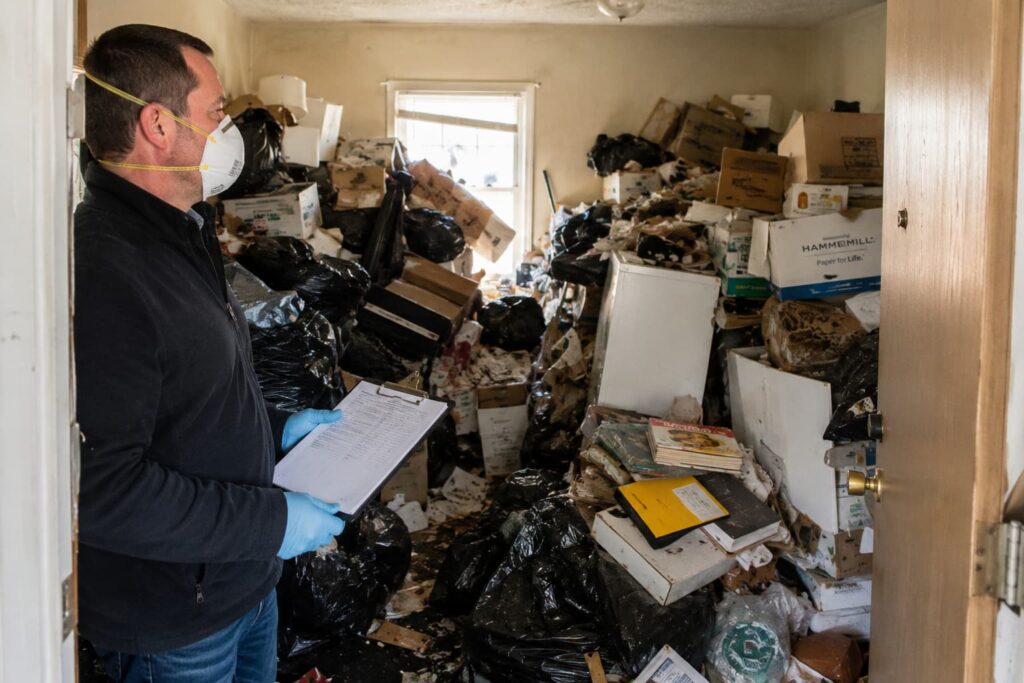
A typical eviction cleanout means removing furniture, bagging trash, and doing a deep clean. A hoarding cleanout means doing all of that — plus managing health hazards that most landlords and standard cleanup crews are not equipped to handle safely. The difference is not just scale. It is the nature of what has been allowed to accumulate over months or years inside the property.
Hoarded environments commonly contain layers of organic material — rotting food, animal waste, mold colonies, and insect or rodent infestations — that have been undisturbed for long enough to create genuine biohazard conditions. Disturbing these materials without proper protective equipment releases airborne pathogens, mold spores, and bacteria that pose serious health risks to anyone in the space. OSHA’s Bloodborne Pathogens Standard (29 CFR 1910.1030) establishes that any worker exposed to potentially infectious biological materials must use appropriate personal protective equipment, including N95 or better respirator masks, gloves, and protective suits.[1]
Sending a standard cleanup crew into a hoarding situation without proper PPE and biohazard training is not just inefficient — it is a health and legal liability for the landlord who hired them.
For Peoria landlords, this means the first decision in any hoarding cleanout is not which dumpster to order — it is whether the situation requires a certified biohazard remediation crew before any general cleanout work can begin. Our detailed walkthrough on how to clean an apartment after a bad tenant in Peoria covers the general cleanup sequence, but hoarding properties require an earlier and more specialized first step.
Phase One: Assessment and Pest Treatment Before Anything Else
Walk the Property With Your Eyes Open
Before scheduling any crew or ordering any container, do a careful assessment walk of the property — with full PPE if the situation looks severe. You are looking for four things: the depth of clutter in each room, signs of active pest infestation, visible mold or water damage, and evidence of structural issues such as sagging floors or ceilings. The answers to those four questions determine your cleanup plan, your container size, and whether you need biohazard specialists before general debris removal begins.
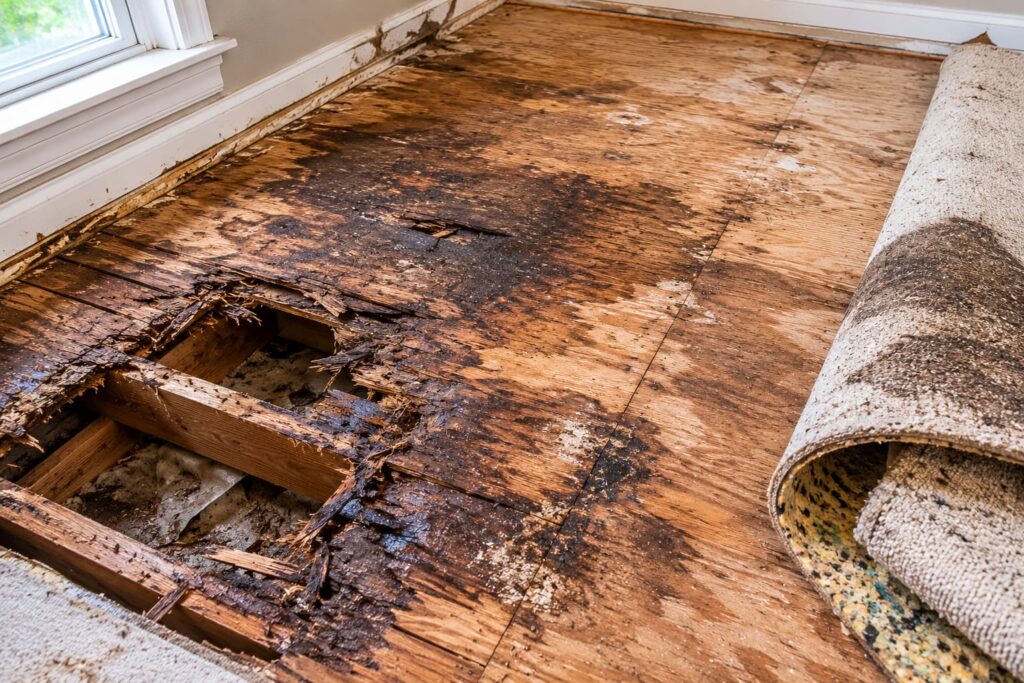
Pay particular attention to the floor beneath the piles. Hoarding situations frequently involve moisture trapped under accumulated material — from spilled liquids, pet accidents, or plumbing leaks that went unaddressed for years. That trapped moisture rots carpets, destroys the plywood subfloor beneath them, and can compromise the structural integrity of floor joists in extreme cases. You may not see the full extent of subfloor damage until the debris is cleared — so budget for it before the cleanout begins rather than being surprised mid-project.
Extermination Before Cleanout Is Non-Negotiable
An active rodent or cockroach infestation must be treated before the physical removal of clutter begins. This is not a sequence you can reverse. When workers start disturbing deeply nested piles of material, rodents scatter — carrying fleas, droppings, and pathogens throughout the property and potentially to adjacent units in a multi-family building. Cockroach populations that have been contained within piles of debris will spread throughout the structure when their habitat is disrupted.
Bring in a licensed pest control company for a full treatment before any cleanup crew sets foot in the space. Get documentation of the treatment — the pest control invoice becomes part of your legal cost file for deposit deduction purposes. In Peoria and Tazewell County, most professional pest control companies will provide a written assessment and treatment report that you can attach to your itemized deposit statement.
| Pre-Cleanout Assessment Finding | Action Required Before Cleanout | Specialist Needed? |
|---|---|---|
| Active rodent infestation | Licensed extermination treatment | ✅ Yes — pest control company |
| Visible mold on walls or surfaces | Mold assessment; containment barriers before disturbing | ✅ Yes — certified mold remediation |
| Animal waste / biological material | Full PPE required; biohazard protocol | ✅ Yes — OSHA-compliant crew |
| Heavy clutter, no visible infestation | Standard deep-clean crew with N95 masks | Recommended but may not require biohazard specialist |
| Sagging floors or ceilings | Structural inspection before crews enter | ✅ Yes — licensed contractor inspection |
Phase Two: The Cleanout Itself — What Makes Hoarding Different
You Cannot Treat Everything as Trash
One of the most counterintuitive aspects of cleaning up after hoarder tenants is the legal obligation to sort carefully through what looks like garbage. Illinois law requires landlords to treat left-behind personal property with legal due process, and hoarded environments often contain items that legally qualify as potentially valuable personal property — collectibles, financial documents, jewelry, medications, family photos — buried under layers of what looks like pure debris.
Before anything goes into the dumpster, a team member should do a sorting pass through each area. Items sorted into the “potentially valuable” category must be inventoried, photographed, and held per your notification obligations to the former tenant. Only after the legally required holding period has passed — and proper certified mail notice has been sent — can those items be disposed of. The cost and time this adds to the cleanup is real, but the legal exposure from skipping this step is far greater.
Container Size and Multiple Pulls Are Almost Always Necessary
Hoarder cleanouts generate far more debris than any standard rental cleanout. A single 30-yard roll-off dumpster — which holds approximately nine pickup truck loads of debris — may not be enough for a severely hoarded property. Heavy, dense materials like wet carpet, subcarpet padding, rotted subfloor sections, and water-damaged furniture weigh far more than their volume suggests, which means you can hit your dumpster’s weight limit before the container is physically full.
Working with a Peoria roll-off dumpster sourcing partner who understands hoarder cleanout volumes means you can plan for multiple container pulls from the start rather than being caught waiting for a swap-out mid-cleanup. Weight tickets from each pull document the true tonnage of the cleanout — and that documentation is critical when the cleanup cost far exceeds the tenant’s security deposit and you need to pursue additional damages.
Hazardous Materials Require Separate Disposal
Hoarding situations consistently produce a higher proportion of materials that cannot go into a standard roll-off container: paint cans, chemical containers, car batteries, appliances containing refrigerants, medications, and electronic waste. These items require separate handling and must be taken to an approved disposal facility. In Peoria County, GFL Environmental at (309) 688-0760 can advise on current options for hazardous material disposal at the Chillicothe Transfer Station and Indian Creek Landfill in Hopedale.
| Standard Cleanout vs. Hoarder Cleanout | Standard 3-Bed Cleanout | Hoarding Situation |
|---|---|---|
| Typical container size | 20-yard roll-off | 30–40 yard; often multiple pulls |
| PPE requirement | Basic gloves and dust mask | N95+ respirator, protective suit, gloves |
| Pre-cleanout step | Walk-through and photo documentation | Pest treatment + biohazard assessment first |
| Specialist needed? | Usually no | Often yes — biohazard and/or mold remediation |
| Typical cleanup time | 1–2 days | 3–7 days or more depending on scope |
| Total cost range | $500–$2,000 | $5,000–$15,000+ |
Phase Three: Structural Assessment After the Debris Is Gone
Once the debris is cleared, you will likely be looking at a property that reveals damage that could not be seen or assessed while the hoard was in place. This is when you need a licensed contractor to inspect the subfloors, check the ceiling joists above the most heavily loaded rooms, assess the HVAC system for blockages or damage, and evaluate walls and windows for moisture intrusion or structural compromise.
Blocked HVAC vents are extremely common in hoarding situations. Piles of material stacked against or over floor vents restrict airflow for months or years, putting significant stress on the heating and cooling system. In Central Illinois winters, an overworked furnace in a hoarded property can fail entirely. Replacing or servicing an HVAC system is a significant expense — and one that can legitimately be charged to the tenant’s deposit if the blockage and resulting damage are documented with photos and a contractor’s assessment.
Industry professionals who specialize in hoarding cleanup note that post-clearance structural discoveries are the norm, not the exception. “By the time we finish a hoarding cleanout,” says one veteran property restoration specialist, “the real cost of the damage almost always exceeds what’s visible on day one. You have to build in a contingency budget for what you find under the clutter.”
Conclusion: Get the Right Resources for Hoarder Cleanups Near You
Cleaning up after hoarder tenants in Peoria is a multi-phase operation that requires honest assessment, the right protective equipment, pest treatment first, careful legal sorting, and large-capacity container planning. Landlords who try to manage a hoarding cleanup the same way they handle a standard turnover almost always face cost overruns, extended vacancies, and legal exposure they were not prepared for.
The good news is that with the right team in place — biohazard specialists, a licensed pest control company, a structural contractor, and a reliable dumpster sourcing partner who can get large containers to your Peoria property fast — a hoarding cleanup becomes a manageable, documented process rather than an overwhelming emergency. Call Zap Dumpsters Peoria to discuss container sizing and scheduling for your specific situation before the cleanup begins.
Facing a Hoarder Cleanout in Peoria? Get the Right Container First.
Hoarder cleanouts need larger containers and often multiple pulls. Zap Dumpsters Peoria helps landlords across Central Illinois source the right roll-off size — with weight tickets that document every ton removed. Call to discuss your situation before the cleanup begins.
Cleaning Up After Hoarder Tenants FAQs
What makes cleaning up after hoarder tenants different from a standard cleanout?
Cleaning up after hoarder tenants involves biohazard risks, active pest infestations, structural damage, and a far higher volume of debris than a typical rental cleanout. Standard crews and containers are often not adequate — the situation typically requires pest treatment before cleanout begins, OSHA-compliant protective equipment, certified biohazard handling if biological waste is present, and 30-yard or larger roll-off containers with multiple pulls.[1]
Do I need a special cleanup crew for cleaning up after hoarder tenants?
In most cases, yes. Cleaning up after hoarder tenants involving animal waste, mold, or any biological material requires workers who follow OSHA’s Bloodborne Pathogens Standard (29 CFR 1910.1030) with proper respirators, protective suits, and hazardous disposal protocols. Standard junk removal crews are not trained or equipped for these conditions.[1]
Can I deduct the full cost of a hoarder cleanup from the tenant’s security deposit?
Yes — cleaning and disposal costs caused by damage beyond normal wear and tear are deductible under Illinois law, but you must document every expense with itemized invoices, dumpster weight tickets, pest control receipts, and contractor assessments. When costs exceed the deposit, you may need to pursue additional damages through small claims court.
How big a dumpster do I need for a hoarder tenant cleanout in Peoria?
Most hoarding cleanouts in Peoria require a 30-yard or 40-yard roll-off container, and many situations require multiple container pulls due to the volume and weight of accumulated debris. Wet carpet, rotted subfloor sections, and furniture are particularly dense and can exceed weight limits before a container is physically full.
What hidden damage should I expect after cleaning up after hoarder tenants?
After cleaning up after hoarder tenants, the most common hidden damage includes subfloor rot from trapped moisture, damaged HVAC systems from years of blocked vents, pest damage to insulation and structural materials, and mold growth inside walls or under flooring. A licensed contractor inspection after the debris is cleared is essential before any renovation work begins.
Landlord’s Checklist For Hoarder Clearances
Hoarder Tenant Cleanup Checklist
Comprehensive Guide for Landlords
Cleaning Up After Hoarder Tenants Citations
- OSHA — Bloodborne Pathogens Standard (29 CFR 1910.1030): PPE requirements for workers handling biological materials in hoarding and biohazard cleanup situations
- iPropertyManagement — Illinois Security Deposit Returns: Documentation requirements for deductions exceeding deposit amounts
- DoorLoop — Illinois Eviction Laws 2026: Tenant personal property handling obligations during hoarder cleanouts