
Key Takeaways
- Most Peoria garage cleanouts require between 10 and 20 cubic yards of dumpster capacity
- A 10-yard dumpster handles single-car garages with light to moderate clutter
- 15-yard containers work well for standard two-car garages with mixed debris
- 20-yard dumpsters accommodate heavily cluttered two-car garages or those with bulky items
- Weight limits matter as much as volume when selecting the right size
Article Summary
Choosing the correct dumpster size for garage cleanouts and decluttering in Peoria depends on your garage’s square footage, clutter level, and debris type. Most homeowners need between 10 and 20 cubic yards, with 15-yard containers being ideal for typical two-car garages containing furniture, storage boxes, and yard equipment.
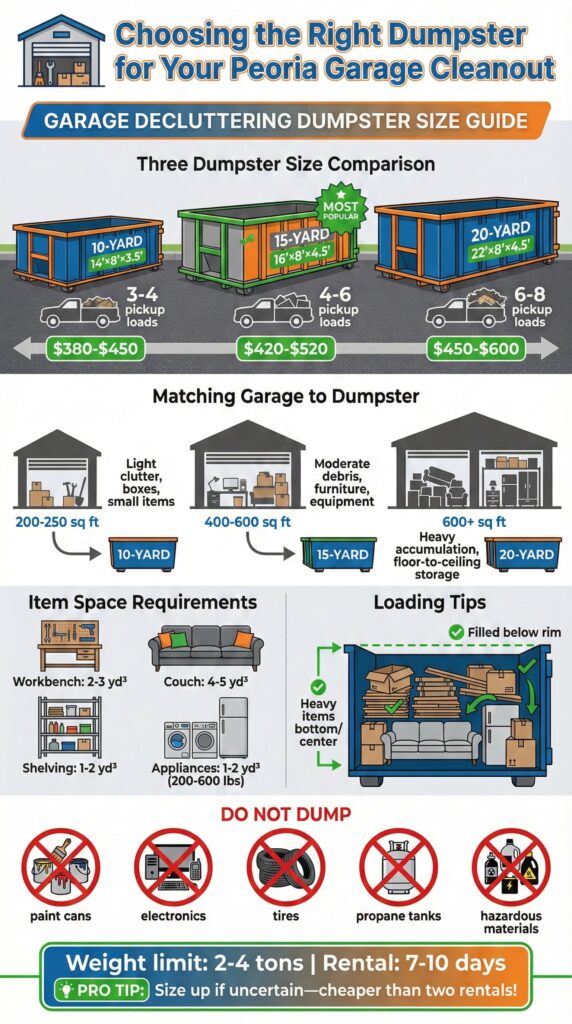
Understanding Dumpster Sizes for Garage Projects
Garage decluttering projects in Peoria generate surprising amounts of waste. Years of accumulated items transform functional parking spaces into storage units packed with forgotten belongings. Selecting the right dumpster size makes the difference between smooth disposal and costly mistakes.
Dumpster sizes are measured in cubic yards, representing the container’s internal volume. A cubic yard equals three feet in each dimension—length, width, and height. This measurement tells you how much space you have for debris, not how much weight the container can hold. Weight limits are separate specifications that matter just as much as volume capacity.
Local Peoria hauling partners typically offer four main sizes for residential garage cleanouts. A 10-yard dumpster measures approximately 14 feet long by 8 feet wide by 3.5 feet high, holding about three pickup truck loads. The 15-yard option extends to roughly 16 feet long by 8 feet wide by 4.5 feet high, accommodating four to six pickup loads. A 20-yard container spans around 22 feet long by 8 feet wide by 4.5 feet high, fitting six to eight pickup truck loads of material.
Understanding these dimensions helps you visualize how much debris fits in each container. The footprint matters too—you need enough space in your Peoria driveway or property for placement. Most residential driveways accommodate containers up to 20 yards without blocking access or creating placement challenges.
Calculating Your Garage’s Debris Volume
Start by assessing what you’re removing. Walk through your garage and categorize items into keep, donate, sell, and discard piles. This sorting process reveals how much material requires disposal. Single-car garages typically contain 200 to 250 square feet of floor space. Two-car garages range from 400 to 600 square feet. Three-car garages extend beyond 600 square feet.
Floor space alone doesn’t tell the complete story. Look vertically too—shelving units, ceiling storage, and wall-mounted systems add significant volume. A garage packed floor-to-ceiling with boxes requires much more capacity than one with items stored only at floor level. Measure or estimate the height of your accumulated clutter zones.
Heavy items like workbenches, metal shelving, lawn equipment, and automotive parts pack differently than lightweight materials. Bulky furniture pieces consume volume without adding much weight. Dense materials like concrete blocks, old pavers, or machinery parts max out weight limits long before filling container volume.
Weight Limits and Their Impact
Every dumpster rental includes a weight allowance measured in tons. A 10-yard container typically includes two to three tons (4,000 to 6,000 pounds). Fifteen-yard dumpsters offer similar weight limits of two to three tons. Twenty-yard containers usually provide three to four tons (6,000 to 8,000 pounds) of weight capacity.
Exceeding weight limits triggers overage fees typically ranging from $75 to $100 per ton over the included allowance. These charges add up quickly when disposing of heavy garage items. Understanding material weights helps you avoid unexpected costs and select appropriate container sizes.
Common garage items have varying weights. A standard refrigerator weighs 200 to 300 pounds. Washing machines range from 150 to 220 pounds. Riding lawn mowers weigh 400 to 600 pounds. Metal shelving units add 50 to 150 pounds each. Concrete debris weighs roughly 4,000 pounds per cubic yard—significantly heavier than mixed household items.
Matching Dumpster Sizes to Garage Types
Different garage configurations generate different amounts of waste. The size and layout of your Peoria garage directly influences which container works best for your decluttering project.
Single-Car Garage Solutions
Single-car garages typically measure 12 to 16 feet wide by 20 to 24 feet deep. These smaller spaces hold less accumulated clutter than larger garages, making them perfect candidates for 10-yard dumpsters. This size handles moderate cleanouts efficiently without paying for unused capacity.
A 10-yard dumpster works well when your single-car garage contains:
- Seasonal decoration storage boxes
- Garden tools and lawn care equipment
- Sporting goods and recreational gear
- Small furniture pieces like folding chairs
- Limited amounts of automotive supplies
Light decluttering in single-car garages sometimes requires even less capacity. However, 10-yard containers represent the practical minimum size for most residential projects. Smaller options exist but offer limited cost savings while restricting what you can efficiently load.
If your single-car garage includes heavy items like old appliances, concrete materials, or dense metal objects, communicate this with Zap Dumpsters Peoria when arranging your container. Weight considerations matter more than volume in these situations.
Standard Two-Car Garage Cleanouts
Two-car garages are Peoria’s most common residential configuration. These spaces measure 20 to 24 feet wide by 20 to 24 feet deep, providing 400 to 600 square feet of potential storage. Years of accumulation in these garages creates substantial disposal needs.
Most two-car garage cleanouts require 15-yard dumpsters when the space contains:
- Multiple storage units and shelving systems
- Seasonal items from holidays and outdoor activities
- Children’s outgrown toys and sports equipment
- Yard maintenance tools and gardening supplies
- Workshop materials and project remnants
- Moderate amounts of furniture
The 15-yard size offers the capacity sweet spot for typical garage decluttering. It provides enough room for substantial cleanouts without the footprint and cost of larger containers. This size accommodates mixed debris types commonly found in residential garages—cardboard boxes, plastic storage bins, metal shelving, wood scraps, and general household items.
Heavily cluttered two-car garages benefit from 20-yard containers instead. Consider upgrading to this larger size when your garage includes:
- Floor-to-ceiling storage throughout most of the space
- Large furniture pieces like couches, tables, or cabinets
- Major appliances stored long-term
- Extensive collections requiring disposal
- Construction materials from incomplete projects
The additional capacity prevents mid-project complications. Underestimating your needs forces you to either pay for a second container or stop your decluttering momentum to arrange additional disposal capacity.
Oversized and Three-Car Garage Projects
Three-car garages and oversized spaces exceed 600 square feet. These large areas accumulate years or decades of items, particularly in established Peoria neighborhoods. Cleanouts of this magnitude almost always require 20-yard dumpsters or larger.
Large garages often become catch-all storage for multiple household functions—workshop space, seasonal storage, automotive maintenance area, and general overflow from living spaces. This multi-purpose use creates diverse waste streams with varying weights and volumes.
Twenty-yard containers handle substantial garage cleanouts including:
- Complete workshop dismantling with benches and tools
- Multiple large appliances and machinery
- Extensive shelving and storage system removal
- Years of accumulated boxes and containers
- Furniture pieces no longer needed in the home
For extreme hoarding situations or garages that have served as long-term storage for entire households, consider consulting with Zap Dumpsters Peoria about <a href=”https://zapdumpsterspeoria.com/residential-rentals/home-cleanout/” rel=”noopener” target=”_blank”>Peoria home cleanout services</a> to properly assess your capacity requirements. These complex projects sometimes benefit from professional guidance to determine if one large container or multiple smaller loads better serves your needs.
Ready to Reclaim Your Garage Space?
Zap Dumpsters Peoria sources the perfect container for your garage decluttering project. We coordinate with trusted local haulers to match you with the right size and schedule.
Call 309-650-8954 for expert guidance on dumpster sizing.
Common Garage Items and Their Space Requirements
Understanding how typical garage contents translate to dumpster capacity helps you make informed size decisions. Different items pack differently and consume varying amounts of volume.
Furniture and Large Items
Garage furniture includes workbenches, storage cabinets, shelving units, and occasionally household pieces stored long-term. A standard workbench occupies approximately two to three cubic yards of space depending on construction. Metal storage cabinets range from one to two cubic yards each. Large shelving systems consume two to four cubic yards when broken down.
Household furniture stored in garages adds substantial volume. A three-seat couch takes up roughly four to five cubic yards. Dining tables with leaves extended occupy three to four cubic yards. Mattresses and box springs each consume about two cubic yards of dumpster space.
Breaking down larger items when possible maximizes your container’s capacity. Removing table legs, disassembling shelving, and cutting long materials into manageable lengths helps use space efficiently. This approach works especially well when working within the limits of smaller containers.
Boxes, Bins, and General Storage
Cardboard boxes and plastic storage containers make up significant portions of garage cleanouts. Empty boxes compress well, occupying minimal space when flattened. Boxes still containing unwanted items require more room since you’re disposing of both container and contents.
Stack similar-sized boxes and bins efficiently to minimize wasted space. Place heavier items on the bottom and lighter materials on top. This loading strategy prevents crushing valuable dumpster capacity with poorly arranged debris.
Seasonal decorations stored in garages generate substantial volume. Holiday items, outdoor furniture cushions, sporting equipment, and recreational gear add up quickly. One standard storage shelf loaded with bins and boxes represents approximately two to three cubic yards of disposal volume.
Tools, Equipment, and Yard Materials
Power tools, hand tools, and workshop equipment occupy less volume than furniture but often carry significant weight. A collection of tools and hardware fits into one to two cubic yards. Larger equipment like lawn mowers, snow blowers, and power washers each consume approximately one cubic yard of space.
Yard maintenance supplies including bags of old fertilizer, partially used chemicals, and broken equipment contribute to overall volume. Remember that certain chemicals and hazardous materials cannot go into standard dumpsters. Peoria residents must dispose of these items through proper hazardous waste channels.
Lumber scraps, plywood sheets, and construction materials from incomplete projects take up substantial room. Stack these materials neatly in your container rather than tossing them randomly. Organized loading maximizes capacity usage.
Cost Considerations for Peoria Garage Cleanouts
Understanding local pricing helps you budget appropriately for your garage decluttering project. Peoria dumpster rental costs vary based on several factors including container size, rental duration, and debris type.
Local hauling partners in the Peoria area typically charge between $384 and $654 for residential dumpster rentals depending on size. A 10-yard container generally costs $380 to $450 for a 7 to 10-day rental period. Fifteen-yard dumpsters range from $420 to $520. Twenty-yard containers typically run $450 to $600 in the Central Illinois market.
These prices usually include delivery, placement, rental period, pickup, and disposal of materials within the weight limit. Additional charges apply when exceeding weight allowances or extending rental periods beyond the included timeframe. Understanding what’s covered in your rental rate prevents surprise fees.
Hidden Costs to Avoid
Several factors trigger additional charges beyond base rental rates. Weight overages represent the most common unexpected expense. Exceeding your included tonnage by just one ton adds $75 to $100 to your final bill. Heavy garage items quickly accumulate weight.
Extended rental periods incur daily fees when you keep containers beyond the included timeframe. Most local haulers charge $10 to $25 per additional day. Plan your decluttering timeline carefully to complete work within your rental period.
Prohibited items discovered in your container create disposal complications and potential fees. Hazardous materials, electronics, tires, and certain appliances require special handling. Review acceptable materials with Zap Dumpsters Peoria before loading to avoid these issues.
Street placement sometimes requires permits from the City of Peoria. Permit costs range from $25 to $100 depending on placement duration and location. Private property placement usually avoids permit requirements but confirm this with your coordinator.
Getting the Best Value
Selecting the correct size on your first rental provides better value than ordering a second container mid-project. A 15-yard dumpster costs significantly less than renting two 10-yard containers sequentially. When uncertain between sizes, consider sizing up rather than down.
Combining your garage cleanout with other home projects maximizes your rental value. If you’re also tackling a basement, attic, or yard cleanup, one larger container might serve all needs simultaneously. Coordinate timing so projects overlap with your rental period.
Request delivery early in your rental period to maximize available time. Some homeowners order containers before starting work, giving them flexibility to load materials as they sort through belongings. This approach reduces time pressure and allows for more thorough decision-making about what to keep versus discard.
| Dumpster Size | Dimensions | Best For | Typical Cost |
|---|---|---|---|
| 10-Yard | 14’L × 8’W × 3.5’H | Single-car garage, light clutter | $380-$450 |
| 15-Yard | 16’L × 8’W × 4.5’H | Standard two-car garage, moderate items | $420-$520 |
| 20-Yard | 22’L × 8’W × 4.5’H | Heavy clutter, bulky items, large garages | $450-$600 |
Practical Loading Strategies
Efficient loading maximizes your dumpster’s capacity and prevents weight distribution problems. Proper techniques help you fit more debris while staying within weight limits.
Bottom Layer Foundation
Start by placing flat, heavy items on the dumpster floor. Sheets of plywood, particle board, or broken furniture bases create a stable foundation. This approach distributes weight evenly across the container bottom, preventing concentrated load points that could cause transport issues.
Break down large furniture pieces before loading. Remove legs from tables, disassemble shelving units, and collapse cardboard boxes. This preparation creates more usable space and allows materials to nest together efficiently.
Heavy items like appliances, metal cabinets, and machinery go in first. Position these items toward the center and front of the container where weight distribution works best. Never place extremely heavy materials exclusively at one end—this creates balance problems during transport.
Filling Vertical Space
Once your foundation layer is established, begin filling upward. Place medium-weight items like storage bins, smaller furniture pieces, and yard equipment next. Try to maintain relatively even heights across the container rather than building tall piles in one section.
Use empty spaces strategically. Hollow items like garbage cans, storage totes, and buckets can hold smaller loose materials. Fill these containers with tools, hardware, or other small items before placing them in the dumpster. This technique maximizes every cubic yard of capacity.
Long materials like lumber, PVC pipes, or metal framing should run lengthwise in the container. Position these items so they don’t create gaps or waste space. Breaking exceptionally long pieces into manageable sections helps them pack more efficiently.
Top Layer Considerations
The final layer matters for safety and compliance. Materials cannot extend above the top edge of the container—this violates transportation safety regulations. Overfilled dumpsters cannot be picked up until you remove excess materials.
Lighter items work well for top layers. Cardboard boxes, plastic bins, and cushioned materials fill the upper portion without exceeding weight limits. Avoid placing sharp or protruding objects at the very top where they might create hazards.
Some items should never go in dumpsters regardless of how much space remains. Paint cans, automotive fluids, propane tanks, and other hazardous materials require special disposal through Peoria’s hazardous waste programs. Electronics and tires also have specific disposal requirements.
Making Your Decision
Selecting the right dumpster size for your Peoria garage cleanout requires honest assessment of your situation. Consider these final factors before committing to a container size.
Choose a 10-yard dumpster when your project involves:
- Single-car garage or very light decluttering
- Primarily lightweight materials and boxes
- Limited furniture or large items
- Budget constraints requiring minimum costs
- Tight driveway or property limitations
Select a 15-yard container for projects including:
- Standard two-car garage cleanout
- Mix of furniture, boxes, and equipment
- Moderate accumulation over several years
- Average weight and volume materials
- Most typical residential garage situations
Opt for a 20-yard dumpster if your cleanout has:
- Heavy clutter throughout the space
- Multiple large furniture pieces or appliances
- Floor-to-ceiling storage in most areas
- Combination of garage and other spaces
- Concerns about having sufficient capacity
When uncertain, consult with Zap Dumpsters Peoria’s coordination team. Describing your garage size, clutter level, and major items helps professionals recommend appropriate sizing. This guidance prevents costly mistakes like undersizing or unnecessary oversizing.
Working with experienced garage cleanout dumpster providers ensures you receive containers matched to your project’s actual requirements. They understand local conditions, disposal facilities, and common Peoria homeowner needs.Remember that dumpster selection impacts more than just cost. The right size makes your decluttering project smoother, faster, and less stressful. Adequate capacity means you can work continuously without interruptions for additional disposal arrangements. For additional guidance on organizing your garage decluttering process, <a href=”https://www.quora.com/How-do-you-effectively-organize-and-clean-a-garage” rel=”noopener” target=”_blank”>community resources offer practical strategies</a> for approaching these projects systematically.
Mini Case Study 1: The Johnsons in North Valley rented a 10-yard container for their single-car garage, only to find they needed a second dumpster when they discovered decades of accumulated items behind stored furniture. They spent $800 total instead of $520 for one appropriately sized 20-yard container.
Mini Case Study 2: Sarah in Alta estimated her two-car garage needed a 20-yard dumpster but coordinated with Zap Dumpsters Peoria first. Professional assessment revealed a 15-yard container would suffice, saving her $100 while still providing adequate capacity for her moderate decluttering project.
Most Peoria garage cleanouts succeed with 15-yard dumpsters, offering the capacity and value sweet spot for typical residential projects.
Proper sizing eliminates the stress of mid-project capacity shortages while avoiding unnecessary costs from oversized containers.
Conclusion
Choosing the right dumpster size for your Peoria garage decluttering project directly impacts your success, budget, and timeline. Most homeowners find 15-yard containers provide ideal capacity for standard two-car garages with moderate accumulation. Single-car spaces or light cleanouts work well with 10-yard options, while heavily cluttered or large garages benefit from 20-yard capacity.
Understanding your garage’s actual disposal needs—not just guessing—prevents costly mistakes and project delays. Assess your space honestly, consider both volume and weight factors, and consult with experienced coordinators when uncertain. The right container size makes garage reclamation projects manageable and even satisfying as you watch years of clutter disappear into organized disposal.
Transform Your Cluttered Garage Today
Zap Dumpsters Peoria coordinates with local hauling partners to source the perfect container for your garage decluttering project. We handle the details so you can focus on reclaiming your space.
Call 309-650-8954 to discuss your garage cleanout needs.
Dumpster Size for Garage Cleanout FAQs
What size dumpster do I need for a typical two-car garage cleanout in Peoria? Most two-car garage cleanouts require a 15-yard dumpster. This size accommodates moderate clutter including storage boxes, yard equipment, small furniture pieces, and general household items accumulated over several years. The 15-yard option provides 4 to 6 pickup truck loads of capacity, sufficient for standard residential garages measuring 400 to 600 square feet. Heavily cluttered spaces with large furniture or appliances benefit from upgrading to a 20-yard container.
How do I know if my garage needs a 10-yard or 15-yard dumpster? Choose a 10-yard dumpster for single-car garages or two-car spaces with minimal accumulation—primarily boxes, small tools, and limited furniture. Select a 15-yard container when your garage includes multiple storage units, seasonal items, workshop materials, and moderate amounts of furniture. Assess your clutter level by visualizing pickup truck loads—10-yard containers hold approximately 3 to 4 loads, while 15-yard options accommodate 4 to 6 loads.
What if I have heavy items like appliances or concrete in my garage? Heavy materials impact weight limits more than volume capacity. Standard residential dumpsters include 2 to 4 tons of weight allowance. Appliances typically weigh 150 to 300 pounds each. Concrete debris weighs approximately 4,000 pounds per cubic yard. Communicate heavy item presence to Zap Dumpsters Peoria when coordinating your container. They can recommend appropriate sizes with adequate weight capacity and help you avoid overage fees ranging from $75 to $100 per ton over your limit.
Can I fit a workbench and shelving units in a 10-yard dumpster? A 10-yard container can accommodate one medium-sized workbench and several shelving units if broken down properly. Disassemble pieces to maximize space utilization. A standard workbench occupies 2 to 3 cubic yards, while metal shelving units consume 1 to 2 cubic yards each. If your garage includes extensive workshop infrastructure plus significant additional clutter, consider a 15-yard or 20-yard container to ensure adequate capacity without requiring mid-project additional disposal arrangements.
How much does a dumpster rental cost for a Peoria garage cleanout? Peoria garage cleanout dumpster rentals typically cost between $380 and $600 depending on container size. A 10-yard dumpster runs $380 to $450 for a 7 to 10-day rental period. Fifteen-yard containers range from $420 to $520. Twenty-yard options cost $450 to $600. These rates include delivery, placement, rental duration, pickup, and disposal within weight limits. Additional charges apply for exceeding weight allowances, extending rental periods, or disposing of prohibited materials requiring special handling.
Dumpster Size for Garage Cleanout Citations
- Dumpsters.com. “10 Yard Dumpster Rental | Dumpsters.com.” Accessed January 2026. https://www.dumpsters.com/sizes/10-yard-dumpster
- Budget Dumpster. “15 Yard Dumpster Rentals: A Complete Guide | Budget Dumpster.” Accessed January 2026. https://www.budgetdumpster.com/budget-dumpster-sizes/fifteen-yard-dumpster.php
- Hometown Dumpster Rental. “How Much Weight Can a 20 Yard Dumpster Hold?” Updated October 2, 2025. https://www.hometowndumpsterrental.com/blog/how-much-weight-can-a-20-yard-dumpster-hold
- Trash Daddy Dumpsters. “Dumpster Rental Peoria, IL | Trash Daddy Dumpster Rentals.” September 18, 2025. https://trashdaddydumpsters.com/dumpster-rentals-illinois/peoria/
- Zap Dumpsters Peoria. “How Much Does Dumpster Rental Cost in Peoria IL? Rate Guide.” August 2, 2025. https://zapdumpsterspeoria.com/how-much-does-a-dumpster-rental-cost-in-peoria-il/
- ZTERS. “Dumpster Rental in Peoria, IL.” Accessed January 2026. https://www.zters.com/dumpster-rental/peoria-il
- The Dumpster Rental Guys. “Garage Cleanout: Choose The Ideal Dumpster Size.” May 18, 2023. https://thedumpsterrentalguys.com/what-size-dumpster-for-garage-cleanout/
- Quora. “How do you effectively organize and clean a garage?” Accessed January 2026. https://www.quora.com/How-do-you-effectively-organize-and-clean-a-garage