
- A 15 yard dumpster fits tighter driveways and single-project cleanups, while a 20 yard dumpster gives you room to spare for multi-room jobs.
- Weight, not just size, decides which container works for heavy materials like concrete, brick, or roofing shingles.
- Peoria’s right-of-way rules only apply if you place a dumpster on the street — most driveway placements skip the permit step entirely.[2]
- Illinois road weight law is the reason overloaded containers can’t just be hauled away on a whim — the load has to meet legal transport limits first.[1]
- When your project sits right on the line between sizes, sizing up usually costs less than paying for a second container later.
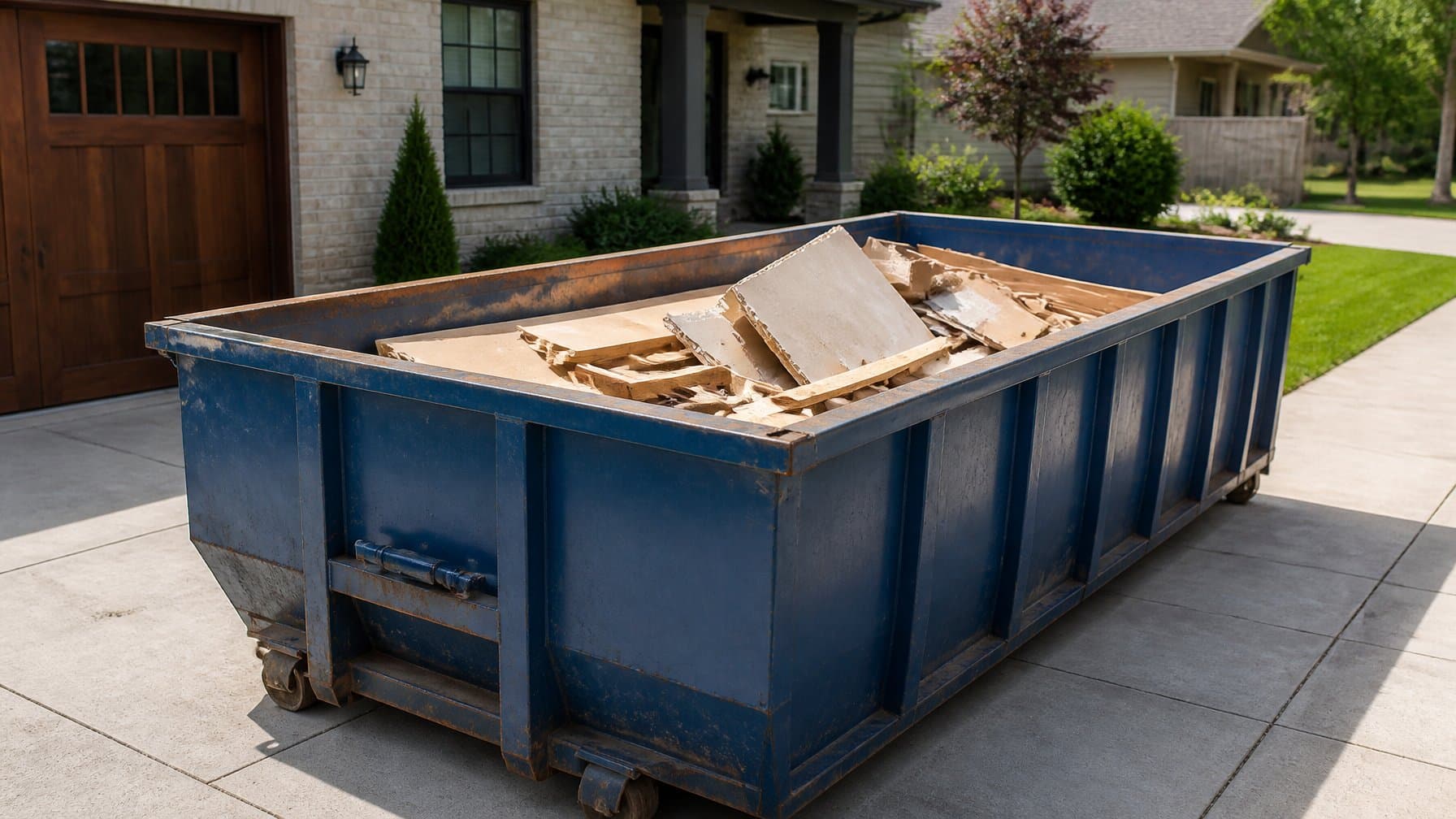
Choosing a 15 Yard Dumpster or 20 Yard Dumpster in Peoria
If you’ve started asking around Peoria about dumpster sizes, you’ve probably noticed everyone has a slightly different opinion. That’s because the right call between a 15 yard dumpster and a 20 yard dumpster really does depend on your project, not just a rule of thumb. Homeowners in older Peoria neighborhoods with shorter driveways often lean toward the smaller footprint of a 15 yard container, while families tackling a bigger renovation in a newer subdivision tend to want the extra room a 20 yard dumpster provides.
The good news is that this decision isn’t as complicated as it looks once you break it down into three questions: how much space do you have to place the container, how much material are you actually removing, and is that material light and bulky or heavy and dense? Answer those three, and the right size usually becomes obvious. Zap Dumpsters Peoria works as a local sourcing partner, connecting Peoria homeowners with the right container size for their project instead of guessing and hoping it fits.
Throughout this guide, we’ll walk through the physical differences between a 15 yard dumpster and a 20 yard dumpster, when each one makes the most sense, what Peoria’s placement rules require, and how to avoid the most common sizing mistakes homeowners make. By the end, you’ll know exactly which container fits your project and your driveway.
15 Yard vs 20 Yard Dumpster: Side-by-Side Comparison
| Feature | 15 Yard Dumpster | 20 Yard Dumpster |
|---|---|---|
| General footprint | Shorter length, fits tighter driveways | Roughly 20-25% longer footprint |
| Typical wall height | Lower sidewalls, easy to load | Slightly taller sidewalls |
| Best for volume type | Dense, heavy debris (dirt, brick, small concrete loads) | Bulky, lower-density debris (furniture, drywall, flooring) |
| Weight sensitivity | Hits its weight limit faster with heavy material | More forgiving with mixed-weight loads |
| Ideal project size | Single room, garage, deck, small yard cleanup | Multi-room remodel, roofing, whole-house cleanout |
When a 15 Yard Dumpster Makes Sense
A 15 yard dumpster is the practical choice when your driveway is on the shorter side or your project is focused on one area of the home. Think garage cleanouts, a single bathroom or bedroom remodel, a deck tear-out, or clearing brush and yard debris after a storm. It’s also a smart pick for heavy, dense material like broken concrete, brick, or dirt, since those materials hit the weight limit long before they fill the container’s visible space. If you fill a bigger dumpster with heavy masonry, you’ll often pay overage fees for exceeding the weight allowance well before you ever reach the top rail.
Homeowners in Peoria’s older, more established neighborhoods with narrower driveways and shorter setbacks tend to prefer the 15 yard size specifically because it’s easier to position without blocking a sidewalk, garage door, or neighbor’s driveway.
When a 20 Yard Dumpster Makes Sense
A 20 yard dumpster earns its reputation as the most popular residential size because it strikes a balance between capacity and cost. It handles multi-room renovations, roofing tear-offs on an average single-family home, whole-house or estate cleanouts, and larger landscaping projects without much more of a footprint than the 15 yard option. Because it holds noticeably more volume for a modest price difference, many Peoria homeowners size up to the 20 yard container even when they’re not entirely sure how much debris they’ll generate — better to have a little extra room than come up short mid-project.
Bulky, low-density debris like furniture, cabinetry, carpet, and drywall is where the 20 yard dumpster really shines. These materials take up a lot of visible space without adding much weight, so the larger volume gets used efficiently before the weight limit becomes a factor.
Weight Limits and Illinois Road Rules Homeowners Should Know
One detail that surprises a lot of first-time renters is that container weight limits aren’t arbitrary — they connect directly to Illinois road law. Vehicles transporting loaded containers on Illinois highways have to stay within maximum gross weight limits set by the Illinois Department of Transportation, and exceeding those limits requires a special oversize/overweight permit before the load can legally move.[1] That’s part of why every dumpster size comes with a weight allowance rather than an unlimited “fill it to the top” policy — it’s tied to what can be safely and legally transported on local roads.
This is exactly why weight matters as much as volume when picking between a 15 yard and 20 yard dumpster. A container that looks half-empty can already be at its legal weight limit if it’s loaded with dense material like concrete, dirt, or roofing shingles. Matching your debris type to the right container isn’t just about fitting everything in — it’s about staying within a legal, safely transportable load.
Do You Need a Permit for a Dumpster in Peoria?
Whether you need a permit comes down almost entirely to where the container sits. If your dumpster stays on private property — your driveway, yard, or another spot fully on your own lot — Peoria generally doesn’t require a right-of-way permit at all. A permit only becomes necessary if the container will sit on the city’s right-of-way, meaning the street, alley, or another public area.[2] When a right-of-way placement is required, the City of Peoria’s rules call for the container to stay at least fifty feet from any intersection, remain outside a ten-foot buffer from fire hydrants, and include reflective marking and boards to protect the road surface underneath.[2]
Most residential dumpster placements in Peoria happen entirely in the driveway, which means most homeowners never need to think about this step at all. If your project genuinely requires street placement — a home with no driveway access, for example — checking with the city ahead of time saves you from a headache on delivery day.
Quick Decision Table: Match Your Project to a Size
| Your Project | Recommended Size |
|---|---|
| Garage or single-room cleanout | 15 Yard |
| Deck or patio removal | 15 Yard |
| Small yard cleanup, brush and branches | 15 Yard |
| Kitchen or bathroom remodel | 15-20 Yard (depends on scope) |
| Roofing tear-off, average single-family home | 20 Yard |
| Whole-house or estate cleanout | 20 Yard |
| Multi-room renovation | 20 Yard |
Loading Safety Tips for Either Container Size
However you size your container, safe loading practices matter just as much as picking the right dumpster. OSHA’s construction waste disposal standard calls for scrap material, waste, and rubbish to be cleared from the work area as a project progresses rather than allowed to pile up.[3] Applying that same habit at home — loading debris steadily instead of letting it stack up around the container — keeps your work area safer and makes better use of the space you’re paying for.
Practical Loading Habits
Break down bulky items like furniture and cabinetry before loading so they take up less volume. Distribute heavier material like dirt or masonry evenly across the floor of the container rather than piling it in one corner, which helps avoid tipping the weight balance during pickup. And keep prohibited items — tires, batteries, paint cans, and other hazardous material — out of either size dumpster, since these typically require separate disposal regardless of container size.
Call (309) 650-8954 to Get Connected With the Right Size DumpsterZap Dumpsters Peoria sources 15 and 20 yard containers for homeowners across Central IllinoisFinding the Right 15 vs 20 Yard Dumpster Near You
Choosing between a 15 yard and 20 yard dumpster really comes down to matching the container to your project, not picking whichever size sounds bigger or safer. If you’re working on a focused, single-area project or dealing with dense material like concrete or dirt, the 15 yard option keeps things simple and cost-effective. If your project spans multiple rooms, involves a roofing tear-off, or you’re clearing out an entire house, the 20 yard container gives you the breathing room to avoid a second rental. For a closer look at how the smaller end of the size range compares, our guide comparing 10 yard vs 15 yard dumpsters breaks down the next size down in more detail.
Whichever size fits your project, Zap Dumpsters Peoria works as your local sourcing partner to help connect you with the right 20-yard dumpster rental option or a 15 yard container based on what you’re actually removing. Give us a call and we’ll help you land on the right size the first time, so your project stays on budget and on schedule near you.
15 vs 20 Yard Dumpster FAQs
What is the difference between a 15 yard and 20 yard dumpster?
A 15 yard dumpster has a smaller footprint and works best for single-room projects or heavy, dense debris, while a 20 yard dumpster offers noticeably more volume for multi-room renovations, roofing, or whole-house cleanouts.
Can a 15 yard dumpster fit in my driveway?
Yes, a 15 yard dumpster is sized to fit most standard residential driveways, including many of Peoria’s shorter driveways in older neighborhoods.
Do I need a permit for a 15 yard or 20 yard dumpster in Peoria?
Generally no, as long as the container stays fully on private property like your driveway. A permit is only required if the dumpster needs to sit on the city’s right-of-way, such as the street.
Is a 20 yard dumpster worth the extra cost over a 15 yard dumpster?
For most multi-room or whole-house projects, yes. The 20 yard dumpster typically costs only a little more than the 15 yard option while providing meaningfully more room, which helps you avoid paying for a second container.
What happens if I put too much heavy debris in a 15 or 20 yard dumpster?
Exceeding the container’s weight allowance can result in overage fees, and Illinois road weight laws mean an overloaded container may not be legally transportable until some material is removed.
15 vs 20 Yard Dumpster Citations
- Illinois Department of Transportation, Legal Weights and Dimensions / OPER 753 — idot.illinois.gov
- City of Peoria, Dumpster or Portable Storage Containers on the Right-of-Way — peoriagov.org
- OSHA, 29 CFR 1926.252 — Disposal of Waste Materials — osha.gov