
Key Takeaways:
- Load heavy items like furniture and concrete at the bottom to create a stable base and prevent shifting during transport
- Break down bulky materials such as cardboard boxes and furniture to reduce volume by up to 40% and maximize available space
- Fill gaps between larger items with smaller debris to eliminate wasted cubic footage and increase load efficiency
- Never exceed the top rim of the dumpster as overfilled containers cannot be legally transported and result in costly delays
- Use the walk-in door for heavy or awkward items to reduce lifting injuries and protect the container from damage
- Distribute weight evenly across the floor rather than creating unstable piles that shift during hauling
Article Summary:
Proper loading techniques can save contractors 15-30% on disposal costs by maximizing space efficiency and avoiding overage fees. Following best-practice 10-yard dumpster loading tips enables strategic placement of heavy items at the bottom, breaking down bulky materials, and filling gaps with smaller debris. This transforms a standard 10-yard container into a cost-effective waste solution for residential projects in Peoria IL.
TRY OUT OUR 10-YARD LOADING PLANNER
10-Yard Dumpster Planner
Plan your debris disposal efficiently! A 10-yard dumpster holds approximately 270 cubic feet (10 cubic yards) and has a weight limit of 4,000 lbs. Select your project type and add debris items to track your capacity usage and ensure you stay within limits.
- Break down materials into smaller pieces to maximize space efficiency
- Load heavy items first at the bottom for better weight distribution
- Avoid overfilling – debris should not extend above the top of the dumpster
- Separate prohibited items like hazardous materials, batteries, and tires
Understanding 10-Yard Dumpster Capacity and Loading Principles
A 10-yard dumpster holds approximately 10 cubic yards of material, roughly equivalent to 3-4 pickup truck loads.[1] For contractors working on residential projects in Peoria, this size handles bathroom remodels, garage cleanouts, small deck removals, and minor kitchen updates efficiently. The container typically measures around 14 feet long, 7.5 feet wide, and 3.5 feet high, providing manageable loading height for most workers without requiring ladders or excessive lifting.[2]
The fundamental principle of efficient loading centers on volumetric optimization. Every cubic foot of wasted space translates directly to reduced project efficiency and potential additional rental costs. Contractors who master strategic loading techniques routinely fit 20-30% more material into the same container compared to those who simply toss debris randomly.[3] This difference becomes significant when managing tight project budgets and compressed timelines on residential jobs throughout Peoria and surrounding Tazewell, Woodford, and Fulton County areas.
Weight distribution matters equally to volume management. While a 10-yard dumpster accommodates 2-3 tons of material, uneven loading creates transportation hazards and potential safety violations.[4] Concentrated weight on one side causes instability during hauling, risking spillage and creating liability concerns. Professional contractors understand that proper loading protects both the work crew and the hauling team while ensuring compliance with Illinois transportation regulations.
The Cost Impact of Poor Loading Techniques
Inefficient loading practices directly impact project profitability. When contractors fail to maximize dumpster capacity, they face three common financial penalties. First, they require additional dumpster rentals mid-project, adding $350-500 in unexpected costs for Peoria residential work.[5] Second, improperly loaded containers that exceed weight limits trigger overage fees ranging from $50-100 per ton over the included weight allowance.[6] Third, overfilled dumpsters that extend beyond the top rim cannot be transported, causing project delays while workers remove excess material and potentially incurring daily rental extensions.
Contractors who implement systematic loading strategies report 15-25% reduction in waste disposal costs across their annual project portfolio.
Material disposal represents a controllable expense category where attention to detail yields measurable returns. A contractor completing 20 residential projects annually who reduces disposal costs by just $75 per job saves $1,500—enough to cover insurance premiums, tool maintenance, or marketing expenses. When multiplied across a crew working multiple simultaneous jobs, the savings compound significantly.
Material Weight Considerations for 10-Yard Containers
Different materials occupy dramatically different weight-to-volume ratios, requiring contractors to adjust loading strategies accordingly. Solid concrete and masonry debris weighs approximately 4,000 pounds per cubic yard, while broken concrete in a dumpster weighs closer to 2,000 pounds per cubic yard due to air gaps between pieces, meaning a 10-yard dumpster reaches its weight limit with only 3-5 cubic yards of these heavy materials.[7] In contrast, household debris, furniture, and general renovation waste averages 300-500 pounds per cubic yard, allowing full volumetric utilization without exceeding weight restrictions.[8]
For mixed-material residential projects common in Peoria—combining some concrete, wood framing, drywall, and household items—contractors must estimate the heavy material proportion carefully. A bathroom remodel that includes removing a cast iron tub, tile backing, and concrete board requires different loading calculations than a deck replacement generating primarily dimensional lumber. Smart contractors weigh material composition before loading begins, adjusting their strategy to stay within both volume and weight parameters.
| Material Type | Weight per Cubic Yard | Max Volume in 10-Yard (2-ton limit) | Best Loading Strategy |
|---|---|---|---|
| Concrete/Masonry | 2,000-4,000 lbs | 3-5 cubic yards | Bottom layer only, fill remaining space with light materials |
| Wood/Lumber | 400-700 lbs | 8-10 cubic yards | Break into manageable lengths, layer horizontally |
| Drywall | 450-500 lbs | 8-10 cubic yards | Break into 2×2 sections, stack flat |
| Furniture/Household | 300-500 lbs | Full 10 cubic yards | Disassemble when possible, nestle smaller items inside larger frames |
| Roofing Shingles | 2,000-3,000 lbs | 4-5 cubic yards | Compact bundles, dedicate separate container if possible |
Strategic Loading Methodology for Maximum Efficiency
Creating a Stable Foundation Layer
The bottom 12-18 inches of your 10-yard dumpster establishes the foundation for everything above. Begin with your heaviest, most stable items—cast iron tubs, concrete chunks, masonry debris, or solid wood furniture pieces. These dense materials create a level, compressed base that prevents lighter items from settling and creating voids later.[9] Distribute heavy items evenly across the entire floor rather than concentrating weight in one area, maintaining balance for safe transportation through Peoria streets.
Avoid placing heavy materials directly against the dumpster walls in an unbroken line. This creates dead space behind the items where smaller debris should fit. Instead, position heavy pieces slightly inward from the walls, leaving 6-8 inches of space around the perimeter for filler material. A contractor removing a bathroom vanity with granite countertop should place the countertop flat on the floor near the center, allowing space for broken tile, drywall chunks, and trim pieces around the edges.
For mixed-material residential projects, segregate your heaviest debris before loading begins. Items like concrete pavers, landscaping bricks, or fixtures should be staged separately so your crew loads them first. This systematic approach prevents the common mistake of reaching the weight limit halfway through loading while substantial volume remains unused. The 10-yard dumpster solutions available in Peoria work best when contractors pre-plan their loading sequence based on material weight and dimensions.
Breaking Down Bulky Items for Space Optimization
Dimensional reduction represents the single most effective technique for maximizing dumpster capacity. Cardboard boxes, furniture, and cabinetry occupy 3-5 times more space intact compared to their broken-down equivalents.[10] A standard kitchen cabinet standing upright consumes approximately 15 cubic feet, but when removed from its frame and flattened, the same material compresses to 3-4 cubic feet. Across a full 10-yard container, this difference determines whether you complete the job with one dumpster or require a costly second rental.
Invest two minutes breaking down each major piece before loading. Remove cabinet doors and set them aside. Collapse cardboard packaging and flatten boxes completely. Disassemble bed frames, shelving units, and other furniture into component pieces. For wooden items, a reciprocating saw makes quick work of reducing oversized pieces to manageable 2-3 foot lengths that layer efficiently. The time spent on breakdown—typically 15-20 minutes for an average residential cleanout—pays for itself many times over in improved space utilization.
Some contractors resist breakdown work, viewing it as non-billable time that slows the job. This perspective misses the larger financial picture. The $50-75 in labor time spent on systematic breakdown prevents a $400 second dumpster rental while keeping the project on schedule. For contractors managing client relationships and protecting profit margins, this math justifies the extra effort consistently. Professional residential contractors throughout Peoria understand that debris management represents skilled work deserving the same attention as installation and finish carpentry.
Filling Gaps and Maximizing Volumetric Density
After establishing your heavy base layer and placing broken-down bulky items, focus on gap filling—the technique that separates efficient contractors from those who waste 20-30% of available capacity. Survey the load from multiple angles, identifying pockets, channels, and voids between larger pieces. These spaces accommodate smaller debris that would otherwise create air gaps and wasted volume.[11]
Smaller debris suitable for gap filling includes:
- Broken drywall pieces and dust
- Cut lumber ends and dimensional scraps under 18 inches
- Trim pieces, baseboards, and molding
- Broken tile and grout debris
- Packaging materials and plastic sheeting
- Insulation pieces and vapor barrier scraps
- Damaged siding and exterior trim
- Small plumbing fixtures and hardware
Work systematically from bottom to top, using a shovel or rake to push small debris into crevices as you build upward. Think of the process like a three-dimensional puzzle where every void represents lost money. A contractor who fills gaps diligently transforms a loosely packed 10-yard container holding 7 cubic yards of actual material into a densely packed unit containing 9-9.5 cubic yards—a 30% capacity improvement with no additional cost.
The gap-filling phase also provides an opportunity to redistribute weight. If one side appears heavier, add denser debris to the lighter side during gap filling. This continuous weight balancing throughout the loading process prevents last-minute adjustments and ensures regulatory compliance for Illinois transportation requirements when haulers move the container.
Top Layer Strategy and Fill-Line Management
The final 12 inches of loading requires the most careful attention. Material must remain level with or below the container’s top rim to comply with transportation regulations and safety standards.[12] Overfilled dumpsters create hazards during hauling, risk spillage onto roadways, and violate local ordinances throughout Peoria and central Illinois. Professional haulers will refuse to transport overfilled containers, requiring contractors to remove excess material—a time-consuming process that delays projects and frustrates clients.
As you approach the fill line, transition to lighter materials that compact naturally during transport. Plastic sheeting, cardboard, and packaging materials work well for topping off the load. Avoid placing rigid or sharp items at the very top where they might protrude during settling. Some contractors use a 4-foot level or straight edge across the top of the container to verify the load remains even and below the rim. This simple check prevents delays and demonstrates professional standards to clients observing the work.
Leave approximately 3-4 inches of clearance from the absolute top of the container as your target. This buffer accommodates settling during transport while maximizing capacity. Material compresses naturally during hauling as vibration and movement eliminate remaining air pockets. A load that appears completely full at the job site often settles 2-3 inches by the time it reaches the disposal facility, but this settling cannot be relied upon to correct an overfilled container at loading.
Safety Protocols and Equipment Protection
Personal Protective Equipment for Loading Operations
Loading operations expose workers to multiple hazard categories requiring comprehensive protective equipment. Sharp metal edges from ductwork, nails protruding from lumber, jagged drywall edges, and broken glass all create laceration risks during material handling.[13] Heavy items pose crush hazards for feet and hands. Airborne dust from drywall, insulation, and concrete cutting irritates respiratory systems. Professional contractors recognize these hazards and implement mandatory PPE requirements for all crew members involved in dumpster loading.
Required personal protective equipment includes:
- Cut-resistant work gloves rated for construction debris handling
- Steel-toe work boots with puncture-resistant soles and ankle support
- Safety glasses or goggles providing side protection against flying debris
- N95 respirators for dusty materials like drywall, insulation, or concrete
- Long pants and long-sleeve shirts to prevent skin lacerations
- High-visibility vests when working near streets or active traffic areas
The $150-200 investment in proper PPE for each crew member prevents medical expenses, workers’ compensation claims, and project disruptions from injuries. Contractors who cut corners on safety equipment often face far greater costs when preventable injuries occur. Illinois OSHA regulations require construction employers to provide appropriate protective equipment, making compliance both a legal obligation and a practical necessity for sustainable business operations.[14]
Beyond regulatory compliance, PPE demonstrates professionalism to residential clients. Homeowners observing contractors working safely with proper equipment develop confidence in the entire project approach. This perception builds referrals and repeat business—intangible benefits worth far more than the modest equipment costs. For contractors building reputations throughout Peoria’s residential market, safety practices differentiate professional operations from less careful competitors.
Using the Walk-In Door Correctly
Most 10-yard dumpsters feature a walk-in door on one end, providing ground-level access for loading heavy or awkward items. This door eliminates the need to lift material over the 3.5-foot container walls—a significant advantage for handling cast iron tubs, granite countertops, water heaters, or solid wood furniture.[15] Contractors who utilize the door properly reduce lifting injuries while protecting the container from damage caused by dropping heavy objects over the sides.
Open the door fully and secure it in place before beginning to load through this access point. Walk items into the container rather than dragging them, which damages the floor and creates tripping hazards from debris trails. For especially heavy pieces requiring two workers, coordinate movements verbally to prevent pinching, crushing, or loss of control. The door opening accommodates most residential items when turned at appropriate angles—vanities, doors, countertops, and appliances all fit through with proper positioning.
After loading heavy items through the door, close and secure it before continuing with overhead loading. An unsecured door swings unexpectedly, creating pinch points and potentially striking workers. Some contractors leave the door open throughout loading for convenience, but this practice increases accident risk and allows small debris to spill out the opening. Disciplined door management—opening only when needed, closing when not in use—reflects professional standards and protects both workers and client property.
Container Placement and Work Zone Safety
Proper initial placement of your 10-yard dumpster creates a safe, efficient loading environment throughout the project. The container must sit on stable, level ground capable of supporting 4-6 tons of combined weight—the empty dumpster plus a full load of material.[16] Driveways, parking areas, and compacted gravel surfaces work well for Peoria residential projects. Avoid placing containers on grass, soil, or slopes where settling creates instability and potential tipping hazards during loading.
Maintain at least three feet of clearance around all sides of the container for safe worker movement and material maneuvering. This space allows workers to approach from multiple angles, reduces collision risks with equipment or vehicles, and provides escape routes if materials shift unexpectedly. Verify adequate overhead clearance as well—trees, power lines, and building overhangs must clear the container by at least six feet to prevent contact during loading and allow safe operation of the hauling truck during placement and removal.[17]
Establish a defined work zone around the dumpster using caution tape, traffic cones, or temporary barriers. This zone keeps unauthorized personnel, children, and pets away from active loading operations. For projects on residential streets in Peoria, coordinate with local authorities regarding temporary parking restrictions or lane closures if the container occupies street space. Proper permit compliance prevents fines and maintains positive relationships with municipal code enforcement officials.
Project-Specific Loading Strategies
Bathroom Remodel Debris Management
Bathroom renovations generate a predictable mix of heavy and light materials requiring strategic sequencing. The cast iron bathtub represents the heaviest single item in most bathroom projects, weighing 200-400 pounds depending on size and style.[18] This fixture should be the first item loaded, placed flat on the dumpster floor near the center. Granite or marble vanity tops follow, distributed to balance the tub weight on the opposite side.
After heavy fixtures establish the foundation, layer tile and cement board debris. Break ceramic tile into manageable pieces rather than loading large sections that waste space. Cement board backing should be broken into 2×2 foot sections that stack efficiently. Drywall from walls and ceiling follows, also broken into similar-sized pieces. Wooden vanity cabinets disassemble easily—remove doors, shelves, and drawer fronts, then collapse the cabinet box for compact loading.
Small bathroom fixtures, trim work, and plumbing components fill gaps between larger pieces. Old faucets, towel bars, toilet paper holders, medicine cabinets, and light fixtures nestle into voids throughout the load. The typical bathroom remodel generates 4-6 cubic yards of debris when loaded efficiently—well within the 10-yard dumpster capacity while leaving room for packaging materials and miscellaneous waste generated during the project.
Kitchen Renovation Waste Optimization
Kitchen projects produce larger volumes of debris than bathrooms but generally involve lighter materials. Standard kitchen cabinets weigh 40-80 pounds each, and a typical kitchen includes 15-20 cabinet boxes plus doors.[19] Remove all doors first and stack them efficiently on one side of the dumpster. Cabinet boxes should be collapsed by removing backs and bottom panels, reducing their volume by 60-70%.
Countertops require careful handling based on material. Laminate countertops break easily into sections for compact loading. Granite and solid surface materials should be placed flat to avoid shattering, which creates dangerous sharp edges and makes the debris difficult to handle. Old appliances—dishwashers, ranges, and microwaves—sit on top of the collapsed cabinet foundation. Do not include refrigerators or freezers containing refrigerants, as these require special handling and cannot be disposed of in standard roll-off dumpsters.[20]
Flooring material—whether tile, vinyl, or hardwood—generates significant volume. Roll vinyl flooring tightly and secure with tape or wire. Break tile flooring into bucket-sized pieces. Hardwood should be cut into 2-3 foot lengths that layer efficiently. The subflooring, if removed, requires similar dimensional reduction. A complete kitchen renovation with cabinet removal, appliance disposal, and flooring replacement typically generates 7-9 cubic yards of debris when loaded properly, making the 10-yard container an appropriate choice for most residential kitchen projects in Peoria.
| Project Type | Estimated Debris Volume | Primary Loading Challenge | Key Efficiency Technique |
|---|---|---|---|
| Full Bathroom Remodel | 4-6 cubic yards | Heavy cast iron tub and tile debris | Load tub first as foundation, break tile into small pieces |
| Kitchen Renovation | 7-9 cubic yards | Bulky cabinets consuming excessive space | Remove doors, collapse cabinet boxes completely |
| Deck Replacement | 8-10 cubic yards | Long dimensional lumber difficult to pack | Cut boards to 3-foot lengths, stack perpendicular layers |
| Garage Cleanout | 6-8 cubic yards | Mixed household items and awkward shapes | Disassemble furniture, fill gaps with small items |
| Basement Finishing Demo | 5-7 cubic yards | Drywall and framing lumber volume | Break drywall into 2×2 sections, cut studs to uniform length |
Deck Replacement and Exterior Projects
Deck removals generate substantial volumes of dimensional lumber, fasteners, and sometimes concrete footings. Cutting lumber into 3-foot lengths dramatically improves packing efficiency compared to loading full 8-12 foot boards.[21] Stack cut lumber in perpendicular layers—first layer running lengthwise in the container, second layer running widthwise across the first. This crisscross pattern eliminates air gaps between boards and creates a stable, compressed load.
Concrete footings or pier blocks from deck foundations add significant weight. Place these heavy items strategically at the bottom corners of the container to balance the load. If removing more than 1-2 cubic yards of concrete, consider requesting pricing information about weight limits before loading. Some deck projects generate enough concrete to exceed standard weight allowances, triggering overage fees that impact project profitability.
Railings, balusters, and trim pieces disassemble into components that nestle into gaps between stacked lumber. Remove nails and screws from boards when possible—this prevents puncture hazards for workers and reduces the risk of protruding fasteners damaging the container or creating transport issues. A complete 12×16 foot deck removal typically generates 8-10 cubic yards of debris, making the 10-yard container appropriate with careful loading but leaving limited room for error or additional waste.
Common Loading Mistakes and How to Avoid Them
Overfilling Beyond the Top Rim
The most frequent and costly loading error involves exceeding the container’s fill line. Material extending above the top rim violates transportation regulations, creates spillage hazards, and prevents legal hauling.[22] When haulers arrive to remove an overfilled dumpster, they require contractors to remove excess material before transport—a process that delays the project, frustrates all parties, and sometimes incurs additional trip charges.
Contractors overfill containers for several reasons. Some misunderstand the regulations, believing material can extend slightly above the rim. Others load inefficiently throughout the project, then face end-of-job deadlines with remaining debris that must go somewhere. A few deliberately overfill, gambling that haulers will transport the load despite violations. All these approaches create problems greater than the temporary convenience of exceeding capacity.
The solution involves disciplined fill-line monitoring throughout loading. Designate one crew member to track the fill level and call a stop when reaching 3-4 inches below the rim. This person also monitors weight distribution, ensuring the load remains level rather than creating high spots on one end or side. If the project generates more debris than expected, contact your dumpster sourcing service about pricing options for an additional container rather than attempting to overfill a single unit.
Prohibited Items and Contamination Issues
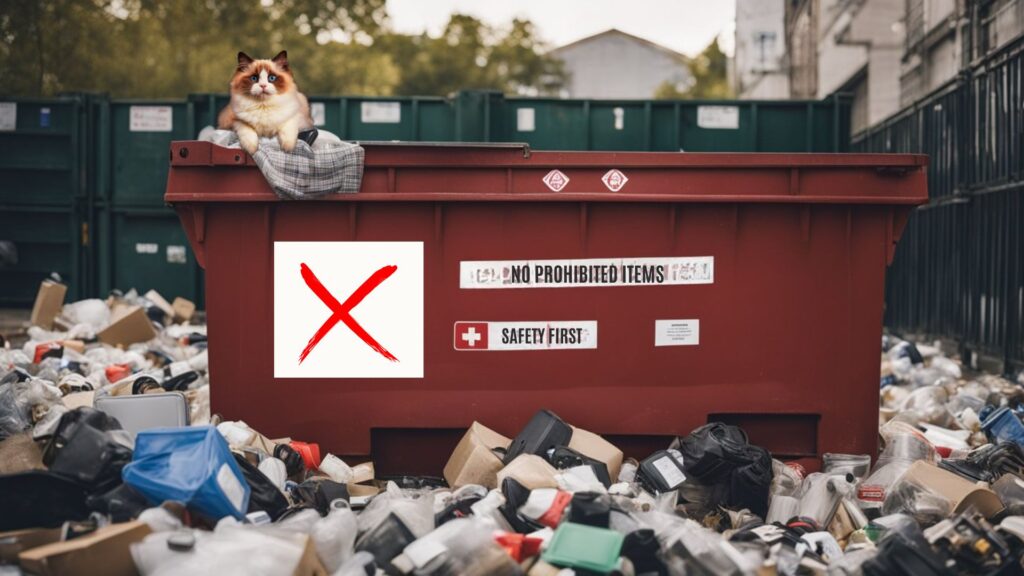
Certain materials cannot be disposed of in standard roll-off dumpsters due to environmental regulations, safety concerns, or facility restrictions. Loading prohibited items creates serious problems—haulers may refuse to transport contaminated loads, disposal facilities reject non-compliant material, and contractors face potential fines for improper waste handling.[23] For residential projects in Peoria, understanding prohibition categories prevents these complications.
Common prohibited items include:
- Hazardous chemicals, paints, solvents, and pesticides
- Automotive fluids, oils, and gasoline
- Propane tanks and compressed gas cylinders
- Asbestos-containing materials requiring certified abatement
- Refrigerators, freezers, and air conditioners with refrigerants
- Electronic waste including televisions and computer monitors
- Tires and automotive parts
- Medical waste and biological materials
- Batteries of all types
- Fluorescent tubes and bulbs containing mercury
Establish a designated area at the job site for prohibited materials requiring separate disposal. Educate all crew members about these restrictions so items are diverted during demolition rather than discovered mixed into the dumpster load later. Most Peoria-area municipalities operate household hazardous waste collection programs for residential quantities of prohibited materials, providing proper disposal channels for items that cannot go into standard dumpsters.[24]
Mini Case Study: A Peoria contractor loaded a bathroom remodel dumpster efficiently but included an old water heater with residual oil in the tank. The disposal facility rejected the entire load due to contamination, requiring the contractor to sort through the dumpster at the facility, remove the offending water heater, and reschedule disposal. The error cost three hours of labor, $150 in sorting fees, and delayed the project by two days—far exceeding the minimal cost of proper water heater disposal through appropriate channels.
Poor Weight Distribution Creating Transport Hazards
Even when total weight stays within limits, improper distribution creates dangerous hauling conditions. Loads concentrated on one side or end shift during transport, potentially causing the container to tip or spill material onto roadways.[25] Professional haulers assess weight distribution during pickup and may refuse to transport dangerously unbalanced loads, requiring contractors to redistribute material before removal.
Achieve proper weight distribution by consciously spreading heavy items across the entire container floor during foundation loading. When adding concentrated weight like concrete chunks or cast iron fixtures, immediately balance with similar weight on the opposite side or end. Throughout the loading process, step back periodically to assess the load visually—one section appearing significantly fuller than others likely indicates weight imbalance requiring correction.
For projects involving heavy materials like tile, concrete, or masonry, consider requesting guidance about weight distribution from your dumpster coordination service. Experienced professionals can provide loading recommendations based on the specific material mix in your project. This proactive consultation prevents problems before they occur and demonstrates the professional approach that builds successful contractor relationships throughout Peoria’s residential market.
Ignoring the Walk-In Door for Heavy Items
Many contractors unnecessarily strain themselves lifting heavy objects over the dumpster walls when a perfectly functional walk-in door provides ground-level access. This mistake stems from habit—workers automatically approach the open top—and lack of awareness about proper door utilization. The resulting injuries, back strains, and dropped items damage both workers and containers.[26]
Train all crew members to evaluate each item before loading and use the door for anything weighing over 50 pounds or featuring awkward dimensions. Cast iron tubs, granite countertops, toilets, vanities, water heaters, and major appliances all qualify for door loading. The extra 30 seconds required to open the door, walk the item inside, and close the door again prevents injuries that sideline workers and jeopardize project schedules.
The door also protects the dumpster itself. Heavy items dropped from 3.5 feet repeatedly dent and damage container floors, walls, and edges. These impacts eventually compromise structural integrity, creating liability when weakened containers fail during transport. Contractors who treat rental equipment carefully through proper door use maintain positive relationships with hauling companies and avoid damage charges that erode project profits.
Cost Control Through Efficient Loading
Avoiding Second Dumpster Rentals
The most significant cost savings from efficient loading comes from eliminating unnecessary additional dumpster rentals. In Peoria, a second 10-yard dumpster costs $350-500 depending on rental duration and included tonnage.[27] This expense represents pure profit loss—money spent on debris management that proper initial loading would have prevented. Contractors who consistently avoid second rentals through strategic loading practices maintain 3-5% better profit margins than competitors who frequently require additional containers.
Several factors contribute to unexpected second dumpster needs. Inaccurate project debris estimation leads contractors to order insufficient capacity. Poor loading techniques waste 20-30% of available space. Mid-project scope changes add demolition or removal work not included in original plans. Prohibited items mixed into the load contaminate the entire container, requiring rejection and replacement. Each scenario has preventive solutions that thoughtful contractors implement systematically.
Accurate estimation begins with detailed project assessment before work starts. Measure the space being renovated and research typical debris volumes for similar projects. When uncertainty exists between two dumpster sizes, choose the larger option—the modest upcharge for a 15-yard versus 10-yard container (typically $50-75) provides valuable insurance against capacity shortfalls and second rental costs. Understanding pricing structures for different container sizes enables informed decisions that balance upfront costs against risk.
Minimizing Overage Fees and Weight Penalties
Weight limits for 10-yard dumpsters typically range from 2-3 tons, depending on the hauler and local regulations.[28] Exceeding these limits triggers overage fees averaging $50-100 per ton, adding unexpected costs that impact project profitability. Heavy materials like concrete, masonry, tile, and roofing shingles easily push loads over standard weight allowances when contractors lack awareness of cumulative weight.
Prevent overage fees through material-specific strategies. For projects involving significant concrete or masonry removal, request a heavy debris dumpster with higher weight limits specifically designed for dense materials. These containers cost 10-15% more than standard units but include 4-6 ton weight allowances that prevent overage charges. Alternatively, separate heavy materials from general debris, using a 10-yard container for standard renovation waste and hauling concrete separately through a clean fill disposal option.
Monitor weight throughout loading rather than discovering overages during pickup. Experienced contractors develop intuitive weight sense, recognizing when material density suggests potential limit issues. For questionable loads, some haulers provide on-truck scales that weigh containers during pickup, allowing immediate verification. When overages occur, understanding the fee structure enables quick cost-benefit analysis—sometimes paying the overage proves more economical than removing material and extending rental duration.
Timeline Management and Rental Period Optimization
Most 10-yard dumpster rentals include 7-14 day periods, with daily fees ranging from $10-25 for extensions beyond the included timeframe.[29] Efficient loading contributes to timeline management by ensuring the container fills appropriately throughout the rental period, avoiding scenarios where the dumpster sits partially full for days before finally being filled and removed.
Coordinate demolition and removal phases to match dumpster availability. Schedule the container arrival for the first day of demolition work rather than having it sit empty, accumulating rental charges. Plan loading systematically so the container fills progressively rather than remaining mostly empty until a burst of loading near the end. This disciplined approach maximizes the value of included rental days and minimizes extension fees.
For projects spanning longer than standard rental periods, discuss options with your dumpster sourcing coordinator. Some contractors benefit from sequential containers—a 10-yard unit for the first phase, removed when full, followed by a second unit for later phases. Others negotiate extended rental periods at reduced daily rates for longer projects. The key involves matching container availability to actual project needs rather than defaulting to standard rental terms that may not align with your work schedule.
Professional contractors throughout Peoria who implement systematic loading practices report average disposal cost savings of $125-200 per residential project compared to less disciplined approaches.
Conclusion
Maximizing 10-yard dumpster capacity through strategic loading techniques directly impacts project profitability for contractors serving Peoria’s residential market. The fundamentals—heavy items at the bottom, breaking down bulky materials, filling gaps systematically, and respecting the fill line—transform an average loading approach into a cost-saving system that reduces disposal expenses by 15-30%. These savings accumulate across projects, contributing measurably to annual profitability while demonstrating the professional standards that generate referrals and repeat business.
Beyond financial benefits, proper loading protects worker safety, prevents regulatory violations, and maintains positive relationships with the hauling companies that keep projects moving forward. The techniques outlined in this guide require minimal additional time during loading but deliver substantial returns through avoided second rentals, eliminated overage fees, and prevented project delays. For contractors committed to operational excellence, disciplined debris management represents skilled work deserving the same attention as any other aspect of professional construction services.
Ready to Source Your Next 10-Yard Dumpster?
Zap Dumpsters Peoria sources and coordinates 10-yard containers from trusted local haulers, matching you with the right solution for your residential project timeline and budget.
Call (309) 650-8954Professional sourcing service for Peoria contractors
10 Yard Dumpster Loading Tips FAQs
What is the best way to load a 10-yard dumpster for a bathroom remodel?
Start with heavy fixtures like cast iron tubs and granite countertops at the bottom to create a stable foundation. Break tile and cement board into 2×2 foot sections, then add collapsed cabinet boxes and drywall. Fill gaps between larger pieces with trim, plumbing fixtures, and small debris. This strategic approach typically contains a complete bathroom renovation within 4-6 cubic yards, leaving buffer space in your 10-yard container.
How do I know if I’m approaching the weight limit in my 10-yard dumpster?
Weight limits for 10-yard containers typically range from 2-3 tons, which translates to approximately 4,000-6,000 pounds. Solid concrete and masonry debris weighs around 4,000 pounds per cubic yard, while broken concrete weighs closer to 2,000 pounds per cubic yard, so loading more than 3-5 cubic yards of these heavy materials approaches or exceeds standard limits. Mixed renovation debris averaging 300-500 pounds per cubic yard allows full volumetric use without weight concerns. If your project includes substantial heavy materials, consult with your dumpster coordination service about weight-specific options before loading begins.
Can I break dumpster loading rules if I’m close to finishing my project?
Never exceed the container’s fill line or load prohibited items regardless of project pressure or timing. Overfilled dumpsters cannot be legally transported, requiring you to remove excess material and creating project delays. Prohibited items contaminate loads and trigger rejection fees, facility charges, and potential regulatory penalties. If you’re running out of space, contact your dumpster sourcing service about adding a second container rather than violating loading regulations that create far greater problems than the temporary inconvenience of proper compliance.
What items can I not put in a 10-yard dumpster for residential projects?
Standard roll-off dumpsters cannot accept hazardous materials including paints, chemicals, and solvents; appliances with refrigerants like refrigerators and air conditioners; electronic waste such as televisions and monitors; propane tanks; asbestos materials; tires; batteries; and fluorescent bulbs. These items require specialized disposal through appropriate channels. Most Peoria-area municipalities operate household hazardous waste programs for residential quantities of prohibited materials, providing proper disposal alternatives for items that cannot go into standard dumpsters.
How much money can efficient 10-yard dumpster loading save on a typical residential project?
Contractors who implement systematic loading techniques avoid second dumpster rentals costing $350-500, prevent weight overage fees of $50-100 per ton, and eliminate project delays that extend rental periods at $10-25 per day. Across a typical bathroom or kitchen renovation, these savings total $125-200 per project. For contractors completing 20-30 residential jobs annually, efficient loading practices generate $2,500-6,000 in avoided disposal costs that directly improve profit margins and competitive positioning in the Peoria market.
10 Yard Dumpster Loading Tips Citations
[1] Dumpsters.com. “10 Yard Dumpster Dimensions and Capacity.” https://www.dumpsters.com/sizes/10-yard-dumpster (Accessed November 2024)
[2] Budget Dumpster. “Complete Breakdown of Dumpster Rental Sizes.” https://www.budgetdumpster.com/budget-dumpster-sizes.php (Accessed November 2024)
[3] HomeAdvisor. “How to Maximize Dumpster Space.” https://www.homeadvisor.com/r/dumpster-loading-tips/ (Accessed November 2024)
[4] Budget Dumpster. “Roll Off Dumpster Weight Limits.” https://www.budgetdumpster.com/resources/dumpster-weight-limits/ (Accessed November 2024)
[5] Zters Waste Value. “Dumpster Rental in Peoria, IL.” https://www.zters.com/dumpster-rental/peoria-il (Accessed November 2024)
[6] Waste Management. “Understanding Dumpster Overage Fees.” https://www.wm.com/us/en/business/dumpster-rental/weight-limits (Accessed November 2024)
[7] Dumpsters.com. “Concrete Weight Calculator.” https://www.dumpsters.com/resources/concrete-weight-calculator (Accessed November 2024)
[8] Contra Costa County. “Volume to Weight Conversion Table for Construction and Demolition Debris.” https://www.contracosta.ca.gov/DocumentCenter/View/49316/Volume-to-Weight-Conversion-Table (Accessed November 2024)
[9] Contractor Magazine. “Best Practices for Dumpster Loading.” https://www.contractormag.com/waste-management/dumpster-loading-best-practices (Accessed November 2024)
[10] NRDC. “Reducing Construction Waste Volume.” https://www.nrdc.org/stories/how-reduce-construction-waste (Accessed November 2024)
[11] This Old House. “Dumpster Loading Techniques for Remodeling Projects.” https://www.thisoldhouse.com/platform/amp/demolition/21015825/how-to-load-a-dumpster (Accessed November 2024)
[12] Illinois Department of Transportation. “Commercial Vehicle Weight and Safety Regulations.” https://idot.illinois.gov/transportation-system/transportation-management/commercial-vehicle/index (Accessed November 2024)
[13] OSHA. “Construction Industry Safety Standards.” https://www.osha.gov/construction (Accessed November 2024)
[14] Illinois Department of Labor. “Occupational Safety and Health Requirements.” https://www2.illinois.gov/idol/laws-rules/fls/pages/occupational-safety-and-health.aspx (Accessed November 2024)
[15] JRA Junk Removal. “Using Dumpster Access Doors Safely.” https://www.jra-junkremoval.com/blog/dumpster-door-loading-tips (Accessed November 2024)
[16] Residential Waste Systems. “Proper Dumpster Placement Guidelines.” https://www.residentialwaste.com/dumpster-placement/ (Accessed November 2024)
[17] SafeSite. “Construction Site Safety Requirements.” https://www.safesite.com/blog/construction-site-safety/ (Accessed November 2024)
[18] This Old House. “Bathtub Materials and Weights Comparison.” https://www.thisoldhouse.com/bathrooms/21015689/all-about-bathtubs (Accessed November 2024)
[19] Better Homes & Gardens. “Kitchen Cabinet Guide.” https://www.bhg.com/kitchen/cabinets/basics/kitchen-cabinets/ (Accessed November 2024)
[20] EPA. “Responsible Appliance Disposal Program.” https://www.epa.gov/rad/responsible-appliance-disposal (Accessed November 2024)
[21] Family Handyman. “Deck Demolition and Removal Tips.” https://www.familyhandyman.com/project/how-to-tear-down-a-deck/ (Accessed November 2024)
[22] Farmer City, Illinois Municipal Code. “Solid Waste Management Regulations.” https://codelibrary.amlegal.com/codes/farmercity/latest/farmercity_il/0-0-0-9880 (Accessed November 2024)
[23] EPA. “Universal Waste and Hazardous Waste Regulations.” https://www.epa.gov/hw/universal-waste (Accessed November 2024)
[24] Peoria Disposal Company. “Hazardous Waste Collection Events.” https://www.peoriadisposal.com/hazardous-waste/ (Accessed November 2024)
[25] National Waste & Recycling Association. “Safe Transportation Standards for Roll-Off Containers.” https://wasterecycling.org/safety-standards/ (Accessed November 2024)
[26] National Safety Council. “Construction Injury Prevention Guidelines.” https://www.nsc.org/workplace/industry-specific-networks/construction (Accessed November 2024)
[27] Easy Dumpster Rental. “Dumpster Rental Peoria, IL.” https://easydumpsterrental.com/illinois/dumpster-rental-peoria-il/ (Accessed November 2024)
[28] Dumpsters.com. “Understanding Weight Limits and Overage Charges.” https://www.dumpsters.com/resources/dumpster-weight-calculator (Accessed November 2024)
[29] Budget Dumpster. “Rental Period and Extension Fee Guide.” https://www.budgetdumpster.com/resources/rental-period/ (Accessed November 2024)