
Key Takeaways:
- A 10-yard dumpster rental costs typically $384 to $587 for a standard 7-10 day rental period in Peoria
- National pricing ranges from $250 to $765 per week depending on location, debris type, and weight included
- Most 10-yard rentals include 2-3 tons of weight allowance, with overage fees of $50-$120 per additional ton
- Hidden costs like permit fees, rental extensions, and prohibited item disposal can add $20-$500 to your total
- The right provider comparison and project planning can save Peoria homeowners $100-$200 on small cleanouts
- Smart sizing decisions prevent costly second rentals that can double your total waste removal expenses
Article Summary:
The cost to rent a 10-yard dumpster averages $384-$587 in Peoria, with national rates ranging from $250-$765 per week. Your final price depends on location, rental duration, weight limits, debris type, and potential permit requirements. Understanding these cost factors helps homeowners budget accurately and avoid surprise fees that can increase expenses by 30% or more.
What Determines 10-Yard Dumpster Rental Pricing?
The price you pay for a 10-yard dumpster rental in Peoria reflects multiple cost factors that vary by provider and project type. Local market conditions, disposal facility fees, fuel costs, and competitive pricing all influence what companies charge for their smallest roll-off containers.
In the Peoria area, 10-yard dumpster costs range from $384 to $587[1], positioning the market slightly below the national average. This pricing typically includes delivery, pickup, a standard rental period of 7-10 days, and a weight allowance of 2-3 tons. Understanding what your base price covers prevents confusion when comparing quotes from different providers.
Location dramatically affects your rental cost. National pricing for 10-yard dumpsters ranges from $220 to $580 per week, with most homeowners paying around $350[4]. Urban areas with higher landfill tipping fees and longer hauling distances command premium prices, while rural locations closer to disposal facilities often offer lower rates. Peoria’s mid-range pricing reflects its position as a mid-sized Illinois city with reasonable access to waste management infrastructure.
The weight allowance included in your rental agreement directly impacts value and potential overage charges. A standard 10-yard dumpster typically includes a weight limit of 2-3 tons (4,000-6,000 pounds), though the maximum safe capacity can reach 10 tons for dense materials like concrete[5,6]. Providers adjust included tonnage based on what you’re disposing of—household junk receives more generous limits than heavy construction debris.
Rental duration affects total costs but less dramatically than you might expect. Most companies structure pricing around weekly periods because delivery and disposal expenses remain constant regardless of rental length. After the initial rental period, expect daily extension fees of $5-$10 per day[10], making short-term projects only marginally cheaper than those requiring the full week.
Breaking Down the Base Rental Price
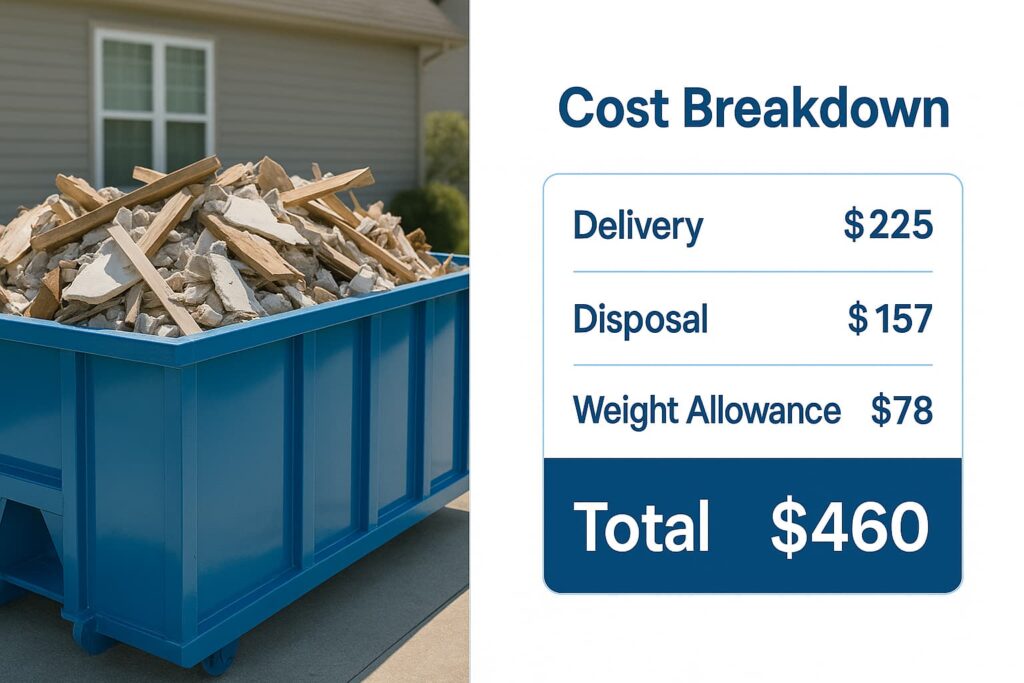
Your quoted 10-yard dumpster price bundles several service components into one figure. Delivery charges cover the truck, driver, fuel, and time required to transport the container to your property. Pickup fees include the return trip and container removal after your project completes. Disposal or tipping fees represent what the provider pays the landfill based on your debris weight.
Current Peoria-area landfill tipping costs range from $65 to $93 per ton, or $11 to $18 per cubic yard[2]. These fees get passed to customers as part of the total price, though different providers handle this differently—some quote all-inclusive flat rates while others itemize disposal separately.
Administrative costs, insurance, container maintenance, and profit margins complete the pricing structure. Providers must recoup expenses for their dumpster fleet, commercial vehicle insurance, regulatory compliance, and business operations. These overhead costs explain why two companies with similar base services might quote different prices—their business models and operational efficiencies vary.
How Debris Type Affects Your Cost
What you’re throwing away significantly influences 10-yard dumpster pricing because different materials have vastly different weights and disposal requirements. Household trash and furniture weigh considerably less than construction materials or roofing shingles, meaning you can fill the entire volume without exceeding weight limits[7].
Heavy materials create the opposite problem. Asphalt shingles weigh 250-300 pounds per roofing square (100 square feet), and roof tear-offs often involve multiple layers that quickly fill weight capacity even when the container appears only half full[7]. Concrete, brick, dirt, and masonry pose similar challenges—their density means volume and weight limits don’t align.
Smart providers adjust pricing and recommendations based on debris type. A 10-yard container for lightweight garage cleanout items might cost $384, while the same size for roofing shingles could run $500-$600 due to anticipated weight. This project-specific pricing helps both parties avoid overage fees and ensures the container can be safely transported.
| Debris Type | Typical Weight | 10-Yard Capacity | Best Size Choice |
|---|---|---|---|
| Household Junk | 1-2 tons full container | Can fill to top | 10-yard works well |
| Furniture & Appliances | 1.5-2.5 tons full | Can fill to top | 10-yard sufficient |
| Drywall & Wood | 2-3 tons full | Fill carefully | 10-yard borderline |
| Roofing Shingles | 3-5 tons half full | Fill only halfway | 10-yard with restrictions |
| Concrete & Brick | 4-8 tons partial fill | Fill 30-50% only | 10-yard with limits or dedicated heavy debris bin |
Hidden Fees That Increase Your 10-Yard Dumpster Cost
The advertised rental price represents your starting point, but additional charges can significantly increase your total expense. Weight overage fees can add up to $200 to your bill if you exceed the included tonnage[8]. Understanding these potential extras helps you budget accurately and avoid unwelcome surprises when the final invoice arrives.
Weight overage fees represent the most common additional charge. If your debris exceeds the included weight allowance, expect overage charges typically ranging from $75-$100 per ton, with some companies prorating the fee by the pound[11]. A 10-yard dumpster with a 2-ton limit filled with 3 tons of debris would incur $75-$100 in extra charges—a 20-25% increase over the base $384-$587 rental cost.
These overages happen more frequently than homeowners anticipate. Even lightweight materials accumulate weight quickly when compacted into a 10-yard container. Wet conditions make the problem worse—absorbent materials like carpet, upholstered furniture, and yard waste can soak up rainwater, significantly increasing debris weight beyond your estimates[12].
Permit fees add another expense layer for certain placement locations. Dumpster permits typically cost $10-$100 when the container must sit on public streets, sidewalks, or other municipal property[10]. Peoria residential areas generally allow driveway placement without permits, but properties lacking suitable private space face this additional expense. The permitting process also requires advance planning—applications can take 3-5 business days for approval.
Rental Extension and Trip Fees
Projects running longer than anticipated generate extension charges. Most providers charge $5-$10 per day after your initial rental period expires[10], though weekly extension rates may offer better value for longer delays. A three-day extension adds $15-$30 to your total, while a full second week might cost $50-$100 depending on provider policies.
Trip fees penalize situations requiring extra truck visits. Overfilled dumpsters with debris extending above the fill line cannot be safely transported, forcing drivers to return after you remove excess material. These trip fees typically range from $50-$100 per additional visit[12], plus any delay charges if the driver must wait while you adjust the load.
Blocked access also generates trip fees. Providers expect clear pathways with gates unlocked, driveways empty of vehicles, and 60 feet of straight-line access for their trucks. Snow accumulation, parked cars, or locked gates requiring driver wait time all trigger additional charges that increase your project cost.
Prohibited Item Disposal Penalties
Throwing banned materials into your dumpster creates expensive problems. Prohibited items discovered at the landfill can result in fines up to $500, as these materials either get returned to you or require special disposal at your expense[8]. Common prohibited items include hazardous chemicals, batteries, tires, electronics, appliances containing refrigerants, propane tanks, and certain types of treated wood.
Landfills reject these items because they require specialized processing that standard waste facilities cannot handle. Electronics contain toxic materials like lead and mercury. Batteries pose fire risks and environmental contamination. Refrigerant-containing appliances need professional draining before disposal. Each prohibited category has specific disposal requirements and associated costs.
The solution involves proper planning and communication. Most providers clearly specify prohibited items in rental agreements and can recommend appropriate disposal methods for problem materials. Peoria residents can use county hazardous waste collection events, electronics recycling programs, and specialized disposal services to handle items dumpsters cannot accept.
Regional Price Variations and Market Comparisons
Dumpster rental costs fluctuate significantly across different markets based on local economic conditions, regulatory environments, and waste management infrastructure. Peoria area pricing ranges from $384 to $587 for 10-yard dumpsters, while nearby East Peoria shows prices from $446 to $864[1,2], demonstrating how even adjacent markets can differ.
National comparisons provide broader context for Peoria’s pricing position. The national average for 10-yard dumpster rentals falls around $360 per week, with a typical range of $220-$580[4]. Peoria’s $384-$587 range sits at the upper-middle portion of national pricing, reflecting Illinois’s moderate landfill fees and Central Illinois’s reasonable operating costs compared to major metropolitan areas.
Geographic factors driving these differences include: Distance to disposal facilities affects fuel costs and driver time. Urban markets with congested traffic and limited landfill access charge premiums for the added complexity. Rural areas near disposal sites offer lower rates due to reduced transportation expenses. Illinois’s relatively developed waste management infrastructure keeps costs moderate compared to states with limited disposal capacity.
Local landfill tipping fees, ranging from $65-$93 per ton in the Peoria region[3], directly impact dumpster pricing since providers must recoup disposal expenses. States with higher tipping fees pass these costs to customers, while areas with competitive disposal markets and lower fees offer better rates. Understanding your region’s disposal landscape helps you evaluate whether quotes represent fair market value.
| Market | 10-Yard Price Range | Included Weight | Rental Period |
|---|---|---|---|
| Peoria, IL | $384-$587 | 2-3 tons | 7-10 days |
| East Peoria, IL | $446-$864 | 2-3 tons | 7-10 days |
| National Average | $250-$450 | 2-3 tons | 7 days |
| Chicago Metro | $299-$765 | 2-3 tons | 7-10 days |
| Rural Midwest | $220-$400 | 2-3 tons | 7-10 days |
Seasonal Pricing Fluctuations
Demand patterns throughout the year influence dumpster availability and pricing. Spring and summer represent peak rental seasons when homeowners tackle renovation projects, landscaping work, and major cleanouts. This increased demand sometimes creates temporary shortages, allowing providers to maintain premium pricing or require advance booking.
Fall shoulder season offers moderate availability at competitive rates as construction projects wind down but before winter weather halts outdoor work. Winter represents the slowest period with maximum availability—though weather complications can affect delivery schedules in Peoria’s snowy climate. Some providers offer winter discounts to maintain equipment utilization during slow months.
Planning your project timing around these seasonal patterns can yield cost savings. Booking during off-peak winter months or early spring before the rush begins often provides better rates and more flexible scheduling. However, project needs typically outweigh seasonal cost considerations—waiting months to save $50 rarely makes sense when renovation progress stalls.
Getting the Best Value on Your 10-Yard Rental
Smart shopping and project planning minimize your total dumpster cost while ensuring adequate capacity for your waste removal needs. Comparing multiple providers reveals significant price differences even within the same market. Request detailed quotes that specify exactly what’s included—base price, weight allowance, rental duration, delivery/pickup, and disposal fees.
Ask these critical questions when comparing providers: What’s the included weight limit and how does my project type affect it? Are there additional fees for delivery based on my location? What happens if I need an extra day or two—what’s the extension charge? Which items are prohibited and what are the penalties? Do you offer flat-rate pricing or itemized billing?
Accurate debris estimation prevents costly size mistakes. While 10-yard dumpsters work well for small bathroom remodels, garage cleanouts, and minor landscaping projects, underestimating your needs leads to either overage fees or expensive second rentals[6]. Consider the comparison between 10-yard and 15-yard options when your project falls near the boundary—the modest price difference often provides valuable insurance against capacity problems.
Preparing your site properly avoids trip fees and delays. Clear the placement area of vehicles, ensure gate access, trim any low-hanging branches, and verify the surface can support the loaded dumpster’s weight. Communicate specific placement preferences to the driver and mark the spot if your property has multiple potential locations.
Maximizing Your Included Weight Allowance
Strategic loading helps you stay within weight limits and avoid overage charges. Load large, heavy items first through the door and distribute weight evenly across the container floor[12]. This creates a stable base and prevents one side from becoming overloaded. Fill gaps with lighter materials, working upward as you progress.
Break down bulky items before loading to improve space efficiency. Disassemble furniture, flatten cardboard boxes, cut longer boards to fit, and compress materials when safely possible. This approach maximizes your 10 cubic yards of volume while keeping debris within the weight threshold.
For heavy material projects, consider partial fills. Concrete, brick, shingles, and masonry should never fill a 10-yard dumpster to capacity. Many providers specifically limit roofing shingle loads to 10 or 15-yard dumpsters and cap fill levels to prevent overweight issues[7]. Following these guidelines protects you from overage fees and ensures safe transport.
Monitor weather forecasts during your rental period. Cover your dumpster with a tarp before rainstorms to prevent water accumulation that adds unnecessary weight. This simple step can save hundreds of dollars in overage fees for projects involving absorbent materials.
Mini Case Studies:
Sarah’s Garage Cleanout: A Peoria homeowner cleared 15 years of accumulated garage items including old furniture, boxes, and yard equipment. Her 10-yard dumpster cost $425 with a 2-ton limit. By breaking down furniture and loading strategically, she filled the container to 90% capacity while staying at 1.8 tons—avoiding any overage fees.
Mike’s Bathroom Remodel: This Morton resident underestimated his debris volume and filled his 10-yard dumpster plus had materials left over. The rental cost $450, but hauling the remainder to the dump cost an additional $75 in vehicle trips and disposal fees. A 15-yard dumpster for $525 would have been more economical.
Ready to Compare Peoria Dumpster Options?
Zap Dumpsters Peoria coordinates with local haulers to match you with the right 10-yard dumpster at competitive rates. We compare multiple providers so you get transparent pricing and reliable service.
📞 Call (309) 650-8954
Get accurate quotes based on your specific project needs—no hidden fees, no surprises.
Understanding Flat-Rate vs. Variable Pricing Models
Providers structure their billing in fundamentally different ways, and understanding these models helps you compare quotes accurately. Flat-rate pricing bundles all services—delivery, pickup, disposal, and a set weight limit—into one upfront price. Variable pricing separates these components, charging separately for the rental period and disposal based on actual weight after pickup.
Flat-rate pricing offers transparency since you know your total cost before the dumpster arrives, though you’ll pay prorated overage fees if you exceed the included weight limit[9]. This model works well when you can accurately estimate your debris weight and want budget certainty. The upfront price provides clear comparison points when shopping between providers.
Variable pricing creates uncertainty but can offer savings for lightweight debris. With variable rates, you pay a base rental fee plus actual disposal costs based on weight measurements at the landfill[4]. This approach benefits projects with bulky but light materials—a garage full of cardboard, plastic toys, and fabric items might weigh only 1 ton even when filling the container.
The trade-off involves predictability versus potential savings. Flat rates eliminate guesswork but charge for weight you might not use. Variable rates provide flexibility but prevent accurate budget forecasting until after pickup when you receive the final weight-based invoice. Your risk tolerance and project characteristics should guide which model you prefer.
Which Pricing Model Fits Your Project?
Choose flat-rate pricing when your debris weight is difficult to estimate or when budget certainty matters more than potential savings. Home cleanouts with mixed materials, renovation debris combining multiple waste types, and first-time dumpster rentals all benefit from flat-rate predictability. The slightly higher cost buys peace of mind and simplified financial planning.
Select variable pricing when you’re confident your debris weighs significantly less than the standard allowance. Pure household junk, primarily cardboard and packaging materials, or lightweight renovation debris like insulation and drywall rarely approach weight limits. Variable billing captures this reality through lower total costs.
Consider your project timeline too. Flat rates typically include fixed rental periods with clear extension charges. Variable models might charge separately for longer periods or include more flexible return scheduling. Match the billing structure to your project’s certainty level—tight deadlines favor flat rates while flexible timelines work with variable models.
10-Yard Dumpster Cost FAQs
What’s included in the base price of a 10-yard dumpster rental in Peoria?
The standard rental price includes container delivery, placement at your specified location, a rental period of 7-10 days, pickup and transport after your project completes, disposal at an approved facility, and a weight allowance of 2-3 tons. Most providers also include one placement adjustment if the initial spot doesn’t work perfectly. Administrative services like customer support and scheduling coordination are bundled into the base cost as well.
How much do 10-yard dumpster rental overage fees cost if I exceed the weight limit?
Weight overage fees typically range from $50-$120 per ton beyond your included allowance, with most Peoria providers charging $75-$100 per additional ton. Some companies prorate this fee by the pound, meaning a 500-pound overage might cost $18-$25 rather than the full per-ton rate. The overage charge gets assessed after your debris reaches the landfill and gets weighed, appearing on your final invoice within 30-120 days depending on processing time.
Can I rent a 10-yard dumpster for less than a week to save money?
Most providers structure pricing around weekly rental periods regardless of how long you actually keep the container, meaning a 3-day rental costs the same as a 7-day rental. This happens because delivery and disposal expenses remain constant whether you keep the dumpster one day or seven—the truck makes the same trips either way. Some specialty providers offer daily rates starting around $25-$30 per day, but total costs for short periods often exceed weekly rates when you include all fees.
Do I need a permit to place a 10-yard dumpster in my Peoria driveway?
Peoria residential properties generally do not require permits for dumpsters placed entirely on private property like driveways, yards, or parking areas. Permits become necessary when containers must sit on public streets, sidewalks, or right-of-way areas due to property access limitations. Permit costs range from $10-$100 depending on location and duration, with processing times of 3-5 business days. Check with your HOA as well—some associations have placement restrictions even on private property.
What debris types cost more in a 10-yard dumpster due to weight concerns?
Heavy materials including concrete, brick, asphalt, dirt, rock, roofing shingles, and dense construction debris generate higher costs due to rapid weight accumulation. These materials often require partial fills only—a 10-yard container might be limited to 30-50% capacity to stay within weight limits. Many providers charge premium rates or apply lower weight allowances for heavy debris to account for the increased disposal and transport costs compared to standard household junk.
Conclusion
Understanding 10-yard dumpster rental costs empowers Peoria homeowners to budget accurately for cleanout and renovation projects. The $384-$587 local price range reflects fair market value when paired with clear terms regarding weight limits, rental duration, and included services. Comparing multiple providers while asking detailed questions about potential additional fees protects you from unexpected charges that can increase total costs by 30% or more.
Smart planning—accurate debris estimation, proper material loading, weather protection, and strategic timing—maximizes the value of your rental investment. The right combination of dumpster size, provider selection, and project preparation turns waste removal from a potential budget problem into a managed expense with predictable costs. Your next home project deserves a waste solution that works as hard as you do.
10-Yard Dumpster Rental Cost Citations
- Zters Waste Value. “Dumpster Rental in Peoria, IL.” Zters. https://www.zters.com/dumpster-rental/peoria-il
- Easy Dumpster Rental. “Dumpster Rental Peoria, IL | RECEIVE $15 OFF.” April 4, 2024. https://easydumpsterrental.com/illinois/dumpster-rental-peoria-il/
- Heartland Recycling Services. “Dumpster Rental – Peoria, Illinois.” July 14, 2025. https://www.heartlandrecyclingservices.com/peoria-il-dumpster-rental-illinois/
- HomeGuide. “2025 Dumpster Rental Prices | Cheap Roll Off Costs By Yard.” April 5, 2023. https://homeguide.com/costs/dumpster-rental-prices
- Dumpsters.com. “A Guide to Roll Off Dumpster Weight Limits.” https://www.dumpsters.com/resources/dumpster-weight-limits
- Dumpsters.com. “10 Yard Dumpster Rental.” https://www.dumpsters.com/sizes/10-yard-dumpster
- Hometown Dumpster Rental. “Guide to Dumpster Weight Limits.” https://www.hometowndumpsterrental.com/blog/guide-to-dumpster-weight-limits
- Angi. “How Much Does It Cost To Rent A Dumpster? [2025 Data].” June 12, 2025. https://www.angi.com/articles/cost-dumpster-rental.htm
- Dumpsters.com. “How Much Does a Roll Off Dumpster Cost?” October 28, 2016. https://www.dumpsters.com/pricing/roll-off-dumpster-prices
- HomeAdvisor. “How Much Does It Cost to Rent a Dumpster? [2025 Data].” https://www.homeadvisor.com/cost/cleaning-services/rent-a-dumpster/
- Hometown Dumpster Rental. “The Average Cost of Dumpster Overage Charges.” https://www.hometowndumpsterrental.com/blog/dumpster-overage-charges
- Budget Dumpster. “What You Should Know About Dumpster Fees.” September 18, 2025. https://www.budgetdumpster.com/resources/dumpster-fees.php
- Illinois Environmental Protection Agency. “Materials Management Advisory Committee Report.” https://epa.illinois.gov/content/dam/soi/en/web/epa/topics/waste-management/materials-management/documents/mmac-report-approved-7-1.pdf