
Key Takeaways
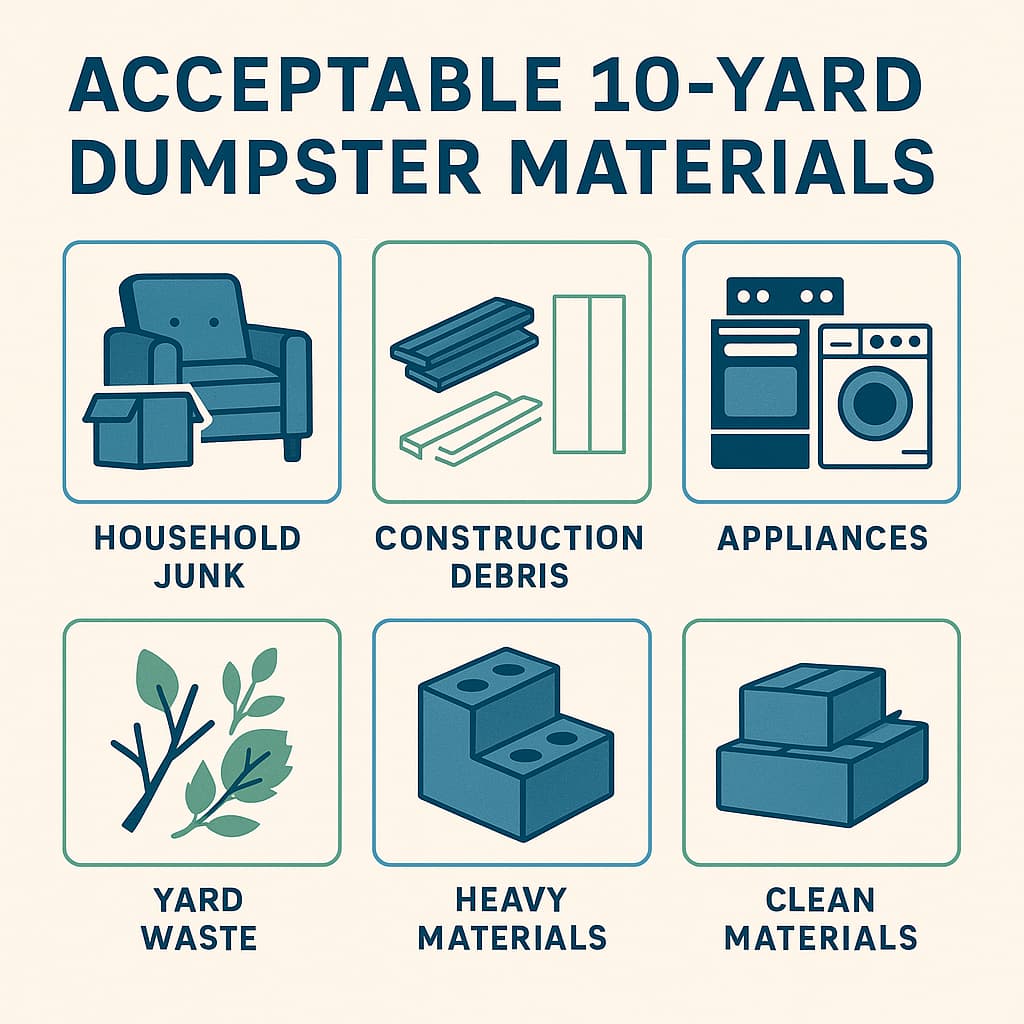
- A 10-yard dumpster accepts most household junk, furniture, construction debris, yard waste, and appliances without refrigerants
- Heavy materials like concrete, brick, and dirt are often ideal for 10-yard containers due to their lower height and manageable weight capacity
- Hazardous waste, liquids, electronics, tires, and items containing refrigerants are strictly prohibited from all dumpsters
- Always verify local regulations and rental company policies before loading your dumpster, as rules vary by location
Need a 10-Yard Dumpster Near You?
Call today. Let the nationwide sourcing team find you the perfect waste management solution in your area
Call (309) 650-8954Quick Answer: A 10-yard dumpster can hold general household items, furniture, construction debris from small renovations, yard waste, and most appliances without hazardous components. The container typically holds 3-4 pickup truck loads of material, making it perfect for bathroom remodels, garage cleanouts, and minor demolition projects.[1][5]
Understanding 10-Yard Dumpster Capacity and Common Uses
A 10-yard dumpster holds approximately 10 cubic yards of material, which equals roughly 3-4 pickup truck loads.[5] This compact size makes it an excellent choice for small-scale projects where you need efficient waste removal without overwhelming your property. The container measures about 14 feet long, 7.5 feet wide, and 3.5 feet high, creating a manageable footprint that fits in most driveways.[5]
These dumpsters work best for bathroom remodels, garage cleanouts, small deck removals, minor kitchen updates, and estate cleanouts.[5] The lower height compared to larger containers makes loading heavy materials easier and safer, which is why many contractors prefer 10-yard dumpsters specifically for concrete, brick, and dirt disposal projects.[2]
Complete Breakdown of Acceptable Materials
Household Junk and Personal Items
Your 10-yard dumpster can handle most everyday household items that accumulate during cleanouts and moving projects. General household waste includes old clothes, toys, books, cardboard boxes, plastic containers, kitchenware, and non-organic trash.[1][11] These lightweight items take up volume without adding significant weight, making them perfect candidates for dumpster disposal.
Small household items like blankets, linens, decorative items, and storage containers all qualify as acceptable materials.[11] When clearing out basements, attics, or garages, you can confidently dispose of years of accumulated belongings in your rental container. The key is ensuring these items are non-hazardous and do not contain electronic components that require special recycling.
Furniture and Large Household Items
Most furniture items are welcome in a 10-yard dumpster, including wooden chairs, tables, dressers, bed frames, and cabinets.[1][14] The durable construction of these containers can handle the weight and bulk of household furniture without issue. Wooden furniture is especially straightforward to dispose of since it breaks down naturally in landfills.[3]
Upholstered furniture and mattresses present a special case in the dumpster rental industry.[1][14] Many rental companies accept these items but charge additional fees ranging from $25 to $75 per piece due to local recycling regulations and processing requirements.[14] Some municipalities require mattresses to be recycled separately rather than sent to landfills, which creates extra handling costs for disposal companies. Always confirm mattress and upholstered furniture policies with your specific rental provider before loading these items.
| Furniture Type | Accepted? | Special Notes |
|---|---|---|
| Wooden furniture (tables, chairs, dressers) | ✓ Yes | Standard acceptance, no extra fees |
| Mattresses and box springs | ⚠ Usually | May require $25-75 additional fee per item |
| Upholstered sofas and chairs | ⚠ Usually | Check local policies, possible extra fees |
| Metal furniture and frames | ✓ Yes | Standard acceptance, good for recycling |
Appliances Without Hazardous Components
Standard household appliances that do not contain refrigerants are acceptable for 10-yard dumpster disposal.[1][9] This category includes stoves, ovens, washers, dryers, dishwashers, and water heaters.[9] These appliances contain metal components that are valuable for recycling, making them environmentally responsible disposal items.
The critical restriction involves appliances containing refrigerants like Freon, including refrigerators, freezers, air conditioners, and dehumidifiers.[1][3] Federal law requires certified technicians to remove and properly handle refrigerants before disposal.[1] If you need to dispose of these appliances, you must have the refrigerant professionally removed and provide certification to your dumpster rental company. Some providers offer refrigerant removal services for an additional fee, while others simply prohibit these appliances entirely.
Construction and Demolition Debris
Construction materials from renovation and small demolition projects are ideal contents for a 10-yard dumpster.[1][2] Wood materials including lumber, old cabinets, trim, and framing wood are completely acceptable and represent some of the most common dumpster contents.[1][2] These materials are relatively lightweight compared to their volume, allowing you to maximize the container’s cubic yardage.
Drywall and plaster from wall removals and ceiling work fit perfectly in 10-yard containers.[1][2] A single 10-yard dumpster can hold drywall from approximately one to two average-sized rooms, depending on ceiling height and wall quantity. When disposing of drywall, breaking larger pieces into manageable sections helps maximize space efficiency within the container.
Roofing materials represent another common use for 10-yard dumpsters, particularly for smaller roofing projects.[2] These containers can hold shingles from approximately 25 squares of roofing material, which covers about 2,500 square feet of roof area.[2] Asphalt shingles are heavy, so confirming weight limits with your rental provider prevents overweight charges that occur when containers exceed tonnage allowances.
Flooring materials including hardwood, laminate, vinyl, tile, and carpet all qualify as acceptable construction debris.[2] Bathroom and kitchen fixtures such as sinks, toilets, bathtubs, and countertops can be disposed of in your 10-yard dumpster without issue.[1] Siding materials from exterior renovations and insulation from wall or attic work round out the construction debris category.[2]
Heavy Materials and Concrete Debris
A 10-yard dumpster often serves as the ideal choice for heavy debris disposal due to its lower height and manageable volume.[1][2] The compact size prevents overloading while the reduced height makes loading heavy materials significantly easier than larger containers. Many rental companies offer specialized “heavy debris” or “lowboy” 10-yard dumpsters specifically designed for concrete, brick, asphalt, dirt, and rock.[2]
Concrete from demolished driveways, sidewalks, foundations, or patio slabs represents one of the most common heavy materials disposed in 10-yard containers.[2][3] Broken concrete chunks, concrete slabs, and concrete with embedded rebar are all acceptable if they meet weight limits.[3] Most 10-yard dumpsters have weight limits between 2-3 tons (4,000-6,000 pounds), though heavy debris containers may allow up to 10 tons depending on local regulations and disposal facility restrictions.[2]
Brick, cinder blocks, and masonry materials from chimney removals, wall demolitions, or landscaping projects work well in 10-yard dumpsters.[2][3] Asphalt from driveway or parking lot removal projects also qualifies as acceptable heavy debris.[2] Clean dirt and soil from excavation projects can be disposed in dumpsters, though some companies prefer separate handling for fill dirt that could be reused for other projects.[1][9]
| Heavy Material Type | 10-Yard Capacity | Weight Considerations |
|---|---|---|
| Concrete | 2-3 tons typical limit | Extremely heavy; may reach weight limit at 1/3 full |
| Brick and masonry | 2-3 tons typical limit | Very heavy; watch for overweight charges |
| Dirt and soil | Varies by company | Must be clean and uncontaminated |
| Asphalt | 2-3 tons typical limit | Heavy material; confirm acceptance first |
Important weight consideration: Heavy materials reach weight limits long before filling the container’s volume. A 10-yard dumpster filled to capacity with concrete could weigh 10-20 tons, far exceeding typical weight allowances and creating unsafe transport conditions.[2] Always discuss heavy material disposal with your rental provider to understand weight restrictions and potential overage charges.
Yard Waste and Organic Debris
Landscaping and yard maintenance projects generate organic debris that works perfectly in 10-yard dumpsters.[1][9] Leaves, grass clippings, and lawn debris from seasonal cleanups represent common yard waste items accepted by most rental companies.[1][9] These lightweight organic materials compress well in containers, allowing you to dispose of substantial volumes without approaching weight limits.
Tree branches, brush, and shrub clippings from pruning projects fit well in 10-yard containers.[1][9] The compact size makes these dumpsters particularly convenient for residential landscaping projects where larger containers would overwhelm driveways or yards. Small tree stumps are typically acceptable, though some rental companies restrict stump size or charge additional fees for stumps exceeding certain dimensions.[14]
Some rental providers prohibit or restrict certain yard waste items due to local composting programs or disposal facility policies.[7] Food waste specifically may be prohibited because it attracts pests and creates odor problems during the rental period.[1] Always verify your rental company’s yard waste policies, especially if your project generates large volumes of organic materials that might be better served by dedicated yard waste services.
Strictly Prohibited Materials in All Dumpsters
Hazardous Waste and Toxic Materials
Federal and state environmental regulations strictly prohibit hazardous waste from dumpsters due to serious safety and environmental risks.[1][4] Materials labeled as toxic, flammable, corrosive, or reactive cannot be disposed of in standard dumpsters under any circumstances.[1] This category includes liquid paints, paint thinners, solvents, sealers, varnishes, and most household cleaners containing hazardous chemicals.[1][7]
Pesticides, herbicides, and fertilizers containing toxic chemicals require specialized disposal through household hazardous waste collection programs.[7] Motor oil, gasoline, diesel fuel, kerosene, and other petroleum products are strictly prohibited from dumpsters due to fire risks and groundwater contamination potential.[1][7] Pool chemicals, propane tanks, and compressed gas cylinders represent additional fire and explosion hazards that cannot be placed in dumpsters.[1][4]
Electronics and E-Waste
Electronic waste or “e-waste” requires special handling due to toxic components including lead, mercury, and cadmium.[1][4] Televisions, computer monitors, laptops, desktop computers, printers, and similar electronics are prohibited from standard dumpster disposal in most jurisdictions.[4] Many states have enacted e-waste recycling laws that require separate collection and processing of electronic devices through certified recycling facilities.[4]
Small electronics policies vary by location and rental company.[1] Some providers accept small electronics like toasters, microwaves, and coffee makers, while others prohibit all electronic items.[4] Fluorescent light bulbs and compact fluorescent lamps (CFLs) contain mercury and require special recycling rather than dumpster disposal.[4]
Batteries and Automotive Components
All battery types are prohibited from dumpster disposal due to toxic heavy metals and acid content.[1][4] Car batteries contain lead and sulfuric acid, creating serious environmental hazards if improperly disposed.[4] Rechargeable lithium-ion batteries from phones, laptops, and power tools present fire risks and must be recycled through specialized programs.[4]
Automotive tires are banned from dumpsters by most landfills due to disposal challenges and recycling requirements.[1][4][8] Tires take up valuable landfill space, trap methane gas, and provide breeding grounds for mosquitoes when stored improperly.[8] Most states require tire recycling through dedicated tire collection programs rather than standard waste disposal.
Asbestos and Medical Waste
Asbestos-containing materials require specialized handling by licensed asbestos abatement contractors.[1][4] Disturbing asbestos releases microscopic fibers that cause serious lung diseases including mesothelioma and asbestosis.[4] Any material suspected of containing asbestos from older homes built before 1980 should be tested before removal and must never be placed in standard dumpsters.
Medical waste including needles, syringes, medications, and biohazardous materials requires disposal through medical waste management programs.[1][4] These materials present infection risks and must be handled according to strict healthcare waste regulations. Pharmacies and healthcare facilities offer medication take-back programs for safe disposal of unused prescriptions.
Liquids and Liquid Waste
Any form of liquid waste is universally prohibited from dumpsters, regardless of whether the liquid is hazardous.[1][7] Liquid waste creates leaking issues during transport, damages disposal trucks, and creates environmental contamination risks at landfills.[7] This prohibition includes water, cleaning solutions, beverages, cooking oils, and any containerized liquids.
Items containing significant liquid content must be drained before dumpster disposal.[7] Paint cans should be dried out or solidified with cat litter or paint hardener before disposal.[7] Wet materials like fresh concrete or excessive mud should be allowed to harden before being placed in containers.
How Weight Limits Affect What You Can Put in Your Dumpster
Every 10-yard dumpster rental includes a weight limit, typically ranging from 2-3 tons (4,000-6,000 pounds) for general debris.[2][5] Understanding how different materials impact weight helps you avoid overage charges that occur when your loaded container exceeds the included tonnage allowance. Rental companies charge overage fees ranging from $50 to $100 per additional ton over the limit.[5]
Lightweight materials like cardboard, wood, and household junk rarely approach weight limits even when filling the container completely.[11] Mixed loads combining light and heavy materials typically stay within weight allowances. Heavy materials including concrete, brick, dirt, and roofing shingles can exceed weight limits when the container is only partially full.[2]
For projects involving primarily heavy materials, consider renting a dumpster specifically designated for heavy debris with higher weight allowances.[2] Some companies offer 10-yard “heavy debris” containers with 10-ton weight limits designed specifically for concrete, brick, and dirt disposal. When you need a <a href=”https://zapdumpsterspeoria.com/roll-off-rentals/10-yard/” style=”color: #0066cc; text-decoration: none;”>10-yard dumpster rental</a> for your Peoria area project, discussing material types with your provider ensures you select the right container and weight allowance for your specific needs.
Special Considerations and Local Regulations
Disposal regulations vary significantly by location, with some municipalities maintaining stricter rules than others regarding acceptable dumpster contents.[1][7] Local ordinances may prohibit certain recyclable materials from landfill disposal, requiring separate recycling for items like cardboard, metal, and certain plastics.[7] Some areas require construction debris to be sorted with wood, metal, and concrete disposed of separately rather than mixed in a single container.
State environmental regulations impact hazardous waste definitions and disposal requirements.[4] What qualifies as hazardous in one state may have different classification in another, though most hazardous materials face universal restrictions. Rental companies familiar with local regulations provide guidance on area-specific rules that affect your project.
Homeowner association rules sometimes restrict dumpster placement or certain disposal activities within residential communities.[14] Always review your HOA guidelines before scheduling dumpster delivery to ensure compliance with neighborhood restrictions. Commercial properties may face additional regulations regarding waste management and disposal documentation.
Understanding <a href=”https://zapdumpsterspeoria.com/10-yard-dumpster-dimensions-and-weight-capacity-explained/” style=”color: #0066cc; text-decoration: none;”>10-yard dumpster dimensions and capacity</a> helps you plan project logistics and material disposal effectively. Proper preparation ensures your rental experience proceeds smoothly while maintaining compliance with all applicable regulations and restrictions.
Tips for Maximizing Your 10-Yard Dumpster Space
Strategic loading helps you fit more material in your container while maintaining safe weight distribution.[11] Breaking down large items like furniture and construction materials into smaller pieces creates better space utilization. Flattening cardboard boxes rather than leaving them assembled saves tremendous space for other materials.
Loading heavy items on the bottom with lighter materials on top creates stable weight distribution and prevents shifting during transport.[11] Filling gaps between large items with smaller debris maximizes cubic yardage usage. Avoid creating air pockets that waste valuable container space.
Never overfill your dumpster beyond the top rim of the container.[11] Overfilled dumpsters create safety hazards during transport and may result in additional charges or refusal to haul the container until contents are reduced. Most rental agreements specify that contents must stay below the fill line marked on the container’s interior walls.
Need Help Choosing the Right Dumpster for Your Project?
Contact us today. Let the team find you the perfect waste management solution for your Peoria area project
Call (309) 650-8954Conclusion
A 10-yard dumpster accepts a wide range of materials including household junk, furniture, construction debris, yard waste, appliances without refrigerants, and heavy materials like concrete and brick. The compact size and manageable capacity make these containers perfect for bathroom remodels, garage cleanouts, small demolition projects, and landscaping work. Understanding what materials are prohibited helps you avoid disposal problems and ensures compliance with environmental regulations. Always verify specific policies with your rental provider, as local regulations and company rules create variations in acceptable materials. Proper planning and material knowledge helps you complete your project efficiently while maximizing your container’s capacity and staying within weight limits.
What Can You Put in a 10-Yard Dumpster FAQs
Can You Put Furniture in a 10-Yard Dumpster?
Yes, you can put most furniture in a 10-yard dumpster, including wooden chairs, tables, dressers, and bed frames.[1][14] Upholstered furniture and mattresses are usually accepted but may require additional fees ranging from $25 to $75 per item due to local recycling regulations.[14]
What Construction Materials Are Allowed in a 10-Yard Dumpster?
A 10-yard dumpster accepts most construction materials including wood, drywall, roofing shingles, flooring, tiles, cabinets, siding, insulation, and plumbing fixtures.[1][2] Heavy materials like concrete, brick, and asphalt are also allowed but must stay within weight limits to avoid overage charges.[2]
Can You Dispose of Appliances in a 10-Yard Dumpster?
Standard appliances without refrigerants like stoves, washers, dryers, and dishwashers can be disposed of in a 10-yard dumpster.[1][9] Refrigerators, freezers, and air conditioners containing Freon require professional refrigerant removal and certification before disposal.[1]
What Items Are Strictly Prohibited from 10-Yard Dumpsters?
Hazardous waste, liquids, paints, chemicals, batteries, electronics, tires, asbestos, medical waste, and propane tanks are strictly prohibited from all dumpsters.[1][4] These materials require specialized disposal through household hazardous waste programs or certified recycling facilities.[4]
How Much Yard Waste Can Fit in a 10-Yard Dumpster?
A 10-yard dumpster can hold substantial yard waste including leaves, grass clippings, branches, brush, and small tree stumps from typical residential landscaping projects.[1][9] The container capacity equals approximately 3-4 pickup truck loads of organic debris.[5]
What Can You Put in a 10-Yard Dumpster Citations
- Bracken Box. “Acceptable Materials.” Bracken Box Dumpster Rentals. https://brackenbox.com/acceptable-materials
- My Disposal. “What Can I Put in My Dumpster?” My Disposal. https://mydisposal.com/what-can-i-put-in-my-dumpster/
- Waste Management. “What Are Unacceptable Materials for Construction Debris Dumpsters?” WM Support FAQs. https://www.wm.com/us/en/support/faqs/products-and-services/what-are-unacceptable-materials-for-construction-debris-dumpsters
- Dumpsters.com. “Prohibited Items in Dumpsters.” Dumpsters.com Resources. https://www.dumpsters.com/resources/prohibited-items
- Republic Services. “10 Yard Dumpster Rental.” Republic Services. https://www.republicservices.com/residents/dumpster-rental/10-yard
- Haul N Off. “10 Yard Dumpster Rental.” Haul N Off Dumpsters. https://www.haulnoff.com/10-yard-dumpster-rental
- Red Box+ Dumpsters. “What Items Can You Put in a Dumpster Rental?” Red Box+ North Central Ohio. https://www.redboxplus.com/north-central-ohio/what-items-can-you-put-in-a-dumpster-rental/
- Win Waste. “10 Yard Dumpster.” Win Waste Innovations. https://www.win-waste.com/commercial-dumpster/10-yard-dumpster/
- Hippo Dumpsters. “What Can You Put in a Dumpster and What’s Not Allowed?” Hippo Dumpsters Blog. https://hippodumpsters.com/what-can-you-put-in-a-dumpster-and-whats-not-allowed/
- Veit Disposal. “10 Yard Roll Off Dumpster.” Veit Disposal Services. https://veitdisposal.com/dumpster/10-yard-roll-off-dumpster/
- Sourgum Waste. “What You Can and Can’t Throw into a Dumpster.” Sourgum Resource Hub. https://www.sourgum.com/resource-hub/what-you-can-and-cant-throw-into-a-dumpster/
- Your Docket. “10 Yard Dumpster: Essential for Small-Scale Projects.” Your Docket. https://www.yourdocket.com/10-yard-dumpster-essential-for-small-scale-projects/
- VLSES. “10 Items You Shouldn’t Toss Into Your Dumpster.” VLSES Blog. https://www.vlses.com/2022/08/29/10-items-you-shouldnt-toss-into-your-dumpster/
- The How To Home. “What Can and Can’t Go in a 10 Yard Dumpster?” The How To Home. https://thehowtohome.com/what-can-and-cant-go-in-a-10-yard-dumpster/