
- Equipment rentals vs ownership decisions depend heavily on how frequently a contractor actually uses a given piece of equipment.
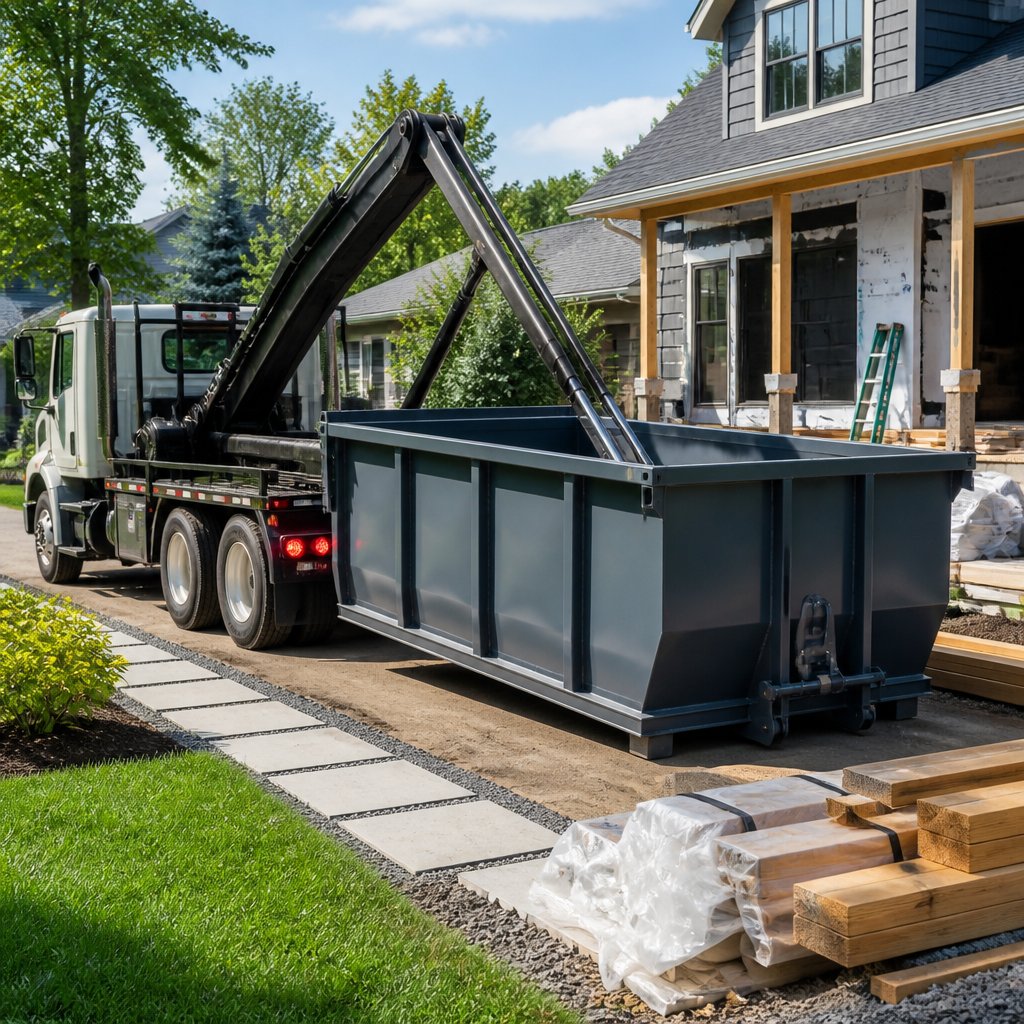
- Dumpster rental almost always beats ownership for contractors, since disposal logistics and permitting are handled by a sourcing partner.
- Section 179 of the tax code allows businesses to deduct the full purchase price of qualifying equipment in the year it’s placed in service.[1]
- Ownership makes more sense for tools used on nearly every job; rental makes more sense for occasional or specialized equipment.
- Storage, maintenance, and insurance costs of ownership are easy to underestimate when comparing rental and purchase prices side by side.
Equipment Rentals vs Ownership: The Core Question
Every contractor eventually faces the same decision across different pieces of equipment: buy it outright, or rent it as needed? Equipment rentals vs ownership isn’t a single answer that applies across the board — the right choice depends heavily on how often a specific tool or piece of equipment actually gets used, and dumpsters sit firmly on the rental side of that equation for almost every contractor.
Section 179 of the federal tax code allows business taxpayers to deduct the cost of certain qualifying equipment as an expense in the year it’s placed in service, rather than depreciating the cost over several years.[1] This deduction is a genuine factor worth understanding when weighing a purchase, since it can meaningfully change the effective cost of ownership in the year equipment is bought.
That said, a tax deduction shouldn’t be the deciding factor on its own. Buying equipment purely to capture a deduction, without a genuine ongoing need for that equipment, usually costs more in the long run than the tax savings are worth. The deduction works best as a secondary consideration layered on top of a decision that already makes sense based on actual usage patterns.
Zap Dumpsters Peoria works as a sourcing partner for the dumpster side of this equation specifically, connecting Peoria contractors with the right container for each project without the overhead of owning and maintaining containers directly.
Rental vs Ownership Factors
| Factor | Favors Rental | Favors Ownership |
|---|---|---|
| Usage frequency | Occasional, project-specific | Used on nearly every job |
| Storage | No storage needed | Requires yard/storage space |
| Maintenance | Handled by rental provider | Contractor’s ongoing responsibility |
| Tax treatment | Deducted as ordinary rent expense | May qualify for Section 179 deduction |
| Upfront cost | Lower, spread across projects | Higher, paid at purchase |
Why Dumpsters Almost Always Make Sense to Rent
Unlike a drill or a saw, a dumpster isn’t just equipment — it comes bundled with logistics that ownership doesn’t solve. Permitting knowledge, placement guidance, and disposal facility relationships are things a sourcing partner already has in place, while owning a dumpster outright would still leave a contractor responsible for figuring out disposal logistics on every single project. Buying a roll-off container also means arranging your own hauling truck and disposal facility relationships, which turns a simple equipment purchase into an entirely separate logistics business most contractors have no interest in running.
When Ownership Makes More Sense
Tools and equipment used on nearly every job — a core set of hand tools, a truck, basic power equipment — tend to pencil out better as purchases over time, since the cost per use drops the more frequently something gets used. The breakeven point varies by equipment type, but frequency of use is consistently the deciding factor, more so than the sticker price of the equipment itself.
Running the Numbers Before Deciding
A simple breakeven calculation helps take the guesswork out of an equipment rentals vs ownership decision. Dividing the purchase price by the typical rental cost per use gives a rough number of uses needed before ownership pays off — if a piece of equipment costs $3,000 to buy and $150 to rent per use, ownership breaks even after roughly 20 uses, not counting maintenance, storage, or the time value of the upfront cash outlay. For a contractor who only needs that equipment a handful of times a year, renting stays the better option well beyond that raw breakeven point once those additional carrying costs are factored in.
This kind of calculation is worth revisiting periodically, not just once. A contractor’s usage pattern can shift as the business grows or specializes, and equipment that made sense to rent a few years ago might cross the threshold into being worth owning as project volume increases.
Costs of Ownership Beyond the Purchase Price
The purchase price of equipment is only part of the true cost of ownership — storage space, ongoing maintenance, insurance, and eventual resale or disposal all add to the real number, and these costs are easy to overlook when comparing a purchase price directly against a rental rate. A piece of equipment that looks cheaper to own over a year of heavy use can quietly become more expensive once storage and maintenance are factored in honestly.
Quick Decision Table: Rent or Own?
| Equipment Type | Typical Recommendation |
|---|---|
| Dumpsters | Rent (sourced per project) |
| Core hand tools | Own |
| Specialized equipment (used rarely) | Rent |
| Heavy equipment (excavators, etc.) | Depends on project volume; often rent unless very frequent use |
| Vehicles used daily | Own |
Tax Considerations Worth Discussing With an Accountant
Section 179 can make ownership more attractive in a given tax year by allowing the full deduction upfront rather than spreading it across several years of depreciation.[1] This benefit applies specifically to purchased equipment, not rented equipment, which is one more factor worth weighing alongside usage frequency. Because tax treatment varies by business structure and changes from year to year, this is a conversation worth having with an accountant rather than relying on general guidance alone.
Rental as an Ordinary Business Expense
Rented equipment, including dumpsters, is generally deducted as an ordinary business expense in the year the cost is incurred, which is simpler to account for than depreciation schedules tied to a purchase, even though it doesn’t offer the same upfront deduction advantage Section 179 provides for owned equipment. For most contractors, the simplicity of rental accounting is itself a meaningful benefit, cutting down on the bookkeeping complexity that comes with tracking depreciation schedules across a fleet of owned assets.
Equipment Rentals vs Ownership Near You
Equipment rentals vs ownership decisions get easier once usage frequency becomes the guiding question rather than sticker price alone. Running a quick breakeven calculation before committing to a purchase, and being honest about the hidden costs that come with owning equipment, leads to better decisions than comparing rental rates against purchase prices in isolation. If you’re also working through how much crew time waste handling adds to a project, our guide on estimating labor costs for waste removal on jobs covers a related cost factor worth planning alongside equipment decisions.
Zap Dumpsters Peoria works as your sourcing partner for contractor dumpster rentals, helping connect your project with the right container near you, without the overhead of ownership.
Equipment Rentals vs Ownership FAQs
Is it better to rent or own a dumpster for construction projects?
Renting almost always makes more sense than ownership, since a sourcing partner handles permitting, placement, and disposal logistics that ownership wouldn’t solve.
What tax benefit applies to purchased equipment?
Section 179 of the federal tax code allows businesses to deduct the full cost of qualifying purchased equipment in the year it’s placed in service, rather than depreciating it over several years.
How do I know if equipment is worth buying instead of renting?
Usage frequency is the key factor in equipment rentals vs ownership decisions — equipment used on nearly every job tends to be worth owning, while occasional-use equipment usually makes more sense to rent.
Does renting equipment offer any tax advantage?
Rented equipment is typically deducted as an ordinary business expense in the year the cost is incurred, which is simpler than depreciation but doesn’t offer the same upfront deduction as Section 179.
What costs of ownership are easy to overlook?
Storage space, ongoing maintenance, insurance, and eventual resale or disposal all add to the true cost of ownership beyond the initial purchase price, and these hidden costs often tip the math back toward renting.
Equipment Rentals vs Ownership Citations
- Internal Revenue Service, Depreciation Expense Helps Business Owners Keep More Money (Section 179) — irs.gov