
- Pop-up retail waste management needs short-term solutions sized for a defined event window, not a full lease term.
- Temporary structures and uses in Peoria fall under a specific permitting process separate from standard retail permits.
- Packaging, signage, and fixture waste all spike at teardown, not just during the event itself.
- A single flexible dumpster booking often works better than committing to a recurring service for a short-term shop.
- Planning disposal before opening day avoids scrambling once the space needs to be vacated on schedule.
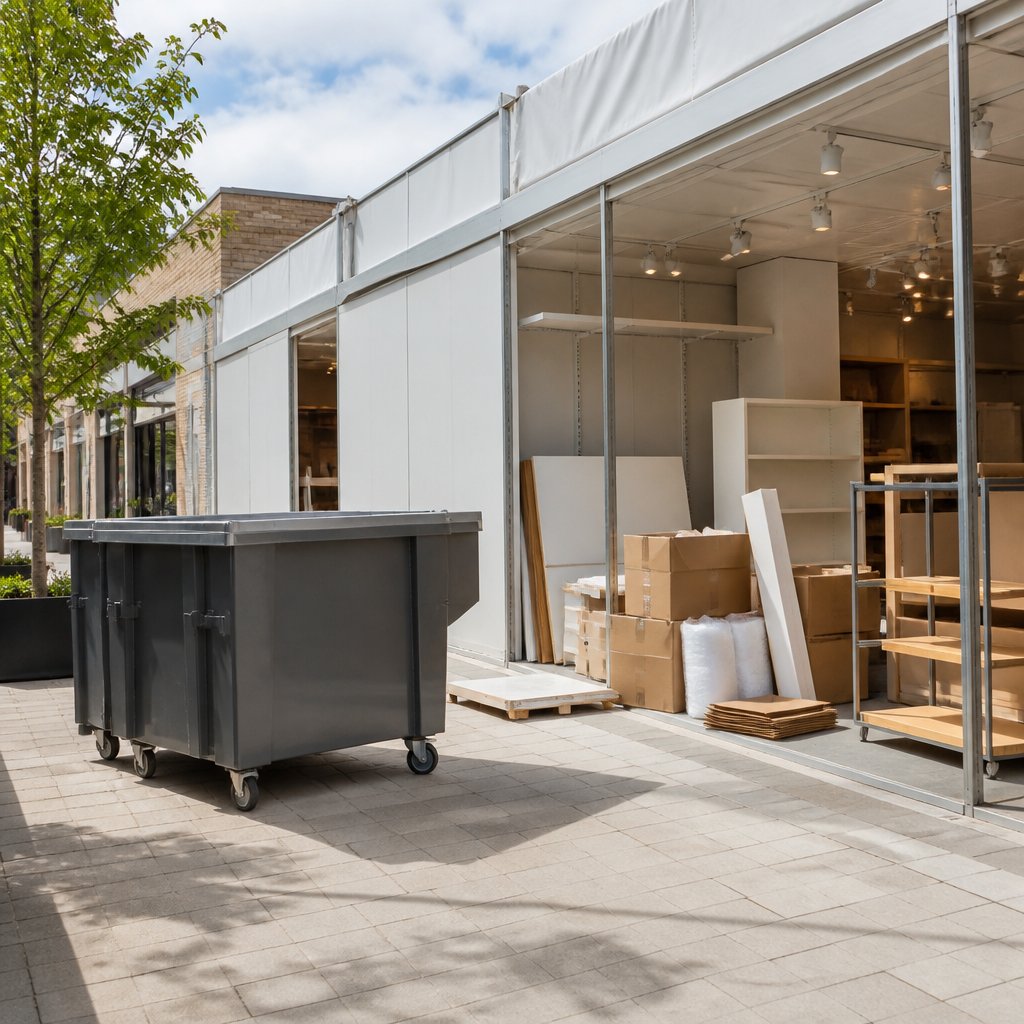
Why Pop-Up Retail Waste Management Needs a Different Approach
A pop-up shop lives and dies by its short timeline — open for a weekend, a season, or a few months, then gone. Pop-up retail waste management short-term solutions have to match that same rhythm, which makes them fundamentally different from planning waste service for a permanent storefront with a year-round lease. Standard commercial dumpster contracts, built around ongoing recurring pickup, often don’t fit a business that only exists for a few weeks, and forcing that mismatched model onto a short-term operation usually means paying for service the business will never fully use.
The City of Peoria regulates temporary uses with specific duration limits depending on the type of activity — sidewalk sales, festivals, and similar special sales are capped at three days and no more than twelve times a year, while demountable temporary structures are permitted for up to six months under special use approval.[1] This time-boxed framework is worth keeping in mind when planning waste disposal too — everything about a pop-up’s logistics, including its dumpster needs, should be scoped to that same defined window rather than treated as an open-ended commitment.
Zap Dumpsters Peoria works as a sourcing partner for pop-up and short-term retail operators, helping connect Peoria event spaces with a dumpster sized and scheduled around the actual event timeline.
Waste Volume Across a Pop-Up’s Lifecycle
| Phase | Typical Waste | Volume Pattern |
|---|---|---|
| Setup | Packaging, shipping materials, display assembly waste | Moderate, front-loaded |
| Operating period | Customer packaging, general trash | Steady, tied to foot traffic |
| Teardown | Fixtures, signage, unsold display materials | High, concentrated spike |
Setup Waste
The days before a pop-up opens generate their own wave of waste — shipping boxes, packaging from fixtures and inventory, and materials left over from building out the temporary space. This phase is easy to underestimate because it happens before the “real” business activity even starts. A quick walkthrough of the vendor’s build-out plan before delivery day arrives, noting roughly how much packaging each fixture and inventory shipment will generate, helps avoid ordering a dumpster too small for the setup phase alone.
Teardown Waste
Teardown is where pop-up retail waste management short-term solutions most often fall short. Fixtures, signage, leftover displays, and unsold packaging materials all need to leave the space by the end date, and this final surge is frequently larger than anything generated during the actual operating period. Operators who assume the same container that handled a few weeks of steady operating waste will also absorb teardown often end up overflowing on the very last day, right when there’s the least flexibility to fix it.
Matching Service to a Defined Timeline
A single dumpster booking scheduled around the pop-up’s actual open and close dates — rather than a recurring weekly service designed for a permanent business — is almost always the more practical and cost-effective choice for a short-term retail operation. Coordinating the final pickup to align with the teardown date, rather than an arbitrary weekly schedule, ensures the container is still there when the largest volume of waste actually needs to leave. Extending that single booking by a day or two past the official close date also provides a useful buffer in case teardown runs longer than planned, which happens more often than most first-time pop-up operators expect.
Quick Reference: Pop-Up Waste Planning Checklist
| Step | Timing |
|---|---|
| Confirm temporary use permit status | Before setup begins |
| Book dumpster for setup + operating period | Before opening day |
| Schedule final pickup for teardown | Aligned with event close date |
| Plan for fixture/signage disposal or resale | Before teardown day |
Sourcing Materials Sustainably for a Short Run
Pop-up retailers sometimes overlook how much of their setup waste is avoidable in the first place. Renting fixtures and display equipment instead of buying new ones built specifically for a short run cuts down on what needs to be disposed of at teardown, since rented items simply go back to their owner rather than into a dumpster. Where fixtures do need to be purchased, choosing modular or reusable options — ones that could realistically serve a second pop-up down the road — reduces the volume that ends up as one-time waste.
Packaging choices matter too. A pop-up that coordinates with suppliers on minimal or consolidated shipping packaging generates noticeably less setup waste than one that receives inventory in dozens of individually boxed shipments. None of this eliminates the need for a dumpster, but it can meaningfully shrink how large a container the event actually requires.
Location and Placement Considerations
Pop-up locations — mall common areas, event spaces, vacant storefronts — often have different access and placement constraints than a standalone retail building. Confirming where a dumpster can actually be positioned, and whether the property owner or event organizer has specific rules about container placement, is worth doing well before the event dates rather than discovering a conflict on setup day.
Confirm Your Temporary Use Category First
Peoria’s temporary use rules assign different duration and frequency limits to different categories — a sidewalk or plant sale caps out at three days and twelve occurrences a year, while a demountable temporary structure can run for up to six months with special use approval.[1] Knowing which category a pop-up shop actually falls into shapes not just the permit process but the realistic scope of a waste disposal plan, since a three-day sidewalk sale and a six-month demountable storefront generate very different total volumes.
Coordinating With Property Owners
Since pop-ups operate on someone else’s property far more often than permanent retail does, waste disposal plans usually need sign-off from a landlord, mall management, or event organizer. Getting this confirmed early avoids a last-minute scramble to find an approved spot for a dumpster once the space is already set up.
Pop-Up Retail Waste Management Near You
Pop-up retail waste management short-term solutions work best when they’re planned around the entire lifecycle of the event, not just the days it’s open for business. Building disposal into the same planning process as permitting, fixtures, and staffing — rather than treating it as an afterthought — keeps a short-term retail run from ending in a scramble to clear the space on time. If you’re comparing this to a longer-term retail waste plan, our guide on retail store cleanouts seasonal and end-of-line disposal covers how ongoing retail operations handle similar volume swings.
Zap Dumpsters Peoria works as your sourcing partner for commercial dumpster service, helping connect your pop-up shop with the right short-term container near you.
Pop-Up Retail Waste Management Short-Term Solutions FAQs
Do pop-up shops need a permit for waste disposal in Peoria?
Pop-up shops generally need a temporary use approval tied to their specific activity type, and if a dumpster will sit on public right-of-way rather than private property, a separate right-of-way permit may apply.
How long can a temporary retail use operate in Peoria?
Duration depends on the category — special sales like sidewalk or plant sales are limited to three days and up to twelve occurrences a year, while demountable temporary structures can be approved for up to six months.
What generates the most waste during a pop-up event?
Teardown typically generates the largest single wave of waste, since fixtures, signage, and leftover display materials all need to be cleared out at once.
Can I use a recurring dumpster service for a short-term pop-up?
It’s possible, but pop-up retail waste management short-term solutions are usually better served by a single booking scheduled around the actual event dates rather than a recurring weekly contract.
Who handles dumpster placement approval for a pop-up in a mall or event space?
Property owners, mall management, or event organizers typically need to approve dumpster placement, so confirming this before setup avoids delays on opening day.
Pop-Up Retail Waste Management Short-Term Solutions Citations
- City of Peoria, Guide to Temporary Uses — peoriagov.org