
- Key Takeaways:
- Never clear storm-damaged roofing debris before your insurance adjuster has documented it — once it’s hauled away, you lose your strongest piece of physical evidence for the claim.
- Illinois insurers must acknowledge your claim communications within 15 working days and begin an investigation within 21 working days under 50 Ill. Admin. Code § 919.40, giving you a concrete timeline to plan dumpster delivery around.
- Booking the dumpster for delivery the day after your adjuster visit — not before — is the safest sequencing for a storm damage roof tear-off in Peoria.
- Photograph and video the damage from the ground and, where safe, the roofline itself before any tarping or temporary repairs are made.
- Zap Dumpsters Peoria sources roofing containers timed to your adjuster’s visit and approval, helping avoid a documentation gap that could weaken your claim.
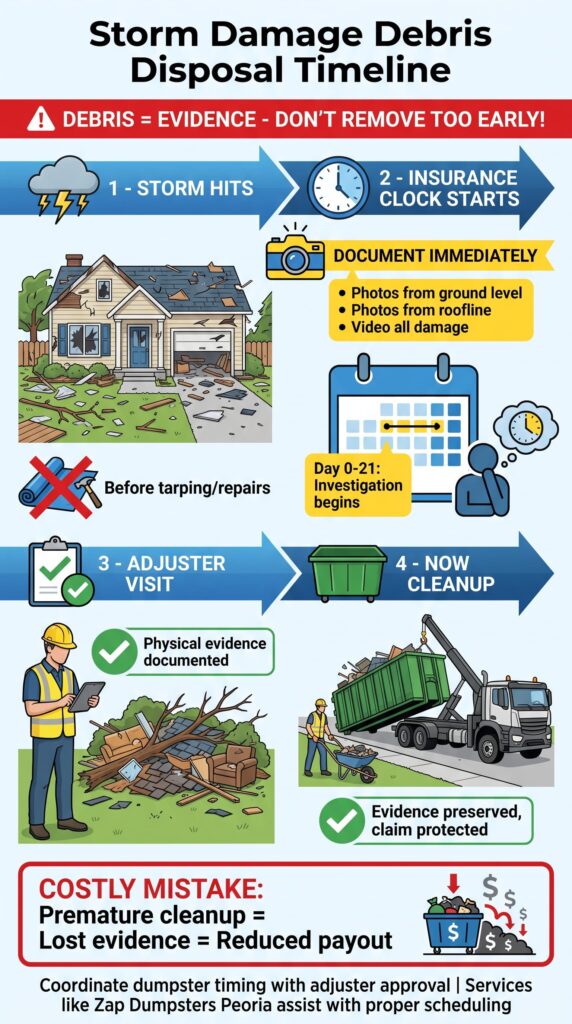
A storm damage roof tear-off dumpster rental in Peoria IL needs to be timed around your insurance claim, not just your contractor’s schedule. The most common — and most costly — mistake homeowners make after a storm is clearing debris too early, before an adjuster has had the chance to see and document the damage in place. Once shingles, flashing, and decking are sitting in a dumpster instead of on the ground where the storm left them, you’ve removed the physical evidence that supports a fair claim payout.
Why Timing the Dumpster Matters More Than Speed
The instinct after a storm is to clean up fast — tarp the roof, clear the yard, get life back to normal. For storm damage roofing debris specifically, that instinct works against you. Insurance adjusters rely heavily on being able to see damage in its original condition, and once debris is hauled away, disputes over the extent or cause of damage become much harder to resolve in your favor.
What Adjusters Need to See First
An adjuster evaluating a storm damage claim looks for evidence connecting the damage to a specific covered event — wind, hail, or fallen debris — rather than ordinary wear. Displaced shingles still lying in the yard, damaged flashing still attached to the roofline, and debris patterns consistent with the storm date all support that connection. Clearing debris before this documentation happens can shift a claim toward the “pre-existing wear” category insurers use to reduce or deny payouts.
The Photo and Video Checklist Before Anything Gets Cleared
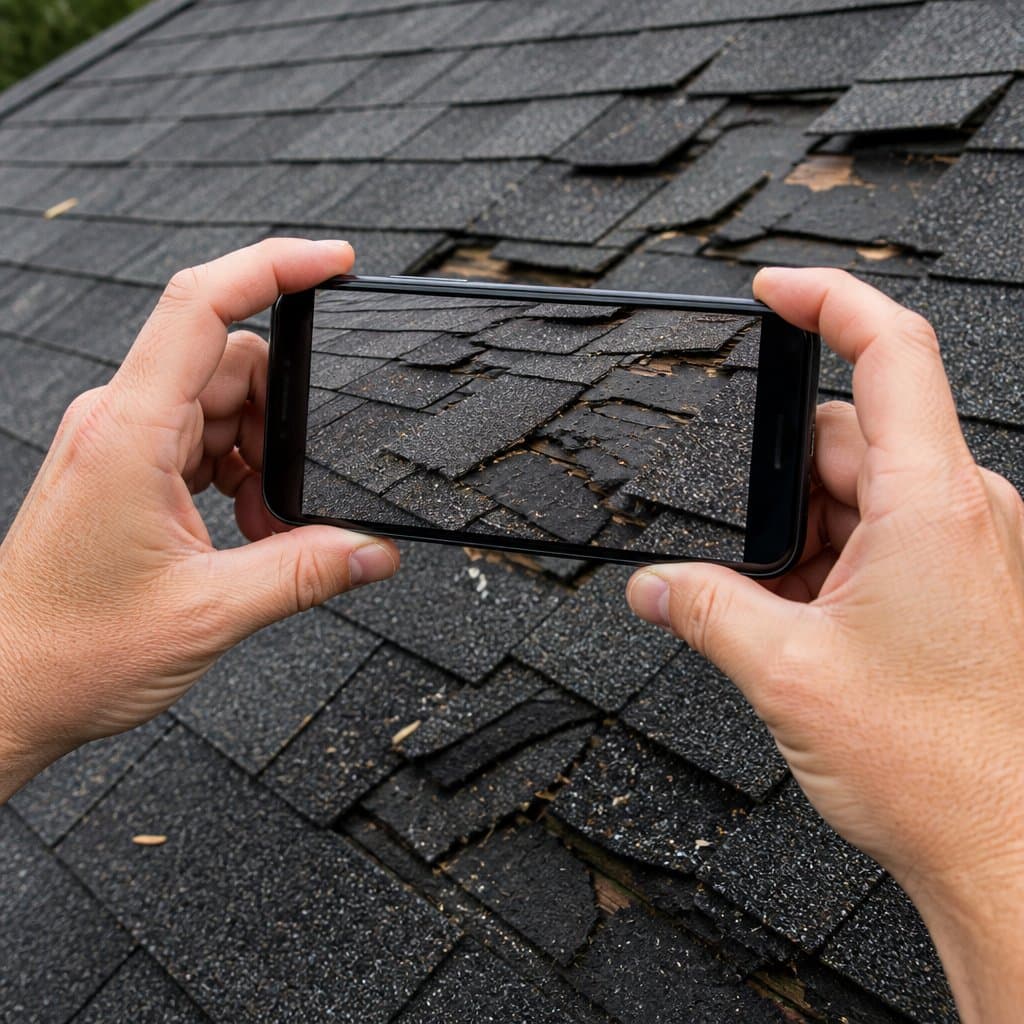
Before any tarping, temporary repair, or dumpster delivery, document the damage thoroughly: wide shots of the full roof from each side, close-ups of individual damaged shingles or flashing, photos of debris in the yard and gutters, and — where it’s safe to do from the ground — any visible interior damage like ceiling stains. Timestamped photos and a written note of when the storm occurred and when you discovered the damage strengthen the claim significantly.
| Stage | Action | Dumpster Status |
|---|---|---|
| Immediately after storm | Photograph and video all visible damage | Not yet booked |
| Same day, if needed | Temporary tarping to prevent further damage (keep receipts) | Not yet booked |
| Within days | File claim, request adjuster visit | Book delivery for the day after the visit |
| After adjuster visit | Confirm scope of approved work with contractor | Dumpster delivered, tear-off begins |
Illinois Insurance Claim Timelines and What They Mean for Your Dumpster Rental
Illinois regulates how quickly insurers must respond to a storm damage claim, and knowing these deadlines helps you plan dumpster delivery instead of guessing. Under 50 Ill. Admin. Code § 919.40, an insurer must acknowledge your claim communications within 15 working days and begin a meaningful investigation within 21 working days of being notified of the loss.[1] If the insurer affirms liability, § 919.50 requires payment of the undisputed portion within 30 days.[1]
The 15/21/30-Day Benchmarks in Practice
In practice, most Peoria homeowners see an adjuster inspection scheduled within one to two weeks of filing, well inside the 21-working-day investigation window Illinois law requires. This gives a realistic planning window: file the claim promptly, document everything before the adjuster arrives, and hold off on booking dumpster delivery until the inspection date is confirmed.
When It’s Safe to Start Tear-Off
Once the adjuster has completed the on-site inspection and you have either a verbal scope confirmation or written approval, tear-off can begin. If your insurer is taking longer than the regulatory benchmarks without explanation, the Illinois Department of Insurance’s post-disaster claims guide recommends documenting the delay and contacting the Department’s Consumer Division directly rather than proceeding with tear-off in a documentation gap.[2] For a broader look at navigating the claims process alongside debris removal, the article on insurance claims for storm debris removal covers additional documentation and timing considerations beyond roofing specifically.
Coordinating Dumpster Delivery With Your Adjuster Visit
Once you have a confirmed adjuster visit date, booking the dumpster for delivery the following day is the sequencing that protects both your claim and your project timeline. Delivering too early risks debris being disturbed or partially cleared before the inspection; delivering too late adds unnecessary delay once the adjuster has already documented everything they need.
Before the Adjuster Arrives
Keep the damage area as undisturbed as reasonably possible. Temporary repairs to prevent further damage — tarping an active leak, for example — are standard practice and typically reimbursable, but full tear-off and debris removal should wait. If your roofing contractor is present for the adjuster visit, they can speak directly to the scope of damage in a way that often speeds up approval.
After Approval: Sizing the Container for Storm Debris
Storm-damaged roofing debris follows the same weight math as a planned tear-off — asphalt shingles run 230 to 430 pounds per square depending on the type — but storm debris often includes additional material like damaged gutters, broken flashing, and displaced decking that a planned tear-off wouldn’t generate. Flagging this additional debris when booking helps your roofing waste disposal sourcing partner recommend the right container size rather than defaulting to what a standard tear-off of the same square footage would need.
Coordinating With Your Contractor and Insurer at the Same Time
A storm damage roof tear-off often involves three parties moving on overlapping timelines: your insurance adjuster, your roofing contractor, and the dumpster delivery itself. The most common breakdown happens when a contractor is scheduled to start before the claim has actually been approved, creating pressure to clear debris ahead of documentation just to keep the contractor’s schedule. Confirming written or verbal claim approval before locking in a contractor start date — even if it pushes the timeline out by a few days — avoids this conflict entirely and keeps the insurance and construction sides of the project working together rather than against each other.
What Happens During Illinois’s Peak Storm Season
Central Illinois sees its highest volume of severe storm and hail activity in spring and early summer, which is also when roofing contractors and dumpster providers see the heaviest demand. During these periods, adjuster visits can take slightly longer to schedule simply due to claim volume across the region, even though the regulatory 15 and 21-working-day benchmarks still apply. Booking your dumpster delivery as a flexible window rather than a fixed date during peak storm season — confirming the exact day once the adjuster visit is scheduled — avoids the need to reschedule delivery if the inspection date shifts.

Storm Damage Roof Tear-Off Dumpster Rental Near You in Peoria IL
A storm damage roof tear-off dumpster rental in Peoria IL works best when it’s sequenced around your insurance claim rather than booked on reflex right after the storm passes. Documenting the damage first, understanding Illinois’s regulatory timelines for adjuster response, and booking delivery for the day after your inspection are the three steps that protect both your claim and your project schedule. Zap Dumpsters Peoria sources roofing containers near you timed to your claim’s progress, and for storms that affect more than just the roof, the residential storm debris removal service covers the same documentation-first approach for yard and property debris beyond the roofline.
Storm Damage Roof Tear-Off Dumpster Rental Peoria IL FAQs
When should I book a storm damage roof tear-off dumpster rental in Peoria IL?
Book delivery for the day after your insurance adjuster’s inspection, not before — clearing debris ahead of that visit removes the physical evidence your claim depends on.
How long does an Illinois insurer have to respond to a storm damage claim?
Illinois law requires insurers to acknowledge claim communications within 15 working days and begin an investigation within 21 working days of notification of loss, under 50 Ill. Admin. Code § 919.40.
What should I document before booking a storm damage roof tear-off dumpster rental in Peoria IL?
Photograph and video the full roof from all sides, close-ups of damaged shingles and flashing, debris in the yard and gutters, and note the date the storm occurred and when you discovered the damage.
Can I do temporary repairs before the adjuster visits?
Yes — temporary repairs like tarping to prevent further damage are standard and typically reimbursable, but keep all receipts and avoid full debris removal until after the inspection.
What if my insurer is taking longer than the standard timeline?
If your insurer misses the 15-day or 21-day benchmarks without explanation, the Illinois Department of Insurance recommends documenting the delay and contacting their Consumer Division rather than proceeding with tear-off before the claim is resolved.
Storm Damage Roof Tear-Off Dumpster Rental Peoria IL Citations
- Illinois General Assembly, Illinois Administrative Code Title 50, Part 919 — Improper Claims Practice: https://www.ilga.gov/agencies/JCAR/EntirePart?titlepart=05000919
- Illinois Department of Insurance, Post-Disaster Claims Guide: https://idoi.illinois.gov/content/dam/soi/en/web/insurance/consumers/documents/claim-disaster-guide-7-23-2019.pdf