
- Key Takeaways:
- Staging tear-off work in sections and covering exposed deck immediately is the most effective way to protect roof debris from rain.
- A tarp must extend over the roof ridge and be anchored with 2×4 boards to prevent wind from lifting it during a storm.
- Wet shingles become heavy and slippery — never attempt to sweep or clear debris from a wet, active roof.
- Debris in dumpsters should be covered or managed in stages to prevent wet loads from exceeding weight limits.
- Zap Dumpsters Peoria helps source containers with enough capacity to account for wet-weight increases on rain-affected projects.
Protecting roof debris from rain during a roofing project comes down to staging work in manageable sections, covering exposed deck before any weather arrives, and managing the weight implications of wet debris in your dumpster. Rain mid-project does not have to stop a roofing job — but it does require a different approach to both safety and debris logistics than a dry-weather tear-off.
Pre-Storm Planning: The Most Effective Protection Starts Before the Weather
The best time to protect a roof mid-project is before rain is in the forecast. Reactive tarping during an active storm is more dangerous and less effective than proactive coverage planned at the start of each day.
Work in Sections, Not Across the Whole Roof at Once
Rather than stripping the entire roof deck at once, dividing the tear-off into sections and completing each section through to new underlayment before moving to the next keeps the exposure window short. This staging approach means that even if an unexpected shower arrives mid-day, the area of vulnerable exposed deck is limited to one section rather than the entire roof.
Reading the Weather Window Accurately
Central Illinois weather can shift quickly, particularly during spring and early fall roofing season. Before beginning a large section tear-off, check a short-interval forecast, since an hourly forecast is more useful than a daily one when managing mid-project exposure risk. A two-hour weather window is generally enough to complete a section through to underlayment on a standard residential roof section with a prepared crew.
How to Tarp a Roof Mid-Project During Rain
If rain arrives before a section is covered with underlayment, a properly anchored tarp is the next line of defense. A tarp that is too small, poorly anchored, or draped without running over the ridge will create water channels that route rain directly into the exposed deck instead of preventing it.
| Tarping Step | Why It Matters |
|---|---|
| Extend tarp at least 3–4 feet beyond the damaged area on all sides | Prevents water from running under the tarp edge |
| Run the tarp over the ridge, not just to it | Water channels under tarps that stop at the ridge |
| Anchor with 2×4 boards rolled in the tarp edge, fastened to the deck | Wind cannot lift boards the way it can lift loose tarp edges |
| Use boards 2 feet longer than the tarp width at each end | Prevents water from running behind the board ends |
| Weight down any loose edges with sandbags if mechanical fastening is not possible | Reduces tarp movement in gusting wind |
Never Tarp in High Wind or Active Lightning
A tarp on a steep roof in gusty wind is a significant fall hazard. No tarping task is urgent enough to send workers onto a slick, wind-affected roof without full fall protection in place. If conditions make rooftop tarping unsafe, the safer option is to protect from the inside by placing plastic sheeting in the attic under the exposure point and routing water away from finishes and electrical components until conditions improve.
Managing Roof Debris in the Dumpster During Rain
Wet Debris Weight Is a Real Cost Issue
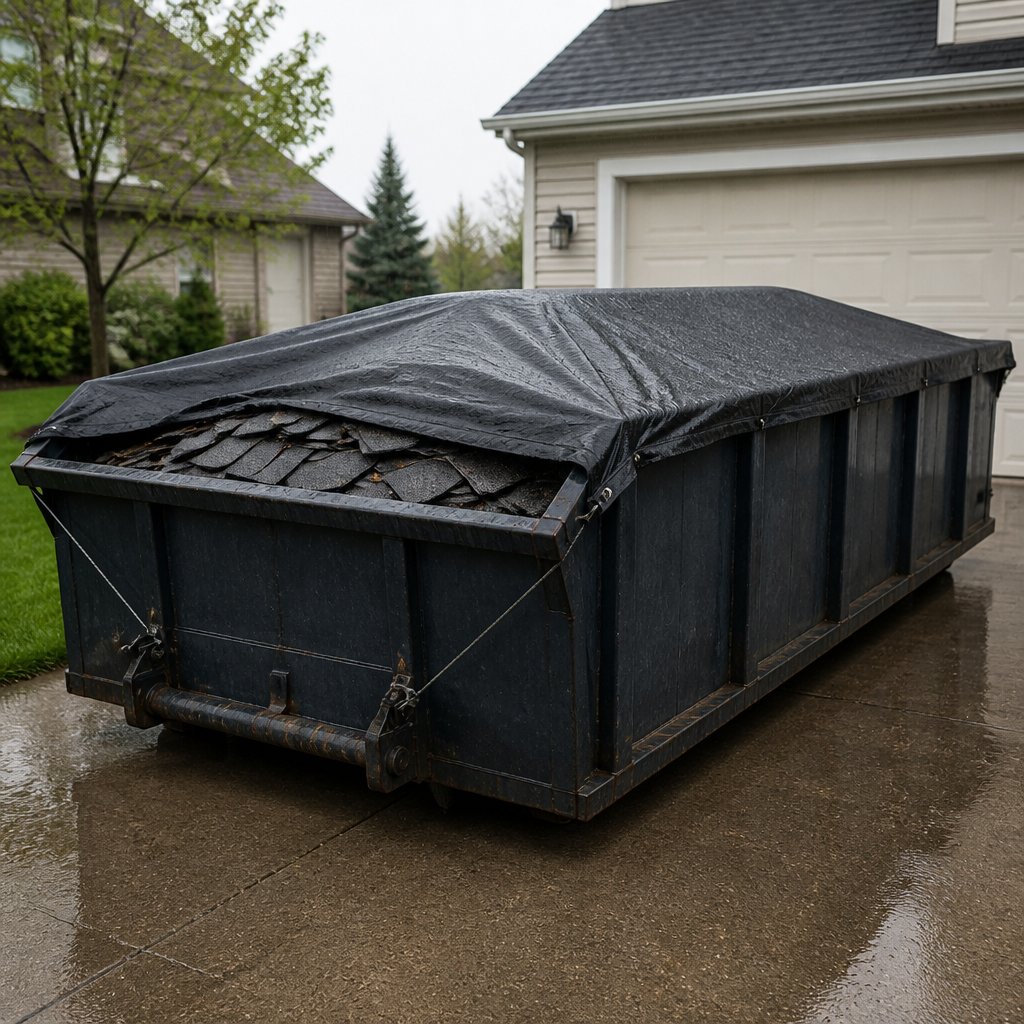
Shingles and roofing felt that absorb rainwater can add hundreds of pounds to a load that was otherwise within the container’s weight limit. A 20-yard container that was close to its weight cap during a dry stretch of the job can easily trigger overage fees after a heavy overnight rain soaks the debris. Covering the container with a tarp when rain is expected is a simple step that many crews overlook but that consistently saves money on weight overage charges.
Covering the Container Between Loading Sessions
Most roll-off containers do not come with built-in covers. A heavy-duty polyethylene tarp weighted or tied down over the open top keeps rain out during overnight breaks and multi-day pauses in loading. This is particularly worth doing when the container is between 60 and 80 percent full, since a load at that stage is already close enough to the weight cap that a night of rain could push it over.
Wet Shingles Are Slippery — Do Not Work in Them
Shingle granules become extremely slippery when wet. Clearing debris from a wet, active roof should not happen mid-storm, regardless of how pressed the project timeline is. If drainage is blocked by debris in a valley or around a penetration during rain, the safest approach is to clear just enough to restore water flow using a soft broom while remaining tied off at all times, then wait until conditions have improved before resuming full debris handling.
Protecting Debris Piles Staged on the Roof

On larger projects where debris is temporarily staged on a flat or low-slope section of the roof before being transferred to the dumpster below, covering that staged pile separately from the main tarp protects both the pile and the surrounding roof surface. A debris pile tarp should slope so water runs off toward the roof’s normal drainage path rather than pooling against walls or penetrations.
Post-Storm Debris Inspection
After any rain event during a project, inspect staged debris and any partially filled container for weight changes before resuming normal loading. Check that tarps over the open deck are still properly anchored and that any water pooling under a tarp has been addressed, since trapped moisture under a tarp that seals the edges can accelerate deck damage faster than rain alone.
| Scenario | Recommended Action |
|---|---|
| Rain forecast during a section tear-off | Stage work; get underlayment down before stopping |
| Unexpected storm mid-job on exposed deck | Inside plastic sheeting first; outside tarp over ridge if safe |
| Container left open overnight with rain expected | Cover with a heavy-duty tarp weighted down at the edges |
| Debris blocking drainage during rain | Clear minimally from a tied-off position; full cleanup after dry conditions return |
How Dumpster Choice Affects Rain Resilience
Choosing the right container type from the start reduces rain-related complications during a project. The comparison of container types for roofing is covered in detail in the guide on what dumpster options are available for residential roof projects. For projects where wet-weather weight increases are a concern, understanding the weight math from the article on estimating dumpster size and weight for a roof tear-off helps plan for wet-load scenarios. General debris and site safety protocols are covered in the foundational guide at roofing debris best practices for dumpsters and nail cleanup.
Zap Dumpsters Peoria works as a sourcing partner for roofing waste disposal, helping Peoria homeowners and contractors select containers with enough weight margin to handle rain-affected loads without triggering overage charges.
Protecting Roof Debris From Rain Near You in Peoria
Protecting roof debris from rain during a roofing project comes down to three habits: staging tear-offs in sections so exposure windows stay short, anchoring tarps correctly over the ridge, and covering the dumpster when rain is expected so wet shingles do not push the load over its weight limit. Central Illinois weather creates real project risk, but crews that build these habits into their standard workflow handle wet-weather interruptions without the delays and extra costs that catch unprepared crews off guard. Zap Dumpsters Peoria sources containers near you with the right weight capacity for every stage of your roofing project, rain or shine.
How Do You Protect Roof Debris From Rain During a Roofing Project FAQs
How do you protect roof debris from rain during a roofing project?
You protect roof debris from rain during a roofing project by staging tear-offs in sections, covering exposed deck with anchored tarps that run over the ridge, and covering the dumpster during rain to prevent wet shingles from triggering weight overage fees.
What is the correct way to anchor a tarp over exposed roof deck?
Roll the tarp edge around a 2×4 board and fasten it to the deck; use boards two feet longer than the tarp width so water cannot run behind the board ends, and extend the tarp over the ridge so water runs off rather than under it.
Can you work on a wet roof during active rain to move debris?
No. Wet shingles and granules are extremely slippery and clearing debris from an active wet roof is a significant fall hazard; work should wait until conditions are safe and workers are properly tied off.
Why do wet shingles in a dumpster cause overage fees?
Shingles absorb rainwater and can gain hundreds of pounds of additional weight, pushing a load that was within its weight cap past the limit and triggering per-ton overage charges.
Should you cover a dumpster during rain on a roofing project?
Yes. Covering the container with a heavy-duty tarp when rain is expected prevents debris from gaining unnecessary water weight, particularly when the container is already close to its weight limit.
How Do You Protect Roof Debris From Rain During a Roofing Project Citations
- Occupational Safety and Health Administration, Disposal of Waste Materials (29 CFR 1926.252): https://www.osha.gov/laws-regs/regulations/standardnumber/1926/1926.252