
- Key Takeaways:
- Roll-off dumpsters are the most practical container type for full residential roof tear-offs due to their capacity and weight ratings.
- Bagsters work for minor repairs but fall short for full replacements due to weight and volume limits.
- Dump trailers offer flexibility for DIY crews but require a tow vehicle and careful weight management.
- Roofing shingles are dense and heavy; the container type matters as much as the size.
- Zap Dumpsters Peoria sources the right container type and size for residential roof projects in the Peoria area.
What are the best dumpster options for residential roof projects? The honest answer depends on the scale of your job, your access constraints, and whether you are running a professional roofing crew or handling a DIY repair. Roll-off dumpsters dominate for full replacements, while bagsters and dump trailers fill specific niches. Understanding what each container type can and cannot handle keeps your project on budget and compliant with weight limits.
Why Container Type Matters as Much as Size for Roofing Projects
Most homeowners think about container size when planning a roof tear-off, but container type is just as important. Roofing debris is one of the densest categories of residential waste. A container that looks like the right size for the volume of material can still be the wrong choice if it is not rated for the weight that shingles, underlayment, and flashing actually put on it.
How Roofing Debris Weight Differs From General Trash
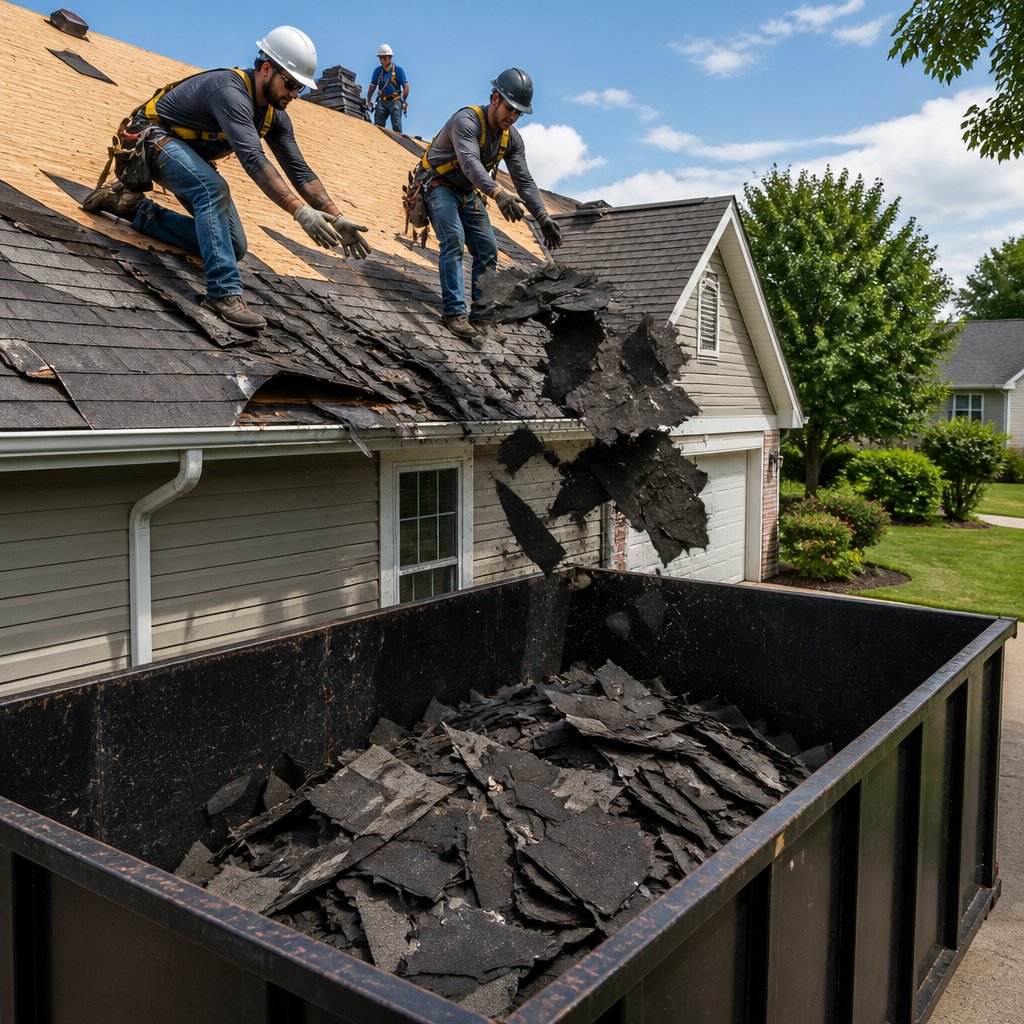
Standard household debris is light and bulky. Shingles are the opposite: dense, heavy, and deceptively compact. A 20-yard roll-off filled with household trash might weigh two to three tons. That same container loaded with two layers of asphalt shingles from a modest roof can exceed five tons. That gap is why the type of container, and the weight allowance that comes with it, matters more for roofing than for almost any other residential cleanup project. Choosing the wrong container type — even if the size looks right — is one of the most common reasons homeowners end up with unexpected overage charges at the end of a roofing job.
Comparing Dumpster Options for Residential Roof Projects
| Container Type | Best For | Key Limitations |
|---|---|---|
| Roll-off dumpster | Full tear-offs, multi-layer shingle removal | Requires driveway access for delivery truck |
| Bagster | Minor repairs, small patches, limited shingle removal | Weight cap of roughly 3,300 lbs limits roofing use |
| Dump trailer (rented or contractor-owned) | DIY crews with a tow vehicle, rural sites, tight access | Requires driver skill, road legality varies by load |
| Haul-away truck service | Contractors who prefer scheduled pickups over a sitting container | Less flexible timing, not always available same-day |
Roll-Off Dumpsters: The Standard Choice for Full Roof Replacements
For most residential roof replacements, a roll-off container is the default recommendation for good reason. Roll-offs are purpose-built for heavy, dense construction debris and come in sizes and weight ratings that align with what a full shingle tear-off produces. The open-top design makes loading straightforward for roofing crews tossing material directly from the roof edge into the container below.
Weight Ratings Versus Size Ratings
When sourcing a roll-off for a roofing job, the weight limit matters more than the cubic yardage. A 20-yard container might have a two-ton or a four-ton weight cap depending on the provider and the specific container. For shingle-heavy loads, always ask explicitly about the tonnage included before booking, since hitting a weight cap triggers overage fees that can significantly increase the final cost of the rental. Providers who specialize in roofing debris will typically be upfront about this; those who primarily serve general contractors may not flag it unless you ask directly.
Placement and Access Considerations
Roll-off containers require a delivery truck with enough clearance to approach the placement site, swing the container off the back, and retrieve it when full. Narrow driveways, low tree branches, overhead wires, and tight urban lots can all create access challenges. If your driveway or street has any of these constraints, flag them early when working with a sourcing partner so the right container size and delivery approach can be planned accordingly.
Bagsters: When They Work and When They Fall Short
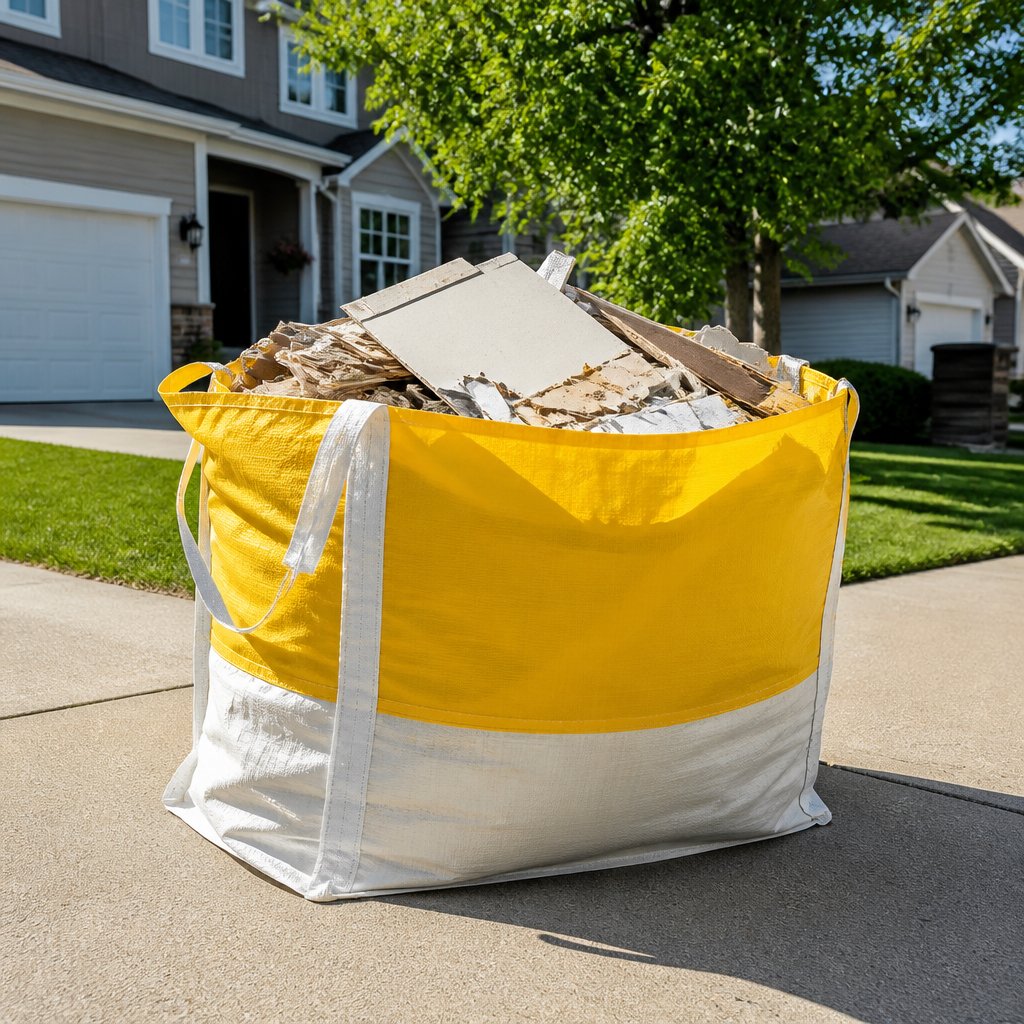
Bagsters are large, collapsible bags that sit flat until needed, then get filled and scheduled for pickup through the bag manufacturer’s collection service. They are convenient for minor repair jobs where only a small number of shingles are being replaced, and they work reasonably well for light debris like felt underlayment scraps or flashing pieces.
The Weight Cap Problem for Roofing Use
A bagster’s weight limit of roughly 3,300 pounds makes it unsuitable for most full roof tear-offs, even on smaller homes. A single square of architectural shingles can weigh 350 to 500 pounds, which means a moderately sized roof generates debris that far exceeds what a bagster can legally hold. For anything beyond patching a handful of damaged shingles, the roll-off is almost always the more practical choice.
Dump Trailers: The DIY Option With Real Trade-Offs
Some homeowners and small roofing crews rent or own dump trailers, which they load on-site and haul directly to a transfer station or landfill. This approach can work well in rural areas where driveway access is easy and the trip to a disposal facility is short.
Load Management and Road Legality
Shingles are heavy enough that overloading a dump trailer is a genuine risk, particularly on a larger tear-off. Most trailers have gross vehicle weight ratings that limit how much material can be loaded before the rig becomes illegal on public roads. Weight distribution also matters: a poorly loaded trailer can handle dangerously, especially on highway ramps or in wet conditions.
| Scenario | Recommended Container Type |
|---|---|
| Full single-layer shingle replacement | Roll-off dumpster, 20-yard minimum |
| Two-layer tear-off | Roll-off dumpster, 30-yard or weight-upgraded 20-yard |
| Small repair, 10 squares or fewer | Bagster or small roll-off, confirm weight limit first |
| Rural DIY project with short haul | Dump trailer if licensed vehicle available |
What to Ask When Comparing Container Options
Before committing to any container type, get clear answers to three questions: What is the weight limit? Is roofing debris specifically allowed? And what are the overage fees if the load exceeds the allowance? These three questions surface the differences between providers that are not always obvious from a price quote alone.
For a deeper look at specific sizing calculations based on your roof’s square footage and shingle type, the existing guide on what size dumpster to choose for a roofing job covers the numbers in detail. And if you have questions about whether standard containers can handle shingle loads specifically, the breakdown in can I put roofing shingles in a standard dumpster is worth reviewing before you book.
Zap Dumpsters Peoria works as a sourcing partner for roofing waste disposal containers, helping Peoria homeowners and roofing contractors identify the right container type and weight rating for their specific project before anything gets booked.
Finding the Best Dumpster Options for Residential Roof Projects Near You in Peoria
The best dumpster options for residential roof projects are not always the biggest or the cheapest — they are the ones matched to the actual weight and volume of your roofing debris. Roll-offs lead the field for full replacements, bagsters fill a limited niche for minor repairs, and dump trailers serve specific DIY scenarios where access and haul distance favor them. Asking the right questions about weight limits and overage fees before you commit makes the difference between a smooth project and an unexpected bill. Zap Dumpsters Peoria sources the right container type near you for whatever your roof project produces.
What Are the Best Dumpster Options for Residential Roof Projects FAQs
What are the best dumpster options for residential roof projects involving full tear-offs?
For full roof tear-offs, roll-off dumpsters rated for roofing debris are the best dumpster options, since they can handle the weight and volume that shingles produce.
Can a bagster hold a full roof tear-off?
No. A bagster’s weight limit of roughly 3,300 pounds makes it too small for most full roof replacements, where debris can easily reach several tons.
What questions should I ask before renting a dumpster for a roofing project?
Ask about the weight limit, whether roofing shingles are an approved material, and what the per-ton overage fee is if the load exceeds the included allowance.
Are dump trailers a good option for residential roof projects?
Dump trailers can work for smaller DIY projects in rural areas with short haul distances, but overloading risk and road weight limits make them less practical for large tear-offs.
Why do roofing projects need a higher weight rating than other cleanup jobs?
Asphalt shingles are dense and heavy, often exceeding 350 to 500 pounds per square, so a container that looks half full can still be at or near its weight limit on a shingle-heavy load.
What Are the Best Dumpster Options for Residential Roof Projects Citations
- Asphalt Roofing Manufacturers Association (ARMA), Asphalt Shingle Recycling: https://www.asphaltroofing.org/sustainability-update/