
- Key Takeaway 1: A roll-off dumpster can become a dangerous projectile in winds above 40 mph — securing it before a storm hits is a safety issue, not just a convenience.
- Key Takeaway 2: The four critical actions are: anchor it, orient it correctly, cover it tightly, and manage water accumulation.
- Key Takeaway 3: If a major storm is on the way, the smartest move is often to request an early pickup before the wind arrives.
- Key Takeaway 4: Peoria’s severe storm season can bring wind gusts of 60–80+ mph — this is not a place where you can skip storm prep for large containers.
- Key Takeaway 5: Rainwater flooding a dumpster can add thousands of pounds, triggering extra fees and making it impossible for a truck to safely lift.
Knowing how to secure a dumpster before a storm can protect your property, keep your neighbors safe, and save you money in overage fees and damage costs. The steps below are practical, proven, and easy to follow — even if a storm is already in the forecast.
📞 Need Help Sourcing a Dumpster in Peoria? Call Zap Dumpsters: (309) 650-8954
Why Peoria Storms Make Dumpster Security a Real Problem
Peoria, IL sits in a region that sees serious storm activity year after year. According to NOAA’s National Centers for Environmental Information, Illinois has experienced 92 severe storm events since 1980 that each caused over $1 billion in damage — more than any other disaster type in the state.[1] In July 2024, a derecho moved through the Peoria area and produced confirmed tornadoes with peak wind speeds of 80–85 mph, along with widespread gusts of 60–71 mph across Peoria County.[2]
Those numbers matter when you have a roll-off dumpster in your driveway or on a job site. A 10-yard roll-off container can weigh 3,000 to 5,000 pounds empty, but its large flat sides act like a sail in high winds. An unsecured, empty dumpster is one of the most dangerous loose objects on a storm-hit property. It can roll, tip, or shift into vehicles, fences, and structures even in gusts well below hurricane force.
This is especially true during the spring and summer storm season in central Illinois, when derechos, severe thunderstorms, and tornado-warned cells move through the area with very little warning. If you have a rental container on your property, storm prep should start the day the forecast turns serious — not the night before the storm arrives.
How to Secure a Dumpster Before a Storm: The Four Core Steps
Getting this right doesn’t take special equipment. It takes knowing what to do and doing it early. Here are the four main areas to focus on.
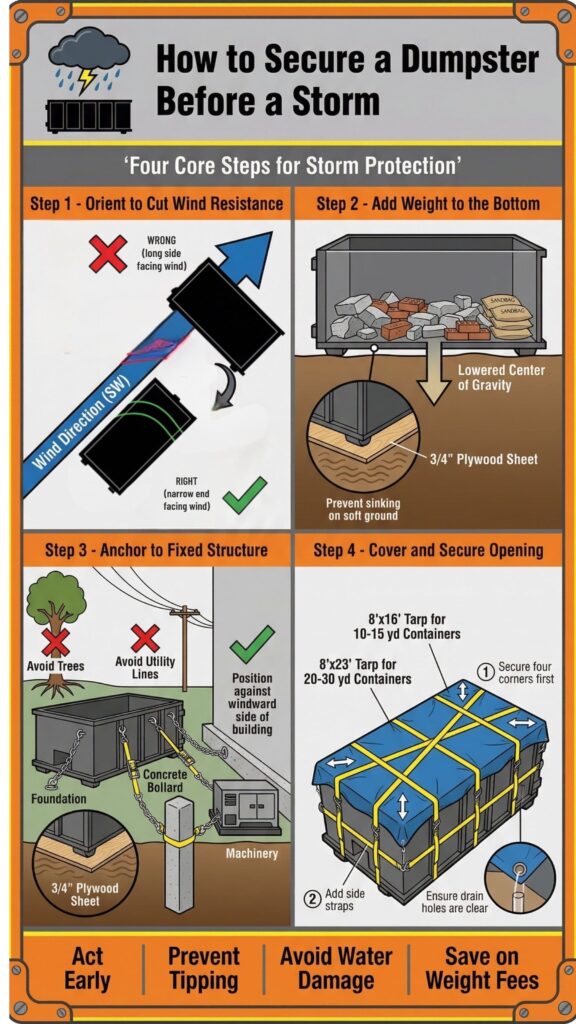
Step 1: Orient the Container to Cut Wind Resistance
The direction your dumpster faces matters more than most people realize. Rotating the container so its shortest side faces the direction the wind is expected to come from can meaningfully reduce wind force on the unit.[3] In Peoria, severe storms most often track from the southwest or west, so orienting the dumpster’s narrow end toward the southwest gives it the lowest profile to incoming wind. If you can do this before the storm arrives, it’s one of the easiest and most effective steps you can take.
Step 2: Add Weight to the Bottom
An empty or lightly loaded dumpster is at the highest risk during a storm. If your container still has room in it, place the heaviest, densest materials at the very bottom — concrete chunks, bricks, or sandbags work well. Spread the weight evenly across the floor of the unit so one side doesn’t bear all the load. This lowers the center of gravity and makes tipping far less likely. On soft ground, slide a sheet of 3/4-inch plywood under the container to prevent the base from sinking into rain-soaked soil and to give it a stable platform.[4]
Step 3: Anchor the Dumpster to Something Fixed
For open-top roll-off containers, physical anchoring is the most reliable method of storm protection. Use heavy-duty industrial chains or steel ratchet straps tied to an immovable structure — a building foundation, a concrete bollard, or heavy stationary machinery. The goal is to prevent the container from sliding or tipping even under sustained wind pressure. Position the dumpster against the windward side of a building or solid wall when possible, as a windbreak can reduce direct wind impact significantly.[3] Keep it away from trees and utility lines, which become projectiles themselves during a storm.
One important note: always keep the container away from storm drains and low-lying areas where runoff collects. A flooded dumpster sitting in a depression can shift, float on a thin layer of water, or block critical drainage paths on your property.
Step 4: Cover and Secure the Opening
An uncovered roll-off dumpster in a storm fills with rainwater fast. For 10–15 yard containers, a heavy-duty vinyl tarp in the 8′ x 16′ range works well. For 20–30 yard containers, look for an 8′ x 23′ cover.[4] Lay the tarp across the full opening and use a cross-pattern of industrial ratchet straps or heavy bungee cords to hold it down — tie the four corners first, then add straps along the sides to prevent the wind from getting underneath and lifting the cover off entirely.
Rainwater flooding a dumpster is more than just a nuisance — it can add thousands of extra pounds to the load, triggering weight overage fees and making it physically impossible for a truck to lift the container safely. If your dumpster has drain holes, make sure they are clear of debris before covering so any water that does enter can escape slowly instead of pooling.
Storm Prep Decision Table: What to Do Based on Forecast Severity
| Forecast Severity | Wind Speed Range | Recommended Action |
|---|---|---|
| Thunderstorm Watch | 25–45 mph gusts | Cover with tarp, strap down, clear perimeter |
| Thunderstorm Warning | 45–65 mph gusts | All of the above + add ballast, anchor to structure |
| Tornado Watch / Derecho | 65–80+ mph gusts | Request emergency early pickup if possible |
| Flash Flood Watch | Heavy rain focus | Move to high ground, cover tightly, clear drains |
The Option Most People Miss: Call for Early Pickup
When a serious storm is tracking toward Peoria, the single most effective thing you can do is call for an early pickup. An empty container is dramatically easier to secure or remove before the storm arrives than to deal with after one has passed. Many waste management providers will accommodate early pickup requests during storm season — especially if you contact them 24–48 hours in advance.
If you sourced your container through a dumpster rental sourcing service, reach out as soon as the weather forecast turns serious. Having a direct line to your provider and knowing the pickup process in advance puts you in the best position to act fast when conditions change. Zap Dumpsters sources containers for homeowners and contractors across Peoria and surrounding areas and can help coordinate timing around severe weather — call (309) 650-8954 before conditions deteriorate.
For the full storm preparation checklist — including what to do both before and after a storm hits your property — see the storm cleanup debris checklist for Peoria homeowners, which walks through the complete cleanup sequence step by step.
Covered vs. Uncovered Dumpster in a Storm: What the Difference Looks Like
| Scenario | Covered & Anchored | Uncovered & Unsecured |
|---|---|---|
| After 2″ of rain | Contents intact, weight manageable | Hundreds of extra pounds of water added |
| 60 mph wind gust | Container stays in place | Risk of rolling or tipping into structure |
| Pickup day after storm | Normal pickup, standard fee | Possible overage fee, delayed pickup |
| Debris scatter | None — contents contained | Loose debris blown onto neighboring property |
Placement Matters: How to Secure a Dumpster Before a Storm Starts With Where You Put It
A lot of storm damage is preventable by choosing the right spot in the first place. The National Weather Service advises keeping any large outdoor objects away from trees, power lines, and overhead hazards during storm season.[2] For a roll-off container, this means placing it on hard, level ground — concrete or asphalt are both better than soil — and positioning it against the solid side of a structure rather than in an open yard. The ideal placement creates a natural windbreak from the building while keeping the container accessible for loading.
Avoid low-lying areas of your property. Peoria is susceptible to localized flooding during heavy rain events, and a container sitting in a low spot can end up surrounded by standing water. This not only adds dangerous weight as water seeps in but can also allow the unit to shift or sink once the ground becomes saturated. High ground, hard surface, sheltered side of a structure — those three things together give any roll-off container its best chance of riding out a storm undamaged.
For Peoria homeowners who need storm debris removal after a major weather event, Zap Dumpsters can help source a roll-off container for storm cleanup quickly — often the same day or next day after a storm passes through.
What to Do With Items Already in the Dumpster
If your container already has material in it when a storm is coming, take a few minutes to reduce the risk of debris scatter. Bag any loose, light material — insulation scraps, cardboard, packaging — in heavy-duty contractor bags and tie them shut. Wrap large items like old carpet or mattresses in plastic sheeting.[4] Soaked absorbent materials not only increase weight but they also break apart over time, creating smaller debris that is harder to collect. Securing what’s already inside is just as important as securing the container itself.
After the Storm: A Quick Inspection Checklist
Once the weather clears, do a quick walk-around before resuming use of the container. Check the anchoring straps or chains for signs of strain or slippage. Inspect the tarp — it may have shifted or torn. Look for dents, cracks, or damage to the container walls and door hinges. Check the drain holes at the base and clear them if any debris has collected. If water did get in despite your precautions, contact your rental provider before the pickup — they can advise on whether a pump-out is needed or whether the added weight will cause a problem at pickup.[3]
“High winds can turn an unsecured dumpster into a dangerous projectile, causing extensive damage and posing serious risks to people and structures nearby. Selecting an appropriate location, utilizing sturdy anchoring methods, and conducting regular inspections are effective ways to minimize risks during severe weather.” — Arcann Waste, How do I Secure a Dumpster Rental in High-Wind Areas?[3]
How to Secure a Dumpster Before a Storm: A Quick-Reference Summary
Here’s the short version for when a storm is moving fast:
- Orient the container’s narrow end toward the prevailing wind direction.
- Add heavy ballast to the base and spread the weight evenly.
- Anchor with chains or ratchet straps to a fixed structure.
- Cover the opening with a heavy-duty tarp secured in a cross-strap pattern.
- Clear the perimeter of any loose tools, bins, or materials within 15 feet.
- If the storm forecast is severe, call for early pickup now — don’t wait.
Quick example: A Peoria homeowner finishing a garage renovation had a 20-yard roll-off on the driveway when the July 2024 derecho approached. He tarped and strapped the container, stacked leftover concrete block along the base, and angled it toward the southwest. The container stayed in place through 60+ mph gusts. The neighbor’s unsecured bin rolled across the yard and dented a fence. Small steps, big difference.
Conclusion: Don’t Leave Storm Safety to Chance Near You
Knowing how to secure a dumpster before a storm is straightforward once you understand the four main risks: wind movement, water accumulation, debris scatter, and placement failure. Peoria’s storm history makes this a practical concern — not a theoretical one. The steps in this guide take less than an hour to execute, cost almost nothing in materials, and can prevent serious property damage, liability issues, and extra fees after a storm passes through.
Plan your container placement with storms in mind from day one. Orient it right, anchor it early, keep it covered, and know your provider’s storm policy before you need it. If a serious storm is heading your way and your container is available for early pickup, make that call. That single action removes the risk entirely. For storm debris removal, dumpster sourcing, and flexible scheduling around severe weather in the greater Peoria area, Zap Dumpsters is a local option worth calling.
📞 Call Zap Dumpsters Peoria to Source a Container: (309) 650-8954
How to Secure a Dumpster Before a Storm FAQs
How do I secure a dumpster before a storm if I don’t have chains or straps?
To secure a dumpster before a storm without industrial hardware, use heavy-duty ratchet straps from a hardware store tied to your vehicle hitch, a deck post, or a concrete footing. Add sandbags or concrete blocks along the base and cover the opening with any thick, waterproof tarp secured with bungee cords at the corners and sides.
Can a dumpster really blow away in a storm?
Yes — an empty roll-off container has large flat surfaces that catch wind like a sail. In Peoria, recorded storm gusts of 60–85 mph are documented, and an unsecured empty container can tip, roll, or shift significantly even in gusts well below that range.
How do I secure a dumpster before a storm if it’s already full of heavy material?
A fully loaded dumpster is less likely to shift from wind, but it’s still at risk from water accumulation and debris scatter. Focus on covering the opening with a tarp and strapping it down firmly, and ensure the heaviest material is spread evenly rather than piled to one side.
Will a flooded dumpster cost me extra money?
Rainwater that accumulates in an uncovered dumpster can add significant weight to the load, which may trigger weight overage fees from your rental provider. It can also make it physically impossible for the truck to safely lift the container until the water drains out, delaying your pickup.
Should I call my dumpster provider before a storm hits?
Yes — contacting your provider 24–48 hours before a severe storm is one of the most effective steps you can take. Many providers will schedule early pickup for containers that would otherwise be at risk, especially during Peoria’s active storm season. Empty containers are far easier to secure or remove before a storm than after one.
How to Secure a Dumpster Before a Storm — Citations
- NOAA National Centers for Environmental Information — Illinois Billion-Dollar Disaster Summary (1980–2024)
- National Weather Service Lincoln, IL — July 15, 2024 Derecho: Wind Damage & Tornadoes in Peoria County
- Arcann Waste — How do I Secure a Dumpster Rental in High-Wind Areas?
- Dumpsters.com — How to Cover a Dumpster for Severe Weather