
Key Takeaways:
- Americans produce 25% more waste between Thanksgiving and New Year’s than any other time of year[1]
- Sorting trash by type (recyclables, organics, donations, true waste) saves money and reduces landfill impact
- Most cities accept extra bags and bulk items at curbside if you follow weight and placement rules
- Natural Christmas trees can be recycled through community programs, while electronics need special e-waste handling
- Short-term dumpster rentals work best when combining holiday cleanup with larger decluttering projects
The holidays generate about 1 million extra tons of household waste each week during the season[2]. That mountain of wrapping paper, cardboard boxes, broken decorations, and worn-out items can overwhelm your regular trash service. The good news? When worried about how to get rid of holiday trash you have several practical options that cost less than you think and keep your home tidy through January.
Sort Your Holiday Waste First
Before you haul anything to the curb, separate materials into clear piles. This simple step helps you match each type of waste to the cheapest, easiest disposal method. Create four main categories: recyclables, items you can donate or sell, organic waste, and true trash.
Flatten all cardboard boxes to save space in your recycling bin. Studies show that recycling facilities collect between 25% to 40% more cardboard during the holiday season compared to regular months[3]. One family can fill two large boxes just with flattened shipping cartons and plastic film bags, which can go to your recycling cart and store drop-offs instead of the garbage.
Clean recyclables include rigid plastics, aluminum cans, glass bottles, and paper without food stains. Check your local rules since cities handle these materials differently. More than 93% of cardboard boxes get recycled in the United States[4], making them one of the easiest materials to divert from landfills.
Organic waste like food scraps, wilted centerpieces, and natural wreaths can go into your yard waste stream or compost bin if your area offers that service. Items you can reuse or donate include unneeded gifts, duplicate toys, holiday decorations in good shape, and small appliances that still work. True trash includes mixed-material packaging, broken items, soiled disposables, and worn-out decorations that can’t be fixed or recycled.
Use Your Regular Curbside Service Fully
Most cities will take a surprising amount of extra material if you follow their rules for overflow and bulky items. Many waste haulers allow tied trash bags next to your cart on your regular collection day or for a small fee[5]. Just make sure your bags weigh less than 50 pounds and your cart lid can close properly.
For cardboard, break down boxes and bundle them or place them in your recycling cart as your local rules require. If you have bulky items like old furniture, mattresses, worn rugs, or broken toys, schedule a bulk pickup appointment or set them out on the allowed day and location for your city.
Peoria Residents: Your Bulky Waste Options
If you live in the Peoria area, GFL Environment provides unlimited bulky waste pickup included in your annual bill[6]. Items too large to fit in your trash cart can be placed at your curb or alley on your regular pickup day. You can call GFL at 309-688-0760 to notify them, but it’s not required. Just place bulky items at least three feet away from your cart and any obstacles like mailboxes or cars. Set everything out between 3 pm the day before pickup and 6 am on your collection day[7].
Follow your city’s placement rules carefully to avoid missed pickups or citations. This means checking weight limits, time windows before collection, and how to stack or bundle items properly. Some cities require specific spacing between items or limit how many pieces you can set out at once. This is crucial when approaching how to get rid of holiday trash.
When to Rent a Dumpster Checklist
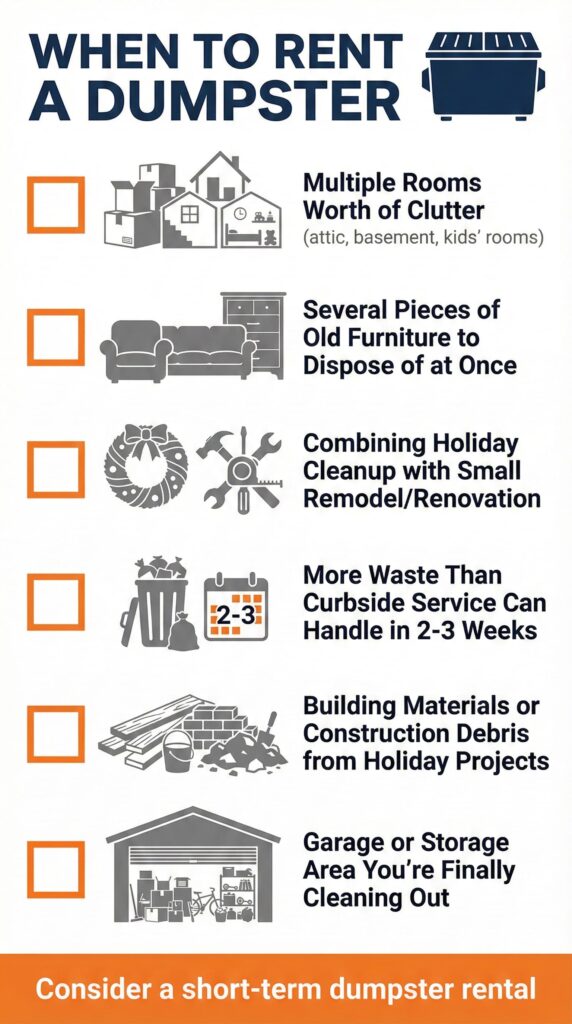
Consider a short-term dumpster rental if you have:
- Multiple rooms worth of clutter to clear (attic, basement, kids’ rooms)
- Several pieces of old furniture to dispose of at once
- Combining holiday cleanup with a small remodel or renovation project
- More waste than your curbside service can handle in 2-3 weeks
- Building materials or construction debris from holiday projects
- A garage or storage area you’re finally cleaning out
For smaller amounts of extra trash, stick with curbside pickup and bulk collection to save money.
Handle Special Holiday Items Correctly
Some holiday leftovers need specific handling so they don’t contaminate your recycling or cause safety problems. Natural Christmas trees and wreaths often have limited-time recycling or mulching programs in many cities. Between 25 and 30 million live Christmas trees are sold in the United States each year[8], and about 66% of consumers recycle their trees through community programs[9].
Christmas Tree Disposal
Trees usually must be undecorated and taken to a drop-off site or set out during special collection dates. Remove all lights, ornaments, tinsel, and tree stands before recycling. Many communities run these programs from late December through mid-January. Check your city website for specific dates and locations near you to learn more about local help in how to get rid of holiday trash.
Electronics and Batteries
Old holiday lights and electronics count as e-waste. Take them to electronics recycling events or designated drop-offs, not your curbside trash. String lights cause major problems at recycling facilities because they wrap around sorting machines and create expensive downtime[10]. Some cities collect between 800 and 1,000 pounds of string lights just during the holiday season[11].
Batteries, aerosol cans, and old cleaning products need to go through your household hazardous waste program or special collection events. Large appliances like old refrigerators often require appointments, and doors may need to be removed with refrigerants handled separately.
Deciding Between Dumpster Rental and Regular Pickup
If you’re doing a bigger New Year cleanout at the same time as handling holiday waste, it’s often cleaner and cheaper to plan a one-time bulk solution than to fight with your trash carts for weeks. This works especially well when you’re tackling the attic, basement, kids’ rooms, and old furniture all at once.
A home cleanout dumpster makes sense when you have multiple rooms of clutter, lots of old decorations and packaging, several pieces of furniture, or you’re combining holiday cleanup with a mini-remodel. The container sits in your driveway for a few days while you work at your own pace.
Junk removal crews work better if you want labor included and don’t want to load the container yourself. They handle everything but usually cost more per cubic yard of waste. Still use donation services first by staging sell or donate items separately and scheduling pickups so your dumpster or junk service is only for true trash.
Making the Most of Donation Services
Organizations like Goodwill, The Salvation Army, and Habitat for Humanity ReStore offer free pickup for furniture and household goods in most areas. This removes usable items from your waste stream entirely and might give you a tax deduction. Schedule these pickups a week ahead since charities get extremely busy after the holidays.
Keep donated items clean and in working condition. Most charities won’t accept furniture with stains, tears, or odors. They also can’t take items with broken parts or safety hazards. When you schedule your pickup, ask which items they accept since rules vary by location.
Planning Ahead for Next Year
A little preparation before and during the holidays can cut your January trash dramatically. Consider shifting gifts toward experiences, consumables, or digital items to reduce physical clutter. Ask family members to use reusable gift bags and simple wrapping paper instead of materials with foil, glitter, or plastic coating.
Set up clearly labeled stations for trash, recycling, and compost during holiday gatherings so guests sort correctly. If you know you’ll host a large group, arrange an extra pickup, request a temporary second cart, or line up a small dumpster ahead of time. This prevents the stress of overflowing bins and missed collections.
Many communities see waste increase by 25% during the holiday period[12], so planning your disposal strategy before guests arrive saves time and hassle in January. Understanding seasonal dumpster demand patterns helps you book services when you need them most.
Getting Help Near You
Sometimes the easiest solution is having an expert source the right waste removal option for your specific situation. Whether you need guidance on what your city accepts, help scheduling bulk pickups, or advice on whether a short-term rental makes sense, local waste management professionals understand the rules in your area.
They can explain weight limits, pickup schedules, and which items need special handling. This saves you from making multiple trips to different facilities or paying for services you don’t actually need. The right approach depends on how much waste you have and what types of materials need disposal.
Need Help Managing Post-Holiday Waste?
Let Zap Dumpsters source the perfect waste removal solution for your situation.
Call us for expert guidance on handling extra trash, bulk items, and holiday cleanup.
Conclusion: Clear Your Home Without the Stress
The weeks after the holidays don’t have to mean living with trash piles and overflowing bins. Sort your waste into clear categories, maximize your regular curbside service, and handle special items like trees and electronics through proper channels. For larger cleanouts, compare whether bulk pickup appointments or a short-term dumpster rental fits your timeline and budget better.
Most importantly, don’t let recyclable materials and donations end up in the landfill when simple planning can give them a second life. The average American produces about 1,800 pounds of waste yearly[13], and smart disposal choices during high-waste periods like the holidays make a real difference. With the right approach, you can start the new year with a clean, organized home and the satisfaction of handling your waste responsibly.
How to Get Rid of Holiday Trash FAQs
How do I dispose of a real Christmas tree after the holidays?
Remove all decorations, lights, and tinsel from your real Christmas tree, then check if your city offers a special collection program or drop-off location. Many communities provide free tree recycling from late December through mid-January where trees get chipped into mulch. If your area doesn’t offer a program, cut the tree into sections that fit in your yard waste cart.
Can I put extra trash bags next to my regular garbage cart?
Most cities allow extra tied trash bags next to your cart on regular collection day, as long as each bag weighs less than 50 pounds and you don’t exceed your local bag limit. Some areas charge a small per-bag fee while others include a certain number of extra bags in your service. Contact your waste hauler to confirm the specific rules for your neighborhood.
What holiday items cannot go in my regular recycling bin?
Wrapping paper with metallic finishes, glitter, or foil coating cannot be recycled along with tissue paper, ribbons, bows, and most string lights. Pizza boxes soaked with grease, plastic gift bags, Styrofoam packaging, and holiday cards with glitter should go in your regular trash. Only clean cardboard boxes, plain paper, and standard recyclables belong in your recycling cart.
How do I know if I need a dumpster rental for post-holiday cleanup?
Consider renting a dumpster if you’re cleaning out multiple rooms at once, disposing of several pieces of furniture, combining holiday cleanup with renovation work, or have more waste than your curbside service can handle in two to three weeks. For just a few extra bags of trash or one or two bulk items, your regular collection service or scheduled bulk pickup will cost less and work fine.
Where can I donate unwanted holiday gifts and decorations?
Organizations like Goodwill, The Salvation Army, and Habitat for Humanity ReStore accept household items, decorations, and unwanted gifts in good condition. Many offer free pickup service for larger items if you schedule ahead. Local shelters, churches, and community centers also welcome donations of usable items, especially during the winter months when demand for household goods increases.
How to Get Rid of Holiday Trash Citations
- U.S. Environmental Protection Agency. “Waste Reduction Holiday Tips.” https://www.epa.gov/archive/epapages/newsroom_archive/newsreleases/bdc382c3e8162e6d852570d60070fee8.html
- U.S. Environmental Protection Agency. “Ways Everyone Can Go Green during the Holidays.” https://www.epa.gov/archive/epapages/newsroom_archive/newsreleases/2d08fc424d1e0dbf8525750c0076fff9.html
- InForum. “Waste processors, haulers feel effects of holiday shopping sprees.” https://www.inforum.com/community/waste-processors-haulers-feel-effects-of-holiday-shopping-sprees
- American Forest & Paper Association. “U.S. Paper Industry Tallies High Recycling Rate.” https://www.afandpa.org/news/2023/us-paper-industry-tallies-high-recycling-rate-2022
- BVR Waste and Recycling. “5 Tips to Manage Extra Household Trash During the Holidays.” https://www.bvrwasteandrecycling.com/post/5-tips-to-manage-extra-household-trash-during-the-holidays
- City of Peoria. “Bulky Waste Information.” https://www.peoriagov.org/641/Bulky-Waste
- City of Peoria. “Trash Collection Services.” https://www.peoriagov.org/542/Trash
- Arbor Day Foundation. “8 Sustainable Ways to Recycle your Christmas Tree.” https://www.arborday.org/perspectives/8-sustainable-ways-recycle-your-christmas-tree
- Illinois Christmas Tree Association. “Recycling Facts.” https://ilchristmastrees.com/tree-talk/recycling-facts/
- CBS Minnesota. “Holiday recycling 101: Here’s how to do your part.” https://www.cbsnews.com/minnesota/news/holiday-recycling-101/
- InForum. “Waste processors, haulers feel effects of holiday shopping sprees.” https://www.inforum.com/community/waste-processors-haulers-feel-effects-of-holiday-shopping-sprees
- Emagazine. “By the Numbers: Holiday Waste.” https://emagazine.com/holiday-waste/
- U.S. Environmental Protection Agency. “National Overview: Facts and Figures on Materials, Wastes and Recycling.” https://www.epa.gov/facts-and-figures-about-materials-waste-and-recycling/national-overview-facts-and-figures-materials