
Key Takeaways:
- Start by securing legal documents and valuables before discarding anything
- Use a four-category sorting system: Keep, Donate, Sell, and Discard
- Hazardous materials like paint, chemicals, and batteries require special disposal in Illinois
- A 20-yard to 30-yard dumpster handles most estate cleanouts for average homes
- Zap Dumpsters Peoria coordinates dumpster sourcing from trusted local haulers
- Estate cleanouts typically take 3-7 days depending on property size and clutter level
Article Summary:
Managing waste during an estate cleanout requires systematic sorting, proper disposal of hazardous materials, and coordination with local waste services. Our estate cleanout checklist for waste helps Peoria families navigate the legal, emotional, and logistical challenges of clearing a deceased loved one’s property while meeting Illinois environmental regulations and maximizing donation opportunities.
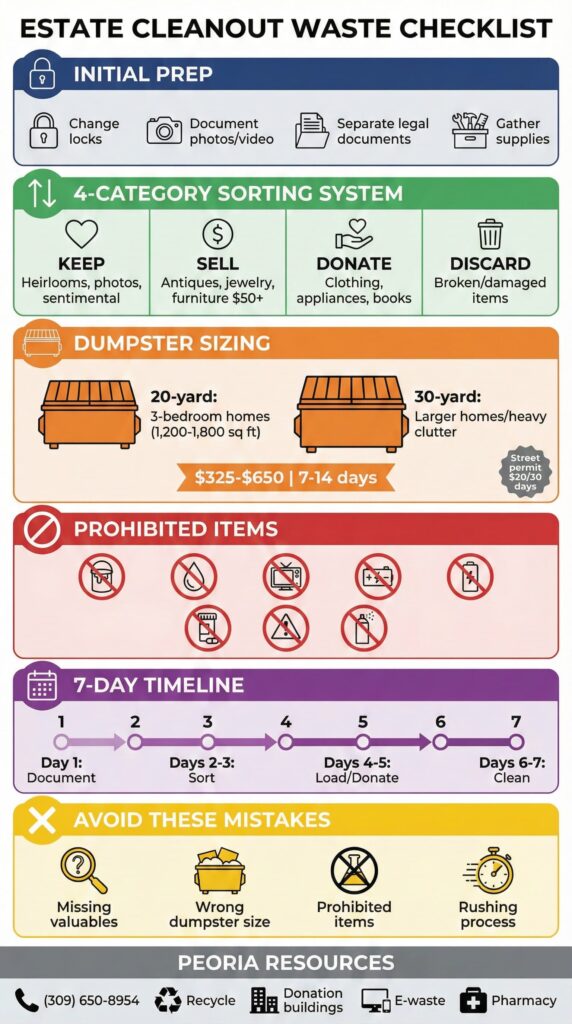
(or check out the infographic summary below for a handy reference)
Estate Cleanout Checklist for Waste Infographic Summary
Understanding Estate Cleanouts and Waste Management Basics
An estate cleanout is the process of clearing out a deceased person’s belongings from their home. Unlike typical home cleanouts or renovations, estate cleanouts carry emotional weight and legal responsibilities. Families must handle sensitive documents, preserve valuable heirlooms, and dispose of decades of accumulated possessions properly.[1]
The waste management side involves sorting through everything from furniture and clothing to hazardous chemicals stored in garages. Most estate cleanouts generate 3 to 6 tons of waste, requiring careful planning to avoid illegal disposal, unnecessary landfill waste, or accidental loss of valuable items.[2]
In Peoria and surrounding Woodford, Tazewell, and Fulton counties, estate cleanouts must follow Illinois Environmental Protection Agency guidelines for hazardous waste, electronics recycling, and general refuse. Working with home cleanout dumpster services helps families coordinate the right container sizes and disposal methods for the job.
Preparation Steps Before You Start Discarding
Secure the Property and Document Everything
Before removing a single item, change the locks if you’re the executor or primary family member handling the estate. This protects valuable assets and prevents unauthorized access during the cleanout process.[3] Keep utilities active, especially electricity and water, as you’ll need lighting for basement and attic work and running water for cleaning.
Walk through every room with a camera or smartphone. Take photos or video of each space before you move anything. This visual inventory protects you if disputes arise about missing items and helps with insurance documentation if the property needs coverage during the cleanout period.[1]
Gather Essential Sorting Supplies
Collect these materials before you begin:
- Heavy-duty trash bags in multiple colors for different categories
- Sturdy moving boxes with lids
- Color-coded labels or stickers (Keep, Donate, Sell, Discard)
- Work gloves and dust masks for dusty spaces
- Basic cleaning supplies for wiping down items
- A rolling cart or dolly for moving heavy boxes[2]
Identify and Separate Critical Documents First
The single most important first step is pulling out legal and financial documents. These include wills, property deeds, vehicle titles, tax returns from the past seven years, bank statements, investment records, insurance policies, birth certificates, marriage licenses, and military discharge papers.[1][3]
Store these in a secure box separate from the cleanout area. Many families accidentally discard irreplaceable documents mixed in with junk mail or old magazines. Check drawers, filing cabinets, desk cubbies, closet shelves, and even between mattresses where people sometimes hide important papers.
The Four-Category Sorting System for Estate Items
Category 1: Keep (Heirlooms and Sentimental Items)
These items have emotional or family historical value even if they lack significant monetary worth. Examples include photo albums, handwritten letters, journals, family Bibles, military medals, wedding rings, and heirloom furniture pieces with stories attached.[1]
Place these items in a dedicated “Keep” area separate from the active sorting zone. Family members often need time to review these items together before making final decisions. Don’t rush this category, as sentimental items mistakenly discarded cannot be recovered.
Category 2: Sell (High-Value and Collectible Items)
This category includes antiques, collectibles, jewelry, quality furniture, artwork, tools in good condition, working electronics, and vehicles. Items typically worth more than $50 should be evaluated for sale through estate sales, consignment shops, or online marketplaces.[2][4]
Consider hiring a professional estate sale company or appraiser if the deceased collected specific items like coins, stamps, vintage tools, or mid-century furniture. What looks like junk to you might have significant value to collectors.
Category 3: Donate (Usable Items for Charity)
Donation candidates include gently used clothing, working small appliances, books, dishes and kitchenware, linens and towels, mobility aids like walkers or canes, and functional furniture in acceptable condition.[4]
In Peoria, organizations accepting donations include Goodwill, Salvation Army, Habitat for Humanity ReStore, and local church thrift shops. Many offer free pickup for large furniture items. Request donation receipts for tax deduction purposes if you’re handling the estate’s final tax return.
Category 4: Discard (Waste Requiring Dumpster Disposal)
This final category includes broken furniture, stained or torn linens, non-working electronics destined for recycling, general household trash, outdated or expired items, and damaged building materials if the property underwent partial renovation.
Typical discard-category items from a 1,500 to 2,000 square foot home fill a 20-yard dumpster. Larger estates or heavily cluttered properties often need a 30-yard container.[5]
| Category | Examples | Action |
|---|---|---|
| Keep | Photos, jewelry, legal docs, heirlooms | Secure in separate location |
| Sell | Antiques, collections, quality furniture | Appraise and list for sale |
| Donate | Usable clothing, dishes, working appliances | Schedule charity pickup |
| Discard | Broken items, trash, worn furniture | Load into dumpster |
What Can Go in Your Estate Cleanout Dumpster
Most residential roll-off dumpsters accept non-hazardous household items. Always confirm specific rules with your hauler, as some materials require special handling or incur additional fees.
Acceptable items for standard dumpsters include:
- General household junk: old toys, books, papers (non-sensitive), knickknacks, broken decor, small household trash
- Furniture: beds, sofas, recliners, tables, dressers, bookcases, and non-antique cabinets
- Mattresses and box springs (many haulers charge a disposal fee, typically $25-$50 per unit based on industry standards)
- Non-hazardous appliances: dishwashers, stoves, washers, and dryers (check if Freon removal is required for refrigerators)
- Construction materials: doors, trim, drywall, lumber, flooring, tile, and cabinets from property updates
- Yard waste: branches, leaves, and untreated wood (if your hauler allows mixed loads)[6][7]
A 20-yard dumpster holds approximately 110-130 trash bags worth of material, roughly equivalent to the contents of three to four rooms in an average home.[5]
Hazardous Materials You Cannot Put in Dumpsters
Illinois law strictly prohibits certain materials from standard waste containers. These items require specialized disposal through licensed facilities or contractors.
Chemicals and Liquids
Never place these in a dumpster: paints, stains, solvents, adhesives, pesticides, herbicides, automotive fluids (motor oil, antifreeze, brake fluid, gasoline), pool chemicals, and harsh cleaning agents. These materials fall under Illinois hazardous waste regulations enforced by the Illinois EPA.[8]
Peoria County offers periodic Household Hazardous Waste collection days at the Peoria Disposal Company facility. Check with Peoria County’s Environmental Health office for the current 2026 collection schedule, as dates vary throughout the year.
Electronics and Batteries
Illinois banned electronics from landfills through the Electronic Products Recycling and Reuse Act. CRT televisions, computer monitors, laptops, printers, and similar devices must go to certified e-waste recyclers.[9]
Car batteries, lithium battery packs, UPS backup batteries, and rechargeable batteries contain heavy metals and require special handling. Many auto parts stores and home improvement centers in the Peoria area accept these for recycling at no charge.
Medications and Medical Sharps
Expired prescription medications, especially opioids and controlled substances, should never enter household waste or dumpsters. Peoria-area pharmacies including CVS, Walgreens, and OSF HealthCare locations offer drug take-back programs.[3]
Medical sharps like needles and lancets require sharps containers available through pharmacies. Never place loose needles in trash bags or dumpsters where they pose injury risks to waste handlers.
Asbestos and Lead Materials
Homes built before 1980 may contain asbestos in pipe insulation, duct wrap, ceiling tiles, vinyl floor tiles, and certain roof shingles. Lead paint is common in pre-1978 homes. Both materials require certified abatement contractors and cannot go in standard dumpsters.[8]
If you suspect asbestos or lead materials during an estate cleanout, stop work and contact an Illinois-licensed asbestos contractor for testing and proper removal.
Pressurized Containers and Flammable Items
Propane tanks, helium cylinders, oxygen tanks, aerosol cans (some types), fireworks, ammunition, and fuel containers pose explosion and fire risks in compacting waste trucks. Take these to hazardous waste collection sites or contact specialized disposal services.[6]
Room-by-Room Estate Cleanout Workflow
According to recent guidance on estate planning processes, systematic room-by-room approaches prevent valuable items from being accidentally discarded.
Kitchen Waste Management
Start with perishable food disposal. Bag all expired food separately and place it in your regular trash pickup rather than the dumpster to avoid odor and pest problems. Discard broken dishes, heavily worn plastic containers, and damaged cookware in the dumpster.
Separate cleaning chemicals, drain openers, oven cleaners, and aerosol products as hazardous waste. Donate usable cookware, small appliances, and unopened pantry items to food banks or shelters.[4]
Bedroom and Closet Sorting
Empty all drawers before discarding furniture. People often hide cash, jewelry, or important papers in drawer corners or taped underneath. Bag clothing into donate versus discard piles. Stained, torn, or heavily worn items go to the dumpster while gently used clothing goes to charity.
Discard worn mattresses, broken bed frames, and damaged furniture pieces. Check under mattresses and inside pillowcases for hidden items before disposal.[1]
Living Room and Dining Room Strategy
Sort books into keep, donate, and discard categories. Water-damaged or mildewed books should be discarded. Check inside books for hidden photos, letters, or bookmarks with sentimental value before donating or discarding.
Examine furniture carefully for value before discarding. Mid-century modern pieces, solid wood construction, and brand-name furniture may have resale value even if upholstery is worn. Separate decor into keep (sentimental), sell (valuable), donate (usable), and discard (broken) categories.[2]
Basement, Garage, and Shed Challenges
These spaces typically contain the highest concentration of hazardous materials. Set up a separate staging area for paints, automotive fluids, pesticides, herbicides, and chemical containers. These require hazardous waste disposal, not dumpster placement.
Recycle scrap metal separately if your hauler offers this service. Old tools in working condition have donation or resale value. Discard broken tools, rusted items, and damaged equipment in the dumpster. Untreated lumber and general yard debris usually go in the dumpster if your hauler allows mixed loads.[6][7]
Mini Case Study: The Johnson family in North Peoria cleared their grandmother’s 1,800 square foot ranch home in five days using a 30-yard dumpster. They separated two loads of donations, sold antique furniture through an estate sale, and properly disposed of garage chemicals at the county hazardous waste event. Total project cost including dumpster rental: approximately $575.
Choosing the Right Dumpster Size for Your Estate Cleanout
Dumpster size depends on property square footage, clutter level, and whether you’re clearing just the interior or including garage and yard materials.
10-yard dumpster: Suitable for small apartments or condos (under 1,000 square feet) with minimal furniture. Holds about 50-60 trash bags.
20-yard dumpster: The most popular size for estate cleanouts of average 3-bedroom homes (1,200-1,800 square feet). Holds furniture from 3-4 rooms plus general household items. Accommodates approximately 110-130 trash bags.[5]
30-yard dumpster: Best for larger homes (2,000+ square feet), heavily cluttered properties, or when clearing basements, attics, and garages in addition to living spaces. Holds approximately 170-190 trash bags.
40-yard dumpster: Reserved for extremely cluttered estates, multi-level homes with full basements and attics, or properties requiring significant cleanout including yard structures.
In Peoria, dumpster rental costs typically range from $325 to $650 depending on size and rental duration. Most rentals include a 7-14 day period, sufficient for most estate cleanouts.[10]
| Dumpster Size | Best For | Approximate Capacity |
|---|---|---|
| 10-yard | Small condos/apartments | 50-60 trash bags |
| 20-yard | Average 3-bedroom homes | 110-130 trash bags |
| 30-yard | Large homes, heavy clutter | 170-190 trash bags |
| 40-yard | Extreme cleanouts, multi-level | 230-250 trash bags |
Timeline and Logistics for Estate Cleanout Projects
Estate cleanouts typically take 3 to 7 days depending on these factors:
- Property size and number of rooms
- Clutter level (light, moderate, or heavy)
- Number of helpers available
- Whether you’re doing a full cleanout or selective clearing
- Distance to donation centers and disposal facilities[2]
Plan for these time allocations:
Day 1: Initial walkthrough, documentation, and separation of legal documents and high-value items (4-6 hours)
Days 2-3: Room-by-room sorting using the four-category system (6-8 hours per day)
Days 4-5: Loading the dumpster, scheduling donation pickups, and staging items for estate sales (6-8 hours per day)
Days 6-7: Final cleaning, touch-ups, and property inspection (4-6 hours)
Many Peoria families tackle estate cleanouts on weekends, spreading the work over 2-3 weekends to accommodate work schedules and emotional processing time.
Mini Case Study: The Martinez family cleared their father’s Washington, IL home (1,400 square feet) over three weekends. They rented a 20-yard dumpster for two weeks, coordinated with Habitat ReStore for furniture pickup, and used one Saturday for garage hazardous waste sorting. The phased approach allowed siblings to travel from out of state and reduced emotional overwhelm.
Working with Dumpster Rental Services in Peoria
Zap Dumpsters Peoria coordinates dumpster sourcing from multiple local haulers, matching you with the right container size and service for your estate cleanout needs. The process is straightforward:
- Call (309) 650-8954 or request a quote online with your property address, estimated cleanout size, and preferred dates
- Zap sources availability from local hauling partners and provides pricing options
- Your chosen hauler delivers the dumpster to your driveway or specified location
- You load the container at your own pace during the rental period
- When full or when you’re finished, the hauler picks up and properly disposes of contents
Permit requirements: If you need to place the dumpster on a Peoria city street or right-of-way rather than your private property, you’ll need a permit from Peoria’s Public Works Department. The cost is $20 per 30-day period. Dumpsters on private driveways or yards typically don’t require permits.[11]
Consider timing your cleanout during lower-demand seasons like late fall or winter when dumpster availability is better and pricing may be more competitive.
Need Help Coordinating Dumpsters for Your Estate Cleanout?
Zap Dumpsters Peoria sources the right container size from trusted local haulers for your property cleanout project.
Serving Peoria, Woodford, Tazewell, and Fulton County families
Common Estate Cleanout Mistakes to Avoid
Discarding items before legal review: Never throw away papers, files, or boxes without checking contents first. Important documents get mixed with junk mail regularly.
Underestimating dumpster size: Starting with too small a container leads to overflow, additional rental fees, or the need to order a second dumpster mid-project. When in doubt, size up.
Ignoring hazardous waste rules: Placing prohibited items in dumpsters can result in fines, refused pickup, or additional charges. Always separate hazardous materials for proper disposal.
Rushing the emotional process: Estate cleanouts carry significant emotional weight. Take time to process memories and involve family members in decisions about sentimental items.
Not documenting valuable items: Take photos of everything before discarding or donating. This protects you if questions arise later about specific items’ disposition.[3]
For properties requiring both cleanout and disposal coordination, working with sourcing services helps match you with haulers experienced in estate work and familiar with local disposal requirements.
Interactive Checklist
Estate Cleanout Waste Checklist
30-Yard Dumpster: Larger homes or heavy clutter
Typical Rental Cost: $325-$650 for 7-14 days in Peoria
Street Placement Permit: Required only for street placement ($20/30 days)
- Paints, chemicals, solvents, pesticides
- Automotive fluids (oil, antifreeze, gasoline)
- Electronics (TVs, monitors, computers)
- Batteries (car, lithium, rechargeable)
- Medications and medical sharps
- Asbestos and lead materials
- Pressurized containers (propane tanks, aerosols)
Phone: (309) 650-8954
For paints, chemicals, automotive fluids, batteries
Conclusion
Estate cleanouts combine practical waste management with emotional processing and legal responsibilities. Using a systematic four-category approach, properly identifying hazardous materials, and coordinating appropriate dumpster services helps Peoria families clear properties efficiently while respecting their loved one’s possessions. The key is taking time for careful sorting, securing important documents first, and working with knowledgeable local partners who understand Illinois disposal regulations.
Estate Cleanout Checklist FAQs
What size dumpster do I need for a full estate cleanout?
Most average 3-bedroom homes (1,200-1,800 square feet) require a 20-yard dumpster. Larger properties or heavily cluttered estates typically need a 30-yard container. Very small condos or apartments can use 10-yard dumpsters. If you’re also clearing garages, basements, and yards, size up to accommodate the additional volume.
Can I put furniture and appliances in an estate cleanout dumpster?
Yes, most furniture and non-hazardous appliances can go in residential dumpsters. Mattresses sometimes incur a disposal fee, typically $25-$50 per unit based on industry standards. Refrigerators and air conditioners may require Freon removal before disposal. Always confirm specific rules with your hauler, as some materials need special handling.
What items are prohibited from dumpsters during estate cleanouts?
Hazardous materials are strictly prohibited including paints, chemicals, automotive fluids, pesticides, batteries, electronics with CRT screens, medications, asbestos materials, propane tanks, and pressurized containers. Illinois law requires these items go to certified hazardous waste facilities or specialized recyclers. Violations can result in fines or refused pickup.
How long does a typical estate cleanout take?
Most estate cleanouts require 3 to 7 days depending on property size and clutter level. Small apartments may take just 2-3 days while large, heavily packed homes can take a full week or longer. Many families spread the work over multiple weekends to accommodate schedules and emotional processing needs.
Do I need a permit for an estate cleanout dumpster in Peoria?
You only need a permit if placing the dumpster on a city street or public right-of-way. Peoria charges $20 per 30-day period for street placement permits through the Public Works Department. Dumpsters on private property like driveways or yards don’t require permits. Check with your local municipality if the property is outside Peoria city limits.
Estate Cleanout Checklist Citations
- Junk Rescue – Estate Cleanout Checklist. https://junk-rescue.com/estate-cleanout-checklist/
- Lugmonster – Estate Cleanout Checklist. https://www.lugmonster.com/blog/estate-cleanout-checklist/
- Clutter Ninjas – Checklist for Planning an Estate Cleanout. https://clutterninjas.com/a-checklist-for-planning-an-estate-cleanout/
- Two Men and a Junk Truck – Estate Cleanout Checklist. https://twomenandajunktruck.com/blog/estate-cleanout-checklist
- Zap Dumpsters Peoria – 20-Yard Dumpster Debris Capacity Guide. https://zapdumpsterspeoria.com/20-yard-dumpster-debris-capacity-guide-how-much-can-they-hold/
- Junk King – Guide to Foreclosure and Estate Cleanouts (PDF). https://www.junk-king.com/brand/_assets/pdf/resources/guide-to-foreclosure-and-estate-cleanouts.pdf
- Zap Dumpsters Peoria – Roll-Off Dumpster Accepted Materials. https://zapdumpsterspeoria.com/roll-off-dumpster-accepted-materials-peoria-il/
- EHC Industries – Hazardous Material Disposal Illinois Regulations. https://ehcindustries.com/blog/hazardous-material-disposal-illinois-regulations-what-property-owners-should-know/
- Illinois EPA – Electronics Recycling. https://www2.illinois.gov/epa/topics/waste-management/waste-disposal/electronics-recycling/
- Zap Dumpsters Peoria – How Much Does a Dumpster Rental Cost. https://zapdumpsterspeoria.com/how-much-does-a-dumpster-rental-cost-in-peoria-il/
- City of Peoria – Public Works Department. https://www.peoriagov.org/government/departments/public-works/