
Key Takeaways:
- 30-yard dumpsters hold 30 cubic yards of material, equivalent to 9-16 pickup truck loads, with weight limits typically between 4-6 tons (8,000-12,000 lbs)
- Industrial warehouse renovations require strategic waste planning to manage high volumes of packaging materials, machinery components, and construction debris
- Peoria’s Warehouse District redevelopment creates significant demand for large-capacity waste coordination services
- Proper surface preparation and clearance planning prevent operational delays on industrial sites
- Specialized regulatory compliance for industrial materials ensures safe disposal and avoids costly penalties
Article Summary:
When coordinating waste disposal with a 30 yard dumpster for industrial projects, managers need to source appropriately to handle large-scale warehouse renovations, manufacturing facility updates, and commercial expansions efficiently. Understanding capacity specifications, weight restrictions, and material handling requirements helps maintain project timelines while controlling waste management costs in Peoria’s growing industrial sector.
Understanding 30-Yard Dumpster Capacity for Industrial Applications
A 30-yard dumpster measures approximately 22 feet long, 8 feet wide, and 6 feet high. This size holds 30 cubic yards of material—roughly equivalent to 9-16 pickup truck loads or 170-190 standard trash bags. For industrial project managers in Peoria, this translates to substantial capacity for warehouse cleanouts, equipment removal, and renovation debris.
Weight capacity presents the critical limitation for industrial applications. Most 30-yard containers include weight limits between 4-6 tons (8,000-12,000 lbs). Manufacturing facilities and warehouse operations generate materials with widely varying densities. Lightweight packaging waste like cardboard and plastic film fills volume quickly without approaching weight limits, while metal components, machinery parts, or concrete-based materials reach tonnage restrictions rapidly.
Industrial sites in Peoria’s Warehouse District benefit from understanding this volume-versus-weight relationship. A container filled entirely with bulky pallet materials might weigh 2 tons, leaving substantial weight capacity unused. Conversely, loading discarded metal shelving, concrete flooring chunks, or industrial equipment can max out the 6-ton limit while occupying only one-third of the physical space.
Industrial Warehouse Renovation Waste in Peoria’s Growth Areas
Warehouse District Transformation Projects
Peoria’s Warehouse District represents a major redevelopment focus, with historic buildings converting to mixed-use residential and commercial spaces. Developers like Oculus are transforming structures at 800 and 801 SW Washington into 168 residential units (90 apartments at 800 SW Washington and 78 apartments at 801 SW Washington) as part of a $38 million revitalization effort restructured in 2025 for financing purposes. Construction on these Warehouse District residential units has an anticipated completion date extending into 2026. These large-scale conversions generate substantial volumes of demolition debris, outdated building materials, and industrial fixtures.
Project managers coordinating dumpster sourcing for warehouse-to-residential conversions face unique challenges. Interior demolition produces drywall, old electrical systems, plumbing components, and structural materials. Exterior work generates roofing materials, brick, siding, and window assemblies. The high-capacity design of 30-yard containers accommodates these mixed material streams effectively.
Manufacturing Facility Updates and Equipment Removal
Industrial facilities require periodic equipment upgrades, production line reconfigurations, and facility maintenance. These projects produce specialized waste streams including non-hazardous machinery components, metal fabrication scrap, wooden crating materials, and large-volume packaging debris. Local contractors like P.J. Hoerr handle diverse industrial projects from storage facilities to large-scale commercial builds.
The open-top design and rear door access of 30-yard containers simplifies loading bulky industrial equipment. Forklift access allows efficient placement of heavy items, while the container’s 6-foot height accommodates tall machinery components without creating loading difficulties.
Commercial Space Expansions and Build-Outs
Growing businesses in Peoria’s industrial zones frequently expand existing facilities or construct new commercial spaces. New construction generates wood framing debris, drywall scrap, metal components, packaging from building materials, and cardboard waste from delivered products. These materials fill containers quickly but typically remain well under weight restrictions.
Infrastructure improvements like the $4.5 million Depot Street reconstruction project between Oak and Persimmon Streets include new roadway development and a 300-vehicle parking facility to support the district’s growth. Supporting contractors managing these developments coordinate waste removal for excavation materials, demolished pavement, construction debris, and site preparation waste.
| Industrial Project Type | Typical Waste Materials | 30-Yard Capacity Match |
|---|---|---|
| Warehouse Renovation | Drywall, lumber, fixtures, pallets, cardboard | Excellent—high volume, moderate weight |
| Manufacturing Cleanout | Packaging materials, crating, light machinery parts | Excellent—bulk materials stay under weight limits |
| Equipment Removal | Metal components, wood bases, shipping materials | Good—watch for dense metal accumulation |
| Commercial Build-Out | Construction debris, drywall, lumber, tile | Excellent—mixed materials optimize capacity |
| Facility Demolition | Structural components, concrete, metal | Moderate—heavy materials reach weight limits quickly |
Site Preparation and Placement Requirements for Industrial Facilities
Space and Clearance Specifications
Industrial sites must provide adequate clearance for safe dumpster coordination. Delivery trucks require approximately 50-60 feet of straight passageway to maneuver the container into position. Overhead clearance needs reach 23-25 feet to allow the hydraulic system to tip and roll off the container from the truck bed.
Manufacturing facilities with loading docks, overhead utility lines, or building overhangs require careful placement planning. Project managers should evaluate access routes before coordinating dumpster sourcing to avoid delivery complications. Warehouse facilities typically offer ample space, but older industrial buildings may present access challenges.
Surface Stability and Load Distribution
A fully loaded 30-yard dumpster can weigh 15,000+ pounds when approaching maximum capacity. The placement surface must support this concentrated weight without cracking, sinking, or creating safety hazards. Paved areas, reinforced concrete pads, and compacted gravel surfaces provide suitable support for industrial applications.
Older warehouse properties with deteriorating asphalt or thin concrete slabs may require protective measures. Placing plywood sheets or steel plates beneath the container distributes weight more evenly and prevents surface damage. Industrial project managers coordinate with hauling partners to assess site conditions and determine appropriate protective measures.
Operational Access and Workflow Integration
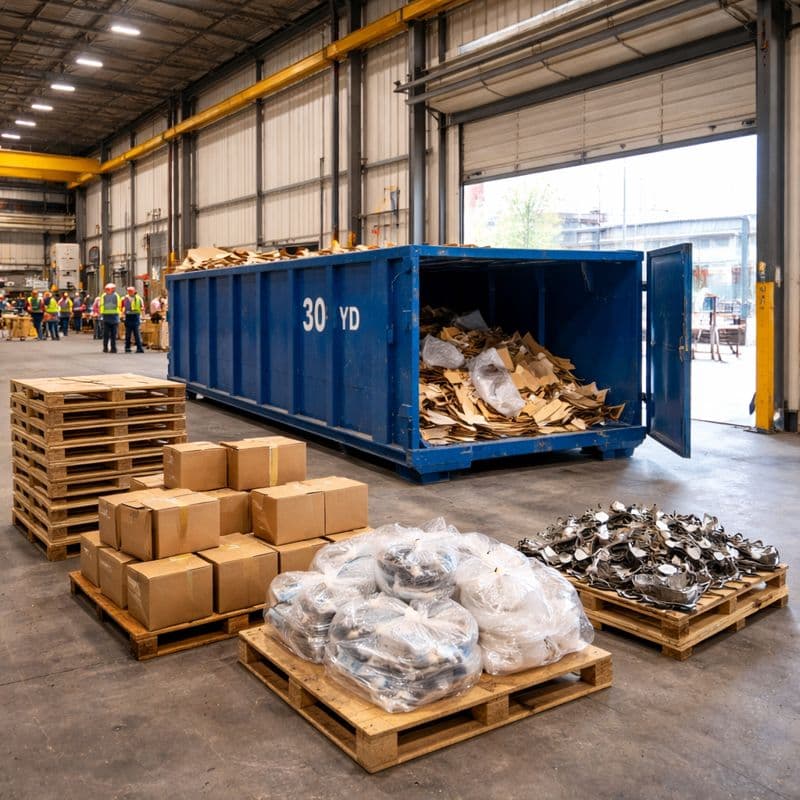
Industrial facilities maintain active operations during renovation and expansion projects. Dumpster placement must allow continued access to loading docks, employee entrances, and delivery routes. Strategic positioning near the work area reduces the distance workers carry debris while minimizing disruption to ongoing business activities.
Safety remains paramount in active industrial environments. Containers should be positioned away from forklift traffic patterns, truck maneuvering areas, and pedestrian walkways. Clear signage and barrier placement prevent unauthorized use and maintain worksite organization throughout the rental period.
Material Management and Regulatory Compliance for Industrial Waste
Industrial facilities generate waste streams subject to specific disposal regulations. The EPA administers the Resource Conservation and Recovery Act (RCRA), which establishes cradle-to-grave management for hazardous materials. Industrial project managers must identify waste types accurately and understand disposal requirements before coordinating dumpster sourcing.
Manufacturing operations occasionally produce materials classified as hazardous waste under federal guidelines. Solvents, chemical residues, contaminated materials, and certain industrial byproducts require specialized handling through licensed facilities. These materials cannot be placed in standard roll-off containers. Project managers should segregate potentially hazardous materials during facility cleanouts and arrange proper disposal through authorized handlers.
Non-hazardous industrial materials appropriate for standard containers include wood pallets, cardboard packaging, plastic wrapping, metal scrap (non-contaminated), general construction debris, office furniture and fixtures, and non-chemical manufacturing byproducts. Illinois hazardous waste regulations align with federal RCRA requirements, with the Illinois EPA maintaining oversight for proper waste classification and disposal practices.
Large Quantity Generators (LQGs) producing 1,000 kilograms or more of hazardous waste monthly face stringent notification, handling, and reporting requirements. Industrial facilities should maintain accurate waste generation records and coordinate with waste management professionals when questions arise about material classification.
| Material Category | Disposal Method | Container Suitability |
|---|---|---|
| Wood/Cardboard Packaging | Standard disposal or recycling | ✓ Appropriate for 30-yard containers |
| Construction Debris | Mixed waste disposal | ✓ Appropriate for 30-yard containers |
| Clean Metal Scrap | Recycling preferred | ✓ Appropriate (consider recycling value) |
| Chemical Containers | Specialized hazmat disposal | ✗ Requires licensed handler |
| Contaminated Materials | RCRA-compliant facility | ✗ Prohibited from standard containers |
| Electronics/E-Waste | Recycling facility | ✗ Special handling required |
Mini Case Studies:
A manufacturing facility in East Peoria coordinated a 30-yard container for a production line reconfiguration. The project generated 4.5 tons of wooden crating, cardboard, metal framework, and plastic packaging—staying comfortably within capacity while completing the upgrade on schedule.
A warehouse renovation in the Warehouse District utilized two 30-yard containers sequentially. The first handled interior demolition debris including drywall, lumber, and fixtures (3.8 tons). The second managed exterior work including roofing materials and siding (5.2 tons), keeping both loads within weight specifications.
Cost Considerations and Rental Logistics for Industrial Projects
Peoria industrial dumpster coordination costs vary based on container size, rental duration, material type, and project location. The 30-yard size typically ranges from $728-$773 in the Peoria market, with pricing reflecting disposal fees, transportation costs, and weight allowances. These rates generally include 7-14 day rental periods with options for extensions.
Industrial project managers should factor several cost elements into budget planning. Base rental rates cover container sourcing, coordination, and standard tonnage allowances (typically 4-6 tons). Overage fees apply when loads exceed included weight limits, usually charging $60-$100 per additional ton. Extended rental periods beyond the standard timeframe add $15-$25 per day depending on the provider.
Location influences final costs through delivery distance calculations. Projects within the immediate Peoria area receive standard pricing, while sites in Tazewell, Woodford, or Fulton County may include modest fuel surcharges. Industrial facilities should confirm all fee structures when requesting quotes to avoid billing surprises.
Material type affects disposal costs since landfills charge by weight and material category. General construction debris, manufacturing waste, and packaging materials process at standard rates. Specialized materials like contaminated wood, treated lumber, or certain industrial byproducts may incur additional disposal fees. Project managers should disclose waste stream composition when coordinating containers.
Coordinating dumpster sourcing in Peoria requires understanding these cost variables and planning accordingly. Transparent pricing from local providers helps industrial project managers budget accurately and avoid unexpected charges.
Optimizing Container Use for Industrial Efficiency
Maximizing 30-yard container efficiency requires strategic loading practices. Industrial facilities benefit from training crew members on proper waste placement techniques. Heavy items should be distributed evenly across the container floor rather than concentrated in one area. This weight distribution prevents overloading one section and ensures safe transportation.
Break down bulky items when feasible to optimize space utilization. Disassembling wooden pallets, flattening cardboard boxes, and cutting large materials into manageable pieces increases capacity significantly. A container loaded with intact pallets fills quickly while leaving substantial air gaps. Breaking pallets down allows tighter packing and more efficient use of available volume.
Layer materials strategically for maximum density. Place flat materials like plywood or drywall on the bottom to create a stable base. Add irregularly shaped items in middle layers, filling gaps with smaller debris. Top layers can accommodate lighter, bulkier materials that compress under their own weight. This systematic approach maximizes both volume and weight capacity.
Avoid prohibited materials that create disposal complications. Industrial sites must exclude hazardous chemicals, flammable liquids, compressed gas cylinders, asbestos-containing materials, certain electronics, fluorescent light bulbs, batteries, tires, and medical waste. These items require specialized disposal through appropriate channels and cannot be mixed with general industrial debris.
Conclusion
Industrial project managers in Peoria’s growing manufacturing and warehouse sectors benefit from understanding 30-yard dumpster specifications, capacity limitations, and coordination logistics. The Warehouse District’s ongoing transformation, combined with commercial expansion throughout the region, creates sustained demand for efficient waste management solutions. Strategic planning around placement requirements, regulatory compliance, and cost considerations ensures industrial projects maintain timelines while controlling expenses. By comparing container options and working with experienced sourcing services, industrial facilities can optimize waste removal operations and support Peoria’s continued industrial development.
Coordinate Your Industrial Dumpster Today
Zap Dumpsters Peoria sources 30-yard containers from trusted local haulers for your warehouse renovation, manufacturing facility update, or commercial expansion project.
✓ Transparent Pricing | ✓ Fast Coordination | ✓ Local Peoria Service
📞 Call (309) 650-8954We compare options from multiple haulers to match you with the right container for your industrial project
30 Yard Dumpster for Industrial Projects FAQs
How much does a 30-yard dumpster rental cost for industrial projects in Peoria?
Peoria industrial projects typically pay $728-$773 for 30-yard container coordination, which includes sourcing, arrangement with haulers, standard tonnage allowances (4-6 tons), and 7-14 day rental periods. Additional costs may apply for weight overages ($60-$100 per ton), extended rental periods ($15-$25 per day), or specialized disposal requirements for certain industrial materials.
What weight limit should industrial facilities expect with 30-yard containers?
Most 30-yard containers include weight limits between 4-6 tons (8,000-12,000 lbs). Industrial facilities should estimate debris weight carefully since manufacturing equipment, metal components, and construction materials reach these limits faster than packaging waste or general debris. Exceeding weight allowances results in overage fees calculated by the ton.
Can manufacturing waste and packaging materials go in the same container?
Non-hazardous manufacturing waste, cardboard packaging, plastic wrap, wood pallets, and general industrial debris can be combined in standard 30-yard containers. However, facilities must segregate hazardous materials, contaminated items, chemicals, and regulated substances for specialized disposal through licensed handlers following EPA and Illinois RCRA requirements.
How long does it take to coordinate a 30-yard dumpster for industrial sites in Peoria?
Most industrial dumpster coordination in Peoria completes within 24-48 hours of the initial request. Rush arrangements may be available for urgent facility needs, though advance planning of 2-3 days ensures optimal scheduling flexibility and hauler availability during peak construction seasons in the Warehouse District and surrounding industrial areas.
What clearance requirements do industrial facilities need for 30-yard container placement?
Industrial sites require 50-60 feet of straight access for delivery trucks plus 23-25 feet of vertical clearance for the hydraulic roll-off system. The placement surface must support 15,000+ pounds when fully loaded. Manufacturing facilities with loading docks, overhead utilities, or building overhangs should evaluate access routes before coordinating delivery.
30 Yard Dumpster for Industrial Projects Citations
- U.S. Environmental Protection Agency. “Hazardous Waste.” EPA.gov, https://www.epa.gov/hw. Accessed January 21, 2026.
- U.S. Environmental Protection Agency. “Resource Conservation and Recovery Act (RCRA) Regulations.” EPA.gov, https://www.epa.gov/rcra/resource-conservation-and-recovery-act-rcra-regulations. Accessed January 21, 2026.
- Illinois Environmental Protection Agency. “Hazardous Waste.” EPA.Illinois.gov, https://epa.illinois.gov/topics/waste-management/waste-disposal/hazardous-waste.html. Accessed January 21, 2026.
- Dumpsters.com. “A Guide to Roll Off Dumpster Weight Limits.” Dumpsters.com, https://www.dumpsters.com/resources/dumpster-weight-limits. Accessed January 21, 2026.
- Hometown Dumpster Rental. “30 Yard Dumpster Guide: Average Costs, Weight Limits, and More.” HometownDumpsterRental.com, https://www.hometowndumpsterrental.com/blog/30-yard-dumpster-guide. Accessed January 21, 2026.
- Prime Dumpster. “How Many Tons in a 30 Yard Roll Off Dumpster?” PrimeDumpster.com, https://primedumpster.com/dumpsters/how-many-tons-in-a-30-yard-roll-off-dumpster/. Accessed January 21, 2026.
- Zap Dumpsters Peoria. “How Much Does a Dumpster Rental Cost in Peoria IL?” ZapDumpstersPeoria.com, https://zapdumpsterspeoria.com/how-much-does-a-dumpster-rental-cost-in-peoria-il/. Accessed January 21, 2026.
- ZTERS. “Dumpster Rental in Peoria, IL.” Zters.com, https://www.zters.com/dumpster-rental/peoria-il. Accessed January 21, 2026.
- WCBU Peoria. “Peoria Aims to Assist Multiple Warehouse District Redevelopment Projects.” WCBU.org, https://www.wcbu.org/local-news/2025-08-08/peoria-aims-to-assist-two-warehouse-district-redevelopment-projects. Accessed January 21, 2026.
- Databid. “Major Infrastructure Projects for 2024 in Peoria Illinois.” Databid.com, https://blog.databid.com/blog/major-infrastructure-projects-for-2024-in-peoria-illinois. Accessed January 21, 2026.