Key Takeaways
- A 20-yard dumpster holds approximately 20 cubic yards of debris, equal to about six pickup truck loads or 110–130 large trash bags
- Weight limits typically range from 2 to 4 tons (4,000–8,000 pounds), with maximum capacities reaching up to 10 tons depending on material type and local regulations
- This size works well for medium renovations like kitchen remodels, roofing projects, garage cleanouts, and deck demolitions
- Contractors can maximize capacity by loading heavy materials first, breaking down bulky items, and distributing weight evenly
- Understanding both volume and weight capacity prevents costly overage fees and project delays
Article Summary
A 20-yard dumpster provides 20 cubic yards of space—enough for approximately six pickup truck loads or 110–130 large trash bags. Weight limits typically range from 2 to 4 tons, though this varies based on debris type and local hauler policies. This size efficiently handles medium-scale projects like kitchen renovations, roofing work, and garage demolitions for contractors serving residential clients in Peoria.
Understanding 20-Yard Dumpster Capacity Basics
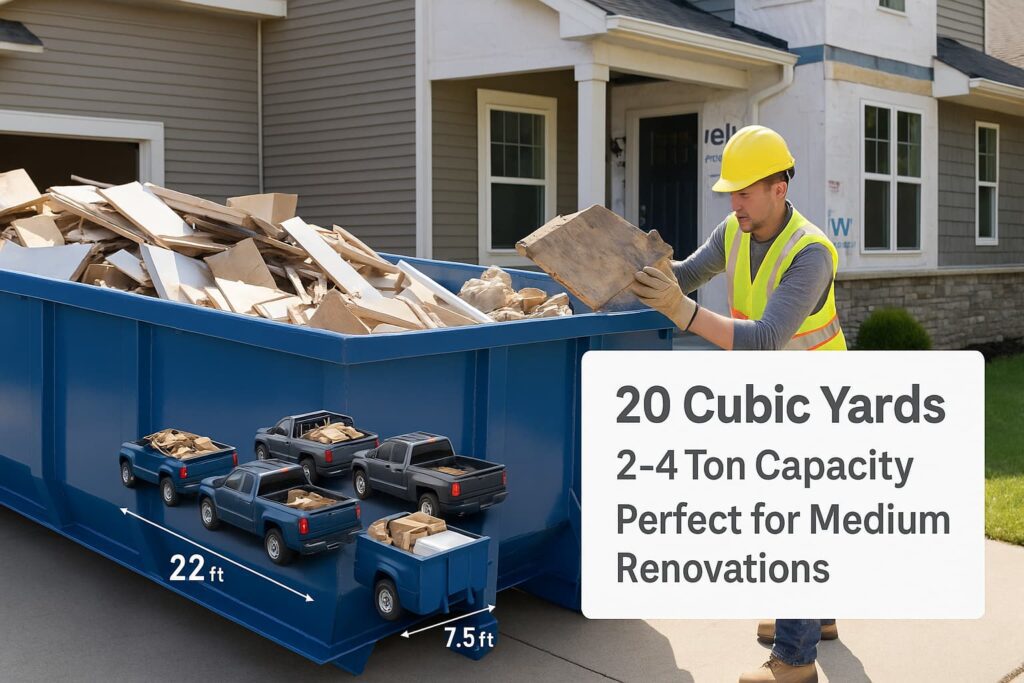
A 20-yard dumpster refers to volume, not physical dimensions or weight. The “20 yards” measures cubic yards—the three-dimensional space inside the container. This capacity translates to roughly 20 cubic yards of debris, which equals about six standard pickup truck loads with level beds.[1]
For contractors working on residential projects, this measurement helps estimate how much material fits before scheduling removal. A typical 20-yard unit measures approximately 22 feet long, 7.5 feet wide, and 4.5 feet high.[2] The rectangular shape allows efficient loading from the open top, and the low side height makes it accessible for manual loading without mechanical equipment.
Volume capacity differs significantly from weight capacity. While the container physically holds 20 cubic yards of material, weight restrictions limit how much heavy debris you can include. Most <a href=”https://zapdumpsterspeoria.com/roll-off-rentals/20-yard/”>dumpster sourcing services in Peoria</a> coordinate with haulers who set weight limits between 2 and 4 tons (4,000–8,000 pounds) for standard mixed debris.[3]
Contractors should verify both volume and weight limits when ordering. A 20-yard dumpster filled with lightweight insulation weighs far less than the same container packed with concrete or roofing shingles. Heavy materials can exceed weight thresholds even when the container appears half-empty.
How Volume Translates to Real-World Debris
The 20-cubic-yard measurement becomes clearer when converted to familiar units. This capacity equals approximately 110 to 130 large 33-gallon trash bags.[4] For renovation work, that’s typically enough space for:
- Complete kitchen cabinet removal plus countertops and appliances
- Full bathroom demolition including fixtures, tile, and drywall
- Residential roofing tear-off for homes up to 1,500 square feet
- Deck demolition for structures around 300 to 400 square feet
- Garage cleanout with years of accumulated storage items
Each project type generates different debris densities. Kitchen demolitions produce mixed materials—wood cabinets, drywall, metal fixtures, and tile fragments. Roofing projects create heavy concentrated loads of asphalt shingles. Understanding these differences helps contractors select appropriate container sizes and avoid weight penalties.
Volume vs. Weight: The Critical Distinction
Many contractors focus solely on whether debris physically fits in the container, but weight restrictions often become the limiting factor first. A 20-yard dumpster might hold 20 cubic yards of space, but haulers in Peoria typically allow only 2 to 4 tons of weight for standard pricing.[5]
Consider these material weight differences per cubic yard:
- Drywall: 400–500 pounds
- Asphalt shingles: 700–900 pounds
- Concrete or brick: 3,000–4,000 pounds
- Mixed household debris: 300–400 pounds
- Wood framing: 200–300 pounds
A container filled completely with concrete reaches the 4-ton weight limit at just over 2.5 cubic yards—leaving 17.5 cubic yards of unused space. Conversely, filling the entire container with lightweight insulation or packaging materials stays well under weight restrictions.
This creates a practical guideline: estimate volume needs first, then calculate approximate weight based on your specific debris mix. Contractors handling heavy materials like concrete, brick, or multiple layers of roofing shingles should consider ordering dedicated heavy-debris dumpsters with reinforced construction and higher weight allowances.
Real-World Capacity for Common Contractor Projects
Understanding capacity in abstract measurements helps, but contractors need practical project-based guidance. The following scenarios show how 20-yard dumpster debris capacity applies to typical residential jobs in Peoria.
Kitchen Renovations and Remodels
A full kitchen demolition generates substantial debris volume. Removing all cabinets, countertops, appliances, flooring, and some drywall typically produces 12 to 16 cubic yards of material.[6] A 20-yard container provides comfortable capacity with room for unexpected waste.
Typical kitchen demolition debris includes:
- Upper and lower cabinet boxes (10–15 linear feet)
- Laminate or granite countertops
- Tile backsplash and flooring
- Old appliances (refrigerator, stove, dishwasher)
- Drywall sections behind cabinets
- Wood trim and molding
Most kitchen remodels stay within the 2-ton weight limit unless removing extensive tile or concrete underlayment. Breaking down cabinet boxes and stacking materials efficiently maximizes space usage. Contractors can complete most kitchen projects with a single 20-yard rental when loading strategically.
For larger kitchens exceeding 200 square feet or projects involving significant structural changes, consider upgrading to a 30-yard container to avoid cramming debris or risking overfill.
Bathroom Demolitions and Updates
Bathroom renovations produce dense, heavy debris in compact volumes. Removing fixtures, tile, and plumbing creates substantial weight despite relatively small room sizes. A standard bathroom demolition (approximately 50–75 square feet) generates 4 to 6 cubic yards of material.[7]
Common bathroom debris:
- Ceramic or porcelain tile (floors and walls)
- Tub, toilet, and sink fixtures
- Vanity cabinets and countertops
- Drywall and cement board
- Cast iron or steel tubs (especially heavy)
- Plumbing components
Tile and fixtures significantly increase weight. Ceramic tile weighs roughly 10–15 pounds per square foot, meaning a 50-square-foot tiled bathroom generates 500–750 pounds from flooring alone. Cast iron tubs add another 300–500 pounds.
Contractors handling multiple bathroom renovations can typically fit two to three standard bathrooms in one 20-yard dumpster while staying within weight limits. Master bathrooms with extensive tile coverage may require more conservative estimates.
Roofing Projects and Tear-Offs
Roofing debris represents one of the heaviest materials contractors encounter. Asphalt shingles weigh approximately 700–900 pounds per cubic yard, making them roughly three times heavier than general mixed debris.[8]
A 20-yard dumpster accommodates residential roofing projects up to approximately 1,500 square feet.[9] This calculation accounts for:
- Single layer of asphalt shingles
- Underlayment and felt paper
- Ridge caps and flashing
- Wood sheathing (if replaced)
- Minimal additional debris
Roofing contractors should account for multiple shingle layers. Homes with two or three layers of old shingles require proportionally more capacity. A 1,500-square-foot roof with double shingle layers needs approximately 30 cubic yards of space or risks exceeding weight limits in a 20-yard container.
Roofing projects quickly approach the 4-ton standard weight threshold. Contractors should request weight limit details from dumpster sources and consider containers specifically rated for heavy roofing debris when handling larger projects or multiple shingle layers.
Deck and Outdoor Structure Demolitions
Wood deck demolitions produce lighter debris with greater volume. A typical 300-square-foot deck generates approximately 10 to 12 cubic yards of material.[10] This includes:
- Decking boards
- Support joists and beams
- Railing systems
- Stairs and posts
- Concrete footings (if removed)
Wood weighs significantly less than tile, concrete, or shingles—typically 200–300 pounds per cubic yard. A complete deck demolition usually stays well within the 2-ton weight limit while filling 50–60% of the container volume.
Contractors can often combine deck demolitions with other lightweight projects like fence removal or yard cleanups in a single 20-yard rental. Breaking down boards and cutting longer pieces into manageable lengths maximizes space efficiency.
Treated lumber requires proper disposal considerations. Some haulers charge additional fees for pressure-treated materials due to environmental processing requirements. Verify accepted materials with your dumpster source before loading.
Garage and Shed Cleanouts
Garage cleanouts represent highly variable projects. Accumulated storage items, old furniture, boxes, and miscellaneous household goods create unpredictable debris volumes. A single-car garage cleanout typically generates 8 to 12 cubic yards; a two-car garage produces 15 to 20 cubic yards.[11]
Common garage cleanout contents:
- Old furniture and appliances
- Storage boxes and containers
- Automotive parts and tires
- Sporting equipment
- Yard care tools and materials
- Paint cans and chemical containers (properly disposed separately)
Most garage debris consists of lightweight household goods well within weight restrictions. Exceptions include removing heavy equipment, multiple appliances, or extensive metal storage systems.
Contractors managing estate cleanouts or foreclosure properties should plan for maximum capacity estimates. These scenarios often reveal hidden debris volumes exceeding initial assessments.
Need Help Sizing Your Dumpster?
Zap Dumpsters Peoria sources the right roll-off containers for your specific project needs. We coordinate with trusted local haulers to match you with appropriate capacity and competitive pricing.
Call (309) 650-8954 for a Free QuoteServing Peoria and surrounding Illinois communities
Weight Limits and Material Considerations
Volume capacity tells only part of the story. Weight restrictions significantly impact what contractors can load into 20-yard containers. Understanding these limitations prevents unexpected overage fees and project delays.
Standard Weight Allowances
Most haulers in Peoria include 2 to 4 tons (4,000–8,000 pounds) in standard 20-yard dumpster pricing.[12] This weight allowance works well for general mixed debris from renovations, cleanouts, and light demolition projects.
Weight allowance variations depend on:
- Local hauler policies
- Landfill tipping fees in your area
- Material type being disposed
- Rental duration
- Seasonal demand factors
Contractors should request specific weight limits when arranging dumpster sourcing. Some haulers advertise attractive base rates but include restrictive weight allowances, resulting in substantial overage charges when disposal costs exceed expectations.
Heavy Debris Surcharges
Exceeding weight limits triggers per-ton overage fees ranging from $50 to $100 per additional ton in the Peoria area.[13] These charges add up quickly on heavy projects:
- 1 extra ton over limit: $50–$100
- 2 extra tons: $100–$200
- 3 extra tons: $150–$300
For roofing, concrete, or dirt projects, contractors should request dedicated heavy-debris containers rated for 5 to 10 tons. These specialized rentals cost slightly more upfront but eliminate overage surprises and provide appropriate container construction for dense materials.
Haulers cannot legally transport overloaded dumpsters on public roads. Severely overweight containers require on-site debris removal before pickup, creating project delays and additional labor costs.
Material-Specific Capacity Guidelines
Different materials have dramatically different weight-to-volume ratios. This chart shows approximate weight per cubic yard for common contractor debris:
| Material Type | Weight per Cubic Yard | Approx. Cubic Yards at 4-Ton Limit |
|---|---|---|
| Mixed household debris | 300–400 lbs | 20+ yards (no weight limit) |
| Wood framing/lumber | 200–300 lbs | 20+ yards (no weight limit) |
| Drywall | 400–500 lbs | 16–20 yards |
| Asphalt shingles | 700–900 lbs | 9–11 yards |
| Concrete/brick | 3,000–4,000 lbs | 2–2.5 yards |
| Dirt/soil | 2,000–3,000 lbs | 2.5–4 yards |
This table demonstrates why contractors can fill entire containers with lightweight materials but must use only a fraction of available space when disposing of heavy debris.
Calculating Your Project Weight
Contractors can estimate debris weight using basic calculations:
Formula: (Square footage × material type weight per square foot) ÷ 2,000 = tons
Example calculation for 1,200-square-foot roofing project:
- Asphalt shingles weigh approximately 2–3 pounds per square foot
- 1,200 sq ft × 2.5 lbs = 3,000 pounds
- Add underlayment, flashing, wood waste: +500 pounds
- Total: 3,500 pounds ÷ 2,000 = 1.75 tons
This project stays comfortably within a standard 2-ton weight limit. However, a roof with double shingle layers would double the weight to 3.5 tons, approaching or exceeding standard allowances.
Contractors should build in a 15–20% buffer for estimation errors and unexpected debris. Underestimating weight leads to overage fees; overestimating might cost more upfront but prevents surprises and project delays.
Maximizing Your 20-Yard Dumpster Capacity
Efficient loading techniques help contractors maximize available space and stay within weight limits. These strategies reduce rental costs and minimize the need for multiple containers.
Strategic Loading Sequence
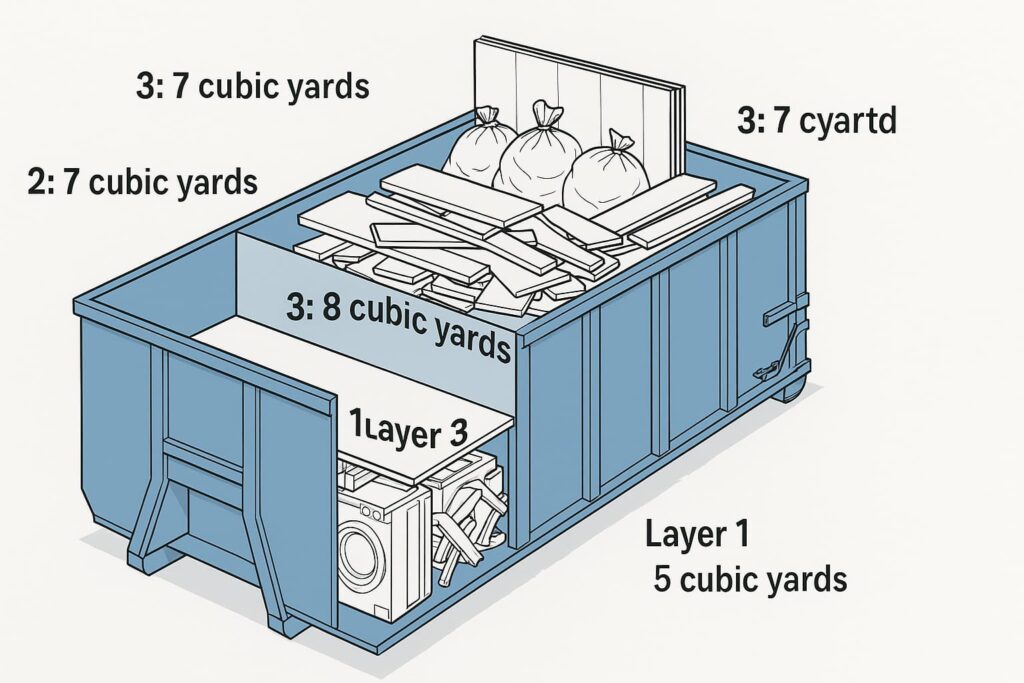
Load materials in a specific order to optimize space usage and weight distribution:
1. Heavy items first, on the bottom: Place dense materials like appliances, fixtures, and concrete pieces at the container floor. This creates a stable base and prevents crushing lighter materials.
2. Flat items against walls: Stack drywall, doors, and other flat materials vertically along container sides. This technique uses otherwise wasted edge space.
3. Fill voids with smaller debris: Use loose materials, insulation, and packaging to fill gaps between larger items. This prevents wasted air space.
4. Break down bulky items: Disassemble furniture, cut lumber into shorter lengths, and flatten cardboard boxes. Broken-down materials stack more efficiently than whole pieces.
5. Reserve lightweight materials for the top: Place bags of debris, cushions, and other compressible items on top where they won’t get crushed and can conform to remaining space.
Weight Distribution Matters
Proper weight distribution affects container safety during transport and prevents structural damage. Haulers cannot move containers with unbalanced loads that might shift during transit.
Follow these distribution guidelines:
- Spread heavy materials evenly across the container floor rather than concentrating them in one area
- Avoid loading all weight on one end, which can make the container difficult to lift onto the truck
- Don’t pile heavy materials significantly higher on one side, creating tipping risks
- Keep the heaviest items low and centered when possible
Extremely unbalanced loads may require reloading before haulers accept the container for removal. This creates project delays and additional labor costs.
Avoiding Overfill Violations
Debris must stay within the container walls—no materials protruding above the top rim. Overfilled containers create road safety hazards and violate transportation regulations.[14]
Haulers typically refuse pickup for overfilled containers until excess materials are removed. This policy applies regardless of total weight. Contractors must either remove items or schedule a second container.
The fill line sits at the top edge of the dumpster walls. Materials can reach this level but cannot extend above it. Lightweight materials like insulation or packaging often compress during loading, so contractors might initially load slightly above the rim if materials will settle below the fill line.
For projects approaching maximum capacity, consider these options:
- Break down larger items more aggressively to improve compaction
- Schedule an earlier pickup and rent a second container for remaining debris
- Upgrade to a 30-yard dumpster if substantial work remains
Attempting to overload containers to avoid second rentals often backfires. Removal delays and reloading labor typically cost more than simply ordering appropriate capacity from the start.
Space-Saving Techniques for Common Materials
Drywall: Stand sheets vertically along container walls rather than laying them flat. Vertical storage uses less floor space and prevents sheets from becoming crushed and difficult to remove.
Wood lumber: Cut boards into 4-foot lengths or shorter. Long boards waste space extending across the container and limit how other materials can be stacked.
Cabinets and furniture: Remove doors, drawers, and backs. Breaking down furniture into component pieces reduces volume by 40–60% compared to loading whole pieces.
Bags of debris: Fill bags firmly but not overly stuffed. Tightly packed bags don’t conform to available spaces as well as moderately filled bags that can squeeze into gaps.
Roofing shingles: Overlap bundles and shingle pieces when loading. The flexible nature of asphalt shingles allows some compression, but avoid excessive compaction that makes later unloading difficult for the hauler.
Cost Implications and Planning Considerations
Understanding 20-yard dumpster debris capacity helps contractors make cost-effective decisions for their Peoria projects. Proper planning prevents common expensive mistakes.
Rental Duration and Extensions
Standard dumpster rentals include 7 to 10-day periods.[15] Projects extending beyond the included time incur daily or weekly extension fees, typically $5–$15 per day in the Peoria area.
Contractors should estimate realistic project timelines:
- Single-trade renovations (kitchen, bathroom): 3–7 days
- Roofing projects: 2–4 days
- Multi-room cleanouts: 5–10 days
- Extended renovations with multiple trades: 14–21 days
For longer projects, request extended rental periods upfront rather than paying daily extension fees. Many haulers offer better rates for 14-day or 30-day commitments compared to multiple short-term extensions.
Comparing Costs: 20-Yard vs. Other Sizes
20-yard dumpsters offer the best value for medium-scale projects. Here’s how pricing typically compares:
| Container Size | Typical Peoria Price Range | Best For |
|---|---|---|
| 10-yard | $300–$400 | Small cleanouts, minor repairs |
| 20-yard | $375–$475 | Medium renovations, roofing |
| 30-yard | $450–$550 | Large projects, new construction |
| 40-yard | $525–$650 | Commercial demolitions |
The 20-yard size offers excellent cost-per-cubic-yard value. Upgrading from 20-yard to 30-yard typically costs only $75–$100 more while providing 50% additional capacity. Contractors uncertain about debris volumes should consider the larger size to avoid needing second rentals.
Hidden Costs to Watch For
Standard rental quotes typically include container placement, rental period, weight allowance, and hauling fees. Additional charges might include:
Permit fees: Street placement in Peoria requires permits costing approximately $25–$75 depending on duration and location.[16] Driveway placement usually requires no permits.
Weight overages: Exceeding included weight allowances costs $50–$100 per additional ton. Review weight limits carefully when disposing of heavy materials.
Extended rental fees: Keeping containers beyond included periods costs $5–$15 daily. Plan realistic timelines to avoid accumulating extension charges.
Trip charges: Some haulers charge for failed pickup attempts if containers are inaccessible, blocked, or overfilled. Ensure clear access on scheduled pickup days.
Prohibited material fees: Disposing of mattresses, tires, electronics, or hazardous materials might trigger special handling fees or disposal surcharges.
Ask detailed questions when coordinating your dumpster source. Clarify all included services and potential additional charges to avoid budget surprises.
When to Order a Second Container
Sometimes projects genuinely require more capacity than initially estimated. Ordering a second 20-yard container typically costs less than trying to force excess debris into an overfilled container that haulers will refuse to pick up.
Consider ordering additional capacity when:
- Project scope expands beyond initial plans
- Hidden debris volumes appear during demolition
- You’re approaching the fill line with substantial work remaining
- Weight limits will be exceeded before volume capacity is reached
- Multiple trades generate debris simultaneously on larger projects
Coordinate timing strategically. If possible, schedule the first container pickup when nearly full, then have the second container placed immediately to minimize rental overlap and extension fees.
Mini Case Studies: Real Contractor Scenarios
Kitchen Remodel in North Peoria: A contractor removed all cabinets, appliances, and tile flooring from a 150-square-foot kitchen. Total debris volume reached approximately 14 cubic yards. The 20-yard container provided ample capacity with room for unexpected drywall removal and additional trim work. Total weight stayed within the 2-ton allowance, resulting in no overage charges.
Roofing Project on Glen Oak Avenue: A residential roofing crew handled a 1,400-square-foot single-story home with one layer of asphalt shingles. The project generated approximately 18 cubic yards of material weighing 3.2 tons. The 20-yard container accommodated all debris with slight room to spare, and the weight stayed just within the 4-ton limit the hauler allowed for roofing debris.
Garage Cleanout in West Peoria: An estate sale cleanout required removing decades of accumulated storage from a two-car garage. The contractor initially estimated 12 cubic yards but discovered 18 cubic yards once sorting began. The 20-yard container handled the full volume, though the contractor had to break down furniture and compact materials aggressively. Lightweight household goods kept weight well within limits at approximately 1.5 tons total.
Conclusion
Understanding 20-yard dumpster debris capacity helps contractors plan efficiently and avoid costly mistakes. These containers hold approximately 20 cubic yards of space—equal to six pickup truck loads or 110–130 trash bags. Weight limits between 2 and 4 tons work well for most medium renovations, but heavy materials like concrete, brick, or multiple roofing layers require careful calculation. Contractors who estimate both volume and weight accurately save money, prevent project delays, and maintain professional relationships with clients. For projects with uncertain debris volumes, choosing a slightly larger container or coordinating with experienced <a href=”https://zapdumpsterspeoria.com/how-big-is-a-20-yard-dumpster/”>dumpster sourcing services</a> provides peace of mind and better project outcomes.
Get Accurate Capacity Guidance Today
Zap Dumpsters Peoria helps contractors source the right container size for every project. We compare local haulers to find competitive rates and appropriate capacity for your specific debris type.
Call (309) 650-8954 for Expert Sizing HelpServing contractors throughout Peoria, IL and surrounding areas
20 Yard Dumpster Debris Capacity FAQs
How much weight can a 20-yard dumpster hold?
Most 20-yard dumpsters include weight allowances between 2 and 4 tons (4,000–8,000 pounds) in standard rental pricing. Specific limits vary by hauler and material type. Heavy debris like concrete, brick, or multiple layers of roofing shingles may require specialized containers rated for higher weight capacities up to 10 tons.
Can a 20-yard dumpster hold a full kitchen renovation?
Yes, a 20-yard container typically accommodates complete kitchen demolitions including cabinets, countertops, appliances, flooring, and moderate drywall removal. Most kitchen projects generate 12–16 cubic yards of debris while staying within standard weight limits. Larger kitchens exceeding 200 square feet or projects with extensive tile removal might require 30-yard containers.
How many pickup truck loads fit in a 20-yard dumpster?
A 20-yard dumpster holds approximately six pickup truck loads with level beds. This estimate assumes standard full-size truck beds (6.5 to 8 feet long). Actual capacity varies based on how tightly materials are packed and whether debris is compacted or left loose.
What’s the difference between 20-yard dumpster volume and weight capacity?
Volume measures the physical space inside the container (20 cubic yards), while weight capacity limits how much mass haulers can legally transport. A container might physically hold 20 cubic yards of concrete, but the 4-ton weight limit prevents loading more than 2–3 cubic yards of this heavy material. Lightweight debris like wood or insulation fills the entire volume without approaching weight restrictions.
How do I know if I need a 20-yard or 30-yard dumpster?
Choose a 20-yard container for medium projects like single-room renovations, standard roofing jobs (up to 1,500 square feet), garage cleanouts, or deck demolitions. Upgrade to 30-yard containers for large multi-room renovations, extensive landscaping projects, or jobs with uncertain debris volumes. The cost difference typically runs only $75–$100, making the larger size valuable insurance against capacity shortfalls.
20 Yard Dumpster Debris Capacity Citations
- HomeGuide. (2024). “Dumpster Rental Cost Guide.” Retrieved from https://homeguide.com/costs/dumpster-rental-cost
- Your Docket. (2024). “20 Yard Dumpster: Residential and Commercial Waste Solutions.” Retrieved from https://www.yourdocket.com/20-yard-dumpster-residential-and-commercial-waste-solutions/
- Waste Management. (2024). “Understanding Dumpster Weight Limits.” Industry standards documentation.
- Budget Dumpster. (2024). “How Much Does a Dumpster Hold?” Retrieved from https://www.budgetdumpster.com/resources/how-much-does-a-dumpster-hold/
- Dumpsters.com. (2024). “20 Yard Dumpster Dimensions and Capacity Guide.” Retrieved from https://www.dumpsters.com/resources/20-yard-dumpster
- HomeAdvisor. (2024). “Kitchen Remodel Waste Removal Costs.” Retrieved from https://www.homeadvisor.com/cost/additions-and-remodels/remodel-a-kitchen/
- Angi. (2024). “Bathroom Remodel Debris Estimates.” Retrieved from https://www.angi.com/articles/bathroom-remodel-cost.htm
- National Roofing Contractors Association. (2024). “Roofing Debris Weight Guidelines.” Industry standards.
- Hometown Dumpster Rental. (2024). “Dumpster Size Calculator for Roofing.” Retrieved from https://www.hometowndumpsterrental.com/dumpster-size-guide/
- This Old House. (2024). “Deck Demolition Planning Guide.” Retrieved from https://www.thisoldhouse.com/decks/reviews/deck-removal-cost
- Junk King. (2024). “Garage Cleanout Volume Estimates.” Retrieved from https://www.junk-king.com/blog/garage-cleanout-cost/
- HomeGuide. (2024). “Dumpster Rental Pricing and Weight Allowances.” Retrieved from https://homeguide.com/costs/dumpster-rental-cost
- Local Peoria hauler average pricing data. (2024). Compiled from multiple regional service providers.
- Illinois Department of Transportation. (2024). “Commercial Vehicle Load Requirements.” Retrieved from https://idot.illinois.gov/
- Waste Management. (2024). “Standard Rental Terms and Conditions.” Retrieved from https://www.wm.com/
- City of Peoria. (2024). “Right-of-Way Permit Requirements.” Retrieved from https://www.peoriagov.org/